



Healthcare Radiology in Nigeria
Nigeria’s healthcare system faces inadequate infrastructure, limited resources, and a high burden of diseases.
Despite these challenges, radiology plays a crucial role in Nigerian healthcare.
This medical specialty supports healthcare delivery through diagnostic imaging.
Radiology in Disease Diagnosis and Treatment
Radiology provides imaging services that help professionals diagnose and treat various medical conditions.
X-rays and CT scans help healthcare professionals identify diseases and plan appropriate treatment strategies.
These technologies can reveal abnormalities, including tumors and fractures.
They also help providers assess injury or illness severity and monitor patient progress.
Moreover, radiology guides minimally invasive procedures, including biopsies and angioplasty.
As a result, it supports patient care and healthcare delivery in Nigeria.
Strengthening Radiology Services in Nigeria
This discussion highlights radiology’s indispensable role in Nigeria’s healthcare system.
It raises awareness about the specialty’s value in diagnosis and treatment.
Furthermore, it emphasizes investment in services, equipment, and training.
Such investment can enhance healthcare delivery and improve patient outcomes.
History of Radiology in Nigeria
Radiology has played a significant role in Nigeria’s healthcare system.
Over time, the field has developed through new services, technologies, and expanding hospital departments.
These changes have strengthened diagnostic imaging and supported healthcare delivery across the country.
- Evolution of radiology in the Nigerian healthcare system
- Milestones in the development of radiology in Nigeria
- Impact of technological advancements on radiology
Evolution of Radiology in the Nigerian Healthcare System
Radiology entered Nigeria’s healthcare system during the early twentieth century.
Healthcare providers initially used X-ray technology for diagnostic imaging.
At first, hospitals in major urban areas provided most radiology services.
Over time, healthcare facilities expanded these services into more remote regions.
Population growth increased demand for diagnostic imaging.
Consequently, hospitals established dedicated radiology departments across the country.
This expansion improved access to imaging for urban and rural patients.
Milestones in the Development of Radiology in Nigeria
Computed tomography scanning entered Nigeria during the 1980s.
CT technology provided detailed cross-sectional images of internal body structures.
As a result, clinicians gained more information for diagnostic evaluation.
Magnetic resonance imaging followed during the 1990s.
MRI enabled more precise imaging of soft tissues and organs.
This development improved diagnosis and treatment planning for many medical conditions.
Digital imaging later transformed radiology during the early 2000s.
Digital systems improved image quality, storage, retrieval, and information sharing.
Technological Advancements in Nigerian Radiology
Technological advancements have made radiology more efficient and accurate in Nigeria.
Digital radiography and advanced imaging modalities have improved patient care.
PACS systems also help facilities store, retrieve, and share radiology images.
Furthermore, teleradiology allows radiologists to interpret images from distant locations.
This capability supports timely diagnosis and treatment decisions.
It also improves access to radiology services in underserved communities.
As radiology continues adopting new technologies, its role in Nigerian healthcare will keep expanding.
These developments can further support healthcare delivery and improve patient outcomes across the country.
Role of Radiologists in Healthcare
Radiologists use imaging technology to diagnose and treat patients effectively.
Transform Your Career with Expert Guidance
Get personalized mentorship consulting that’s tailored to your unique path. Our expert advice is actionable and exclusive.
Get StartedThey support patient wellbeing through diagnostic expertise and image-guided care.
They also help healthcare teams make informed decisions about patient management.
Responsibilities in Diagnosis and Treatment
Radiologists interpret medical images to identify various conditions.
They provide timely findings that help physicians plan appropriate patient care.
Additionally, they perform image-guided procedures and collaborate on treatment plans.
- Radiologists interpret X-rays, magnetic resonance imaging scans, computed tomography scans, and ultrasounds.
- They consult referring physicians about imaging findings and patient care.
- They perform image-guided biopsies, injections, and tumor ablations.
- They collaborate with specialists to develop treatment plans based on imaging results.
- They learn about advances in radiology technology and techniques to improve patient care.
Collaboration with Healthcare Professionals
Radiologists work closely with multidisciplinary healthcare teams.
They coordinate imaging decisions with professionals involved in diagnosis, treatment, and follow-up care.
This collaboration supports comprehensive care for patients.
- Radiologists discuss imaging recommendations and follow-up plans with primary care physicians.
- They help oncologists monitor tumor responses and plan surgical interventions.
- They assist surgeons with real-time imaging during intraoperative procedures.
- They work with radiation therapists to design cancer treatment plans.
- They help emergency physicians prioritize imaging for critically ill or injured patients.
Importance of Accurate and Timely Reports
Accurate radiology reports support proper diagnosis and treatment.
Timely reporting helps physicians make informed decisions about patient care and management.
Clear findings also improve communication among healthcare providers.
- Accurate reports help physicians make informed patient care decisions.
- They help patients receive appropriate treatment based on imaging findings.
- They reduce unnecessary repeat imaging and help minimize healthcare costs.
- They help prevent diagnostic and treatment delays that could affect patient outcomes.
- They improve communication and care coordination among healthcare providers.
Radiologists contribute significantly to patient care through imaging expertise and professional collaboration.
Their skills and knowledge support improved patient outcomes and healthcare quality.
Learn More: Notable Public Health Technologists in Nigeria
Radiology Imaging Techniques in Nigerian Hospitals
Radiology services support diagnosis across Nigerian hospitals.
Different imaging techniques address different clinical needs.
However, healthcare facilities do not offer every imaging option equally.
- X-rays remain among the most common imaging techniques in Nigerian healthcare facilities.
- CT scans provide detailed images of internal body structures.
- MRI uses magnetic fields and radio waves to image organs and tissues.
- Ultrasound uses sound waves to create images inside the body.
- Mammography focuses on breast imaging and helps detect early signs of breast cancer.
Availability and Accessibility of Radiology Services
Access to radiology services differs considerably across Nigeria.
Major cities such as Lagos, Abuja, and Port Harcourt host well-equipped radiology centers.
Meanwhile, rural communities often face limited resources and fewer imaging options.
- Public hospitals usually provide limited access to advanced imaging techniques.
- Private radiology clinics may offer broader services at higher costs.
- Rural areas experience greater difficulty accessing radiology services.
- Urban radiology centers generally provide more equipment and service choices.
Challenges Affecting Radiology Service Delivery
Several challenges limit the reliable delivery of radiology services in Nigeria.
Healthcare facilities need adequate staffing, funding, infrastructure, and equipment maintenance.
Additionally, high service costs can prevent many Nigerians from obtaining necessary imaging.
- Nigeria faces a shortage of trained radiologists and technicians.
- Limited funding restricts equipment updates and quality maintenance.
- Some facilities lack suitable infrastructure for radiology services.
- Inconsistent power supplies can disrupt imaging equipment operations.
- High radiology costs can make services unaffordable for average Nigerians.
Strengthening Radiology Services in Nigeria
Radiology services remain important for diagnosing and treating various health conditions.
Therefore, healthcare improvements should address access, affordability, and service quality.
These improvements can strengthen radiology’s contribution to Nigeria’s healthcare system.
Learn More: Overview of Public Health Technology in Nigeria
Diagnostic Capabilities of Radiology
Radiology supports diagnosis across many diseases and conditions.
Imaging techniques reveal abnormalities inside the body.
These findings can guide early detection, treatment planning, and outcome assessment.
Radiology Detection of Diseases and Conditions
Radiologists use X-rays, MRI, CT scans, and ultrasound to identify abnormalities.
X-rays can reveal broken bones, pneumonia, and other lung conditions.
Meanwhile, MRI and CT scans show internal organs and may reveal tumors, cysts, or other abnormalities.
Early Detection and Disease Prevention
Radiology can detect diseases early, when treatment may be more effective.
Early detection can improve patient outcomes and increase the chances of successful treatment.
For example, mammograms can detect breast cancer early and support prompt intervention.
Similarly, CT scans can detect lung cancer during its early stages.
Radiology in Treatment Planning and Patient Outcomes
Radiology provides detailed information about the location and extent of diseases or abnormalities.
Doctors use this information to develop treatment plans suited to individual patient needs.
In cancer care, imaging helps determine disease stage and guide treatment decisions.
These decisions may involve surgery, chemotherapy, or radiation therapy.
Radiology also monitors treatment progress and helps doctors assess its effectiveness.
See Related Content: Professional Development for Nigerian Dietitians
Radiology Education and Training in Nigeria
Nigerian universities and hospitals provide radiology education through academic and clinical training programs.
These programs combine theoretical coursework with practical, hands-on experience.
Training prepares radiologists to support accurate and timely patient diagnoses.
- Universities and hospitals provide radiology training programs.
- Radiologists require continuous education and professional training.
- Nigeria faces challenges attracting and retaining skilled radiologists.
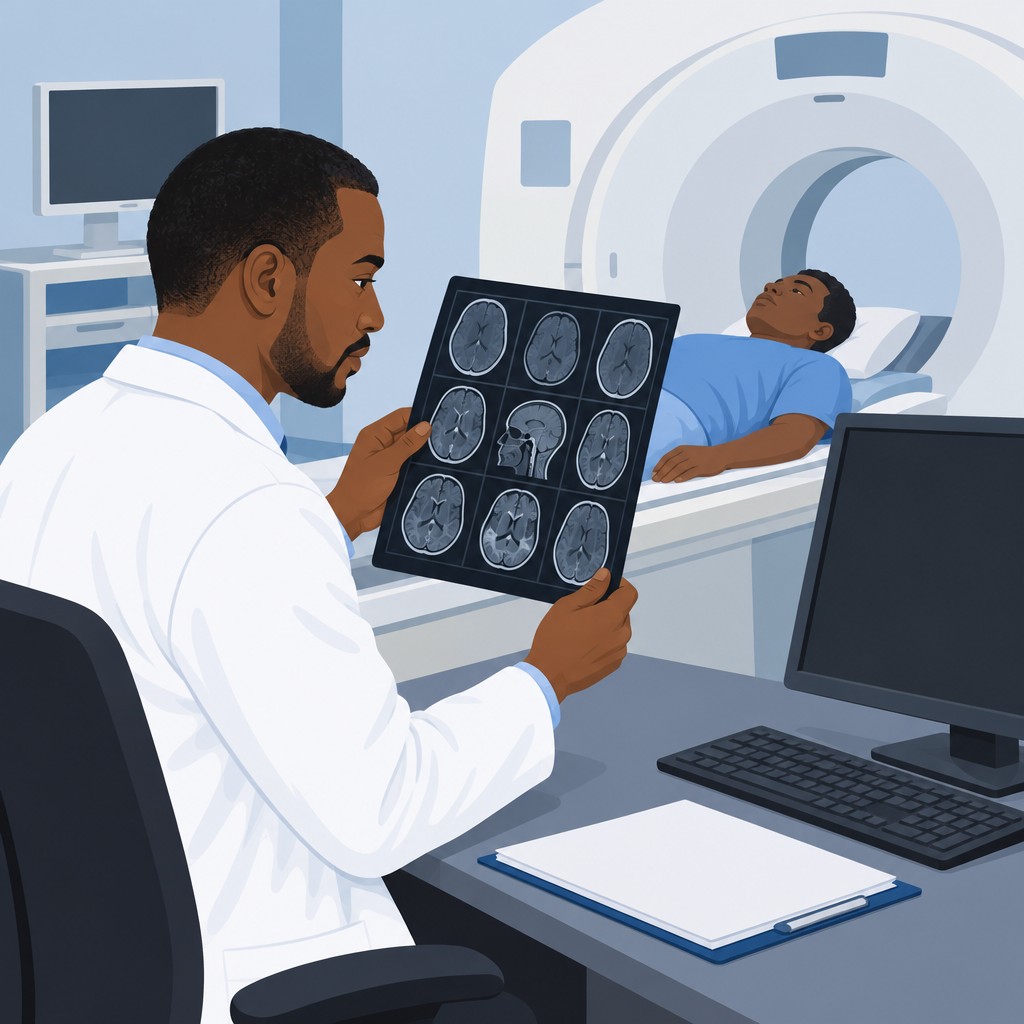
Radiology Training Programs
Radiology training programs operate mainly within Nigerian universities and hospitals.
Participants study radiology concepts through structured theoretical coursework.
They also gain practical experience through hands-on clinical training.
The University of Lagos offers a radiology training program.
Obafemi Awolowo University also provides radiology education.
Ahmadu Bello University represents another Nigerian institution offering radiology training.
Continuous Education for Radiologists
Radiologists need continuous education to remain current with developments in radiology.
Ongoing training helps professionals understand evolving technologies and clinical practices.
Consequently, continued learning supports accurate and timely patient diagnoses.
Challenges Affecting Radiologist Retention
Nigeria faces difficulties attracting and retaining skilled radiologists.
Limited incentives encourage many skilled radiologists to seek opportunities abroad.
This movement contributes to shortages of experienced radiologists within local healthcare services.
Additionally, some healthcare facilities lack advanced equipment and necessary resources.
These limitations create further challenges for radiologists working in Nigeria.
Strengthening Radiology Education and Services
Investment in radiology education and training can improve healthcare service quality.
Better retention measures can help preserve experienced professionals within Nigeria.
Addressing equipment and resource limitations can strengthen radiology services.
These improvements can help patients receive accurate and timely diagnoses.
You Might Also Like: Introduction to Medical Laboratory Science in Nigeria
Radiology Equipment and Technology
Nigerian hospitals show mixed conditions in radiology equipment, combining serious challenges with opportunities for improvement.
Imaging technology strongly influences how effectively healthcare providers deliver diagnostic services.
Therefore, equipment availability and quality remain important concerns for hospitals and patients.
Overview of Radiology Equipment
Many Nigerian hospitals use outdated radiology equipment that requires upgrading.
Such limitations can prevent healthcare providers from producing clear images for diagnosis.
Consequently, unclear images may contribute to misdiagnoses or delays in treatment.
Equipment shortages also force patients to wait longer for imaging tests.
These delays can prolong suffering and reduce recovery opportunities for patients needing urgent care.
Investing in Modern Imaging Technology
Investing in modern imaging technology can strengthen healthcare services in Nigeria.
Upgraded equipment can support more accurate diagnoses and more efficient clinical decisions.
MRI and CT scanners can produce detailed images of internal body structures.
These images can help providers detect conditions earlier and plan timely interventions.
Additionally, modern systems can reduce waiting times for imaging tests.
Shorter waits can streamline care and accelerate diagnosis and treatment.
Impact of Inadequate Equipment on Patient Care
Inadequate radiology equipment can significantly weaken patient care and treatment outcomes.
Without modern imaging technology, providers may struggle to diagnose conditions accurately.
Misdiagnoses can lead to unnecessary procedures, longer hospital stays, and higher healthcare costs.
Patients may also experience emotional strain and reduced quality of life.
Furthermore, equipment shortages can widen disparities in access to imaging services.
Patients in underserved areas may therefore struggle to receive timely and appropriate care.
Addressing these equipment challenges can help hospitals improve the quality of care they provide.
Cost and Accessibility of Radiology Services
Radiology costs and service availability strongly influence diagnostic care in Nigeria.
Many patients need timely imaging to support appropriate diagnosis and treatment.
Therefore, healthcare planners must improve affordability and access across different communities.
- Affordability of radiology services for the average Nigerian
- Disparities in access to radiology services in urban and rural areas
- Strategies for improving access to radiology services for all Nigerians
Affordability of Radiology Services for the Average Nigerian
Radiology services support timely diagnosis and treatment for many medical conditions.
However, service costs can exceed what the average Nigerian can comfortably afford.
Consequently, some patients may delay diagnosis and treatment, creating serious health concerns.
Government subsidies could reduce expenses for patients who need diagnostic imaging.
Public-private partnerships may also expand affordable services across more communities.
Furthermore, community-based initiatives could help more individuals obtain necessary imaging.
Urban and Rural Differences in Radiology Access
Access to radiology services differs substantially between urban centres and rural areas.
Urban centres generally have more advanced facilities and equipment for diagnostic imaging.
Rural communities often lack the infrastructure and resources required for adequate services.
This imbalance can create significant health differences between urban and rural populations.
Rural patients may travel farther before receiving timely and accurate diagnostic imaging.
Delayed imaging can postpone treatment and contribute to poorer health outcomes.
Strategies for Improving Radiology Access
Expanding rural infrastructure can bring radiology services closer to underserved communities.
Mobile radiology units could provide imaging services in locations without permanent facilities.
Telemedicine services could support remote diagnostic imaging and specialist collaboration.
Training programs can strengthen healthcare professionals’ ability to interpret imaging results.
Improved interpretation can help rural facilities provide more accurate and timely diagnoses.
Additionally, public awareness can encourage people to seek imaging when healthcare providers recommend it.
Greater awareness may increase appropriate use of radiology services among Nigerians.
Building More Equitable Radiology Services
Affordable and accessible imaging can help Nigerians receive more timely healthcare.
Reducing financial barriers can support earlier diagnosis and treatment decisions.
Expanding rural services can reduce the access gap between different populations.
These measures require cooperation among government institutions, healthcare providers, and communities.
Future of Radiology in the Nigerian Healthcare System
Radiology technology and techniques can strengthen healthcare services across Nigeria.
Radiologists continue exploring better methods for diagnosis and treatment as technology develops.
These improvements can support more timely decisions and better patient care.
Advancements in Radiology Technology and Techniques
New radiology technologies can improve diagnostic capabilities in Nigerian healthcare facilities.
Advanced techniques can also expand treatment options for patients.
However, healthcare providers must match technological improvements with appropriate training and quality controls.
Radiology Integration into Primary Healthcare Services
Primary healthcare facilities need accessible radiology services for early detection and timely intervention.
Diagnostic imaging can help primary healthcare providers reach accurate diagnoses sooner.
Consequently, patients can receive appropriate care without unnecessary delays.
Recommendations for Strengthening Radiology Services
Nigeria can strengthen radiology by improving resources, skills, cooperation, and service coverage.
These actions can support reliable imaging services across different healthcare settings.
Healthcare planners should coordinate these improvements with patient needs and available resources.
- Increase investment in infrastructure and equipment to support high-quality radiology services.
- Upgrade radiology facilities with suitable equipment and necessary resources.
- Expand continuous training and education for radiologists and other relevant professionals.
- Encourage collaboration between radiologists, physicians, and other healthcare professionals.
- Improve communication within multidisciplinary teams to support effective patient care.
- Implement quality assurance programs that regularly evaluate radiology practices.
- Use audits to identify service gaps and maintain reliable quality control measures.
- Expand radiology access in rural areas through mobile units or telemedicine.
- Provide timely imaging services that reduce the need for long-distance travel.
Radiology’s Role in Nigeria’s Healthcare Future
Radiology plays a crucial role in diagnosing and treating medical conditions across Nigeria.
It supports healthcare delivery and can improve patient outcomes.
Government officials, policymakers, and investors should recognize the importance of radiology services.
They must provide resources to improve and expand these services across Nigeria.
As technology advances, radiology can address Nigeria’s growing demand for healthcare services.
Investing in modern equipment can strengthen healthcare delivery.
Training healthcare professionals can further improve radiology services.
Promoting radiology research can also support future healthcare improvements.
Additional Resources
Google search results for Role of Radiology in Nigerian Healthcare System Health Sciences
Bing search results for Role of Radiology in Nigerian Healthcare System Health Sciences


