



Radiography in Nigeria
Radiography in Nigeria uses imaging techniques.
It helps healthcare professionals diagnose and treat medical conditions.
Technological advances improve imaging quality and reduce radiation exposure.
They also enhance diagnostic accuracy.
Historical Background of Radiography in Nigeria
Radiography in Nigeria began with the early medical use of X-ray technology.
Initially, only a few hospitals possessed X-ray machines because resources and infrastructure remained limited.
Consequently, patients often waited longer for examinations, diagnosis, and treatment.
Early Use of X-ray Technology
Medical institutions in Nigeria adopted X-ray technology during the early twentieth century.
This development followed Wilhelm Conrad Roentgen’s discovery of X-rays in 1895.
Clinicians primarily used the technology to identify fractures, foreign bodies, and internal abnormalities.
However, limited equipment restricted access to only a few medical institutions.
Therefore, long waiting times delayed diagnosis and treatment for some patients.
Development of Radiography as a Medical Imaging Tool
Over time, radiography developed beyond its earliest diagnostic applications in Nigeria.
Technological advances introduced more sophisticated imaging modalities into medical practice.
Furthermore, digital radiography enabled faster image acquisition and improved image quality.
Radiographers consequently produced more accurate and detailed diagnostic images.
These images helped healthcare professionals make better-informed care decisions.
Additionally, improved imaging reduced the need for some invasive procedures.
Challenges in Earlier Radiography Services
Despite progress, radiography in Nigeria faced several challenges during its development.
For example, many radiographers lacked access to formal training programs.
This limitation produced inconsistent practices and weakened quality control measures.
As a result, diagnostic images sometimes varied in quality and affected clinical decisions.
Moreover, insufficient healthcare funding restricted access to modern equipment and technology.
Limited resources consequently hindered the delivery of quality radiographic services.
Additionally, Nigeria experienced a shortage of qualified radiographers.
This shortage increased workloads and reduced efficiency within medical imaging departments.
Therefore, radiographers struggled to meet the growing demand for diagnostic imaging services.
Current State of Radiography in Nigeria
Radiography facilities in Nigeria now include digital X-ray machines, CT scanners, and MRI machines.
These resources support more detailed imaging for clinical assessment.
Consequently, healthcare teams can use imaging findings to guide diagnosis and treatment.
Equipment and Facilities Available
Healthcare facilities have acquired modern equipment that supports diagnostic imaging.
Digital systems and advanced scanners provide additional imaging options for patient assessment.
These facilities help healthcare professionals plan appropriate diagnosis and treatment.
Level of Expertise and Training of Radiographers
Radiographers in Nigeria demonstrate varying levels of professional expertise.
Some practitioners receive advanced training in nuclear medicine, ultrasound, and interventional radiography.
However, continuous education remains necessary as radiography technology continues to advance.
Common Practices and Procedures in Radiography
Radiographers commonly perform X-rays, CT scans, MRIs, and ultrasound examinations.
These examinations help clinicians assess various medical conditions.
Radiographers work with radiologists and other healthcare professionals to support image interpretation and patient management.
Find Out More: Public Health Tech and the Fight Against Diseases
Transform Your Career with Expert Guidance
Get personalized mentorship consulting that’s tailored to your unique path. Our expert advice is actionable and exclusive.
Get StartedDigital Radiography in Nigerian Medical Imaging
Digital radiography has transformed image capture and processing in Nigerian medical imaging.
Unlike film-based radiography, it uses electronic sensors to capture images.
Consequently, radiographers can view images immediately, acquire them faster, and achieve enhanced image quality.
Electronic Image Management Through PACS
PACS stores and manages medical images electronically for convenient access and retrieval.
Through this system, radiographers can quickly retrieve patient images for diagnosis and treatment planning.
Moreover, PACS improves workflow efficiency, reduces film storage costs, and supports patient care.
Expanded Access to MRI and CT Scans
MRI and CT scans have become more widely available in Nigeria.
These modalities produce detailed images of internal body structures for accurate diagnosis.
Therefore, clinicians can use them to detect tumors, fractures, and other abnormalities.
Benefits of Radiography Technology
These technological advances have strengthened healthcare delivery in Nigeria.
Digital radiography, PACS, MRI, and CT scans support improved patient care and outcomes.
As technology advances, radiography practices in Nigeria may continue to improve.
Explore Further: Public Health Tech and Nigeria's Healthcare System
Benefits of Technological Advances in Radiography
Recent technological advances have transformed medical imaging in Nigeria.
They offer several benefits that strengthen patient care and diagnostic accuracy.
These improvements support clearer examinations, faster decisions, and safer care.
- Improved image quality and resolution help professionals examine internal structures and detect small abnormalities clearly.
- Computed tomography and magnetic resonance imaging support quicker, more accurate diagnoses and timely treatment planning.
- Advanced imaging reduces invasive procedures, lowers risks, and supports treatment plans tailored to individual patient needs.
These advances have significantly changed how healthcare professionals assess and manage medical conditions.
As technology evolves, radiography in Nigeria may gain further innovative solutions.
Find Out More: Salary Expectations for Dietitians in Nigeria
Challenges in Adopting Radiography Technologies
Nigeria faces several challenges when healthcare facilities adopt new radiography technologies.
These obstacles can delay equipment upgrades and limit the use of advanced radiography techniques.
However, healthcare professionals can address these challenges through coordinated planning and continuous improvement.
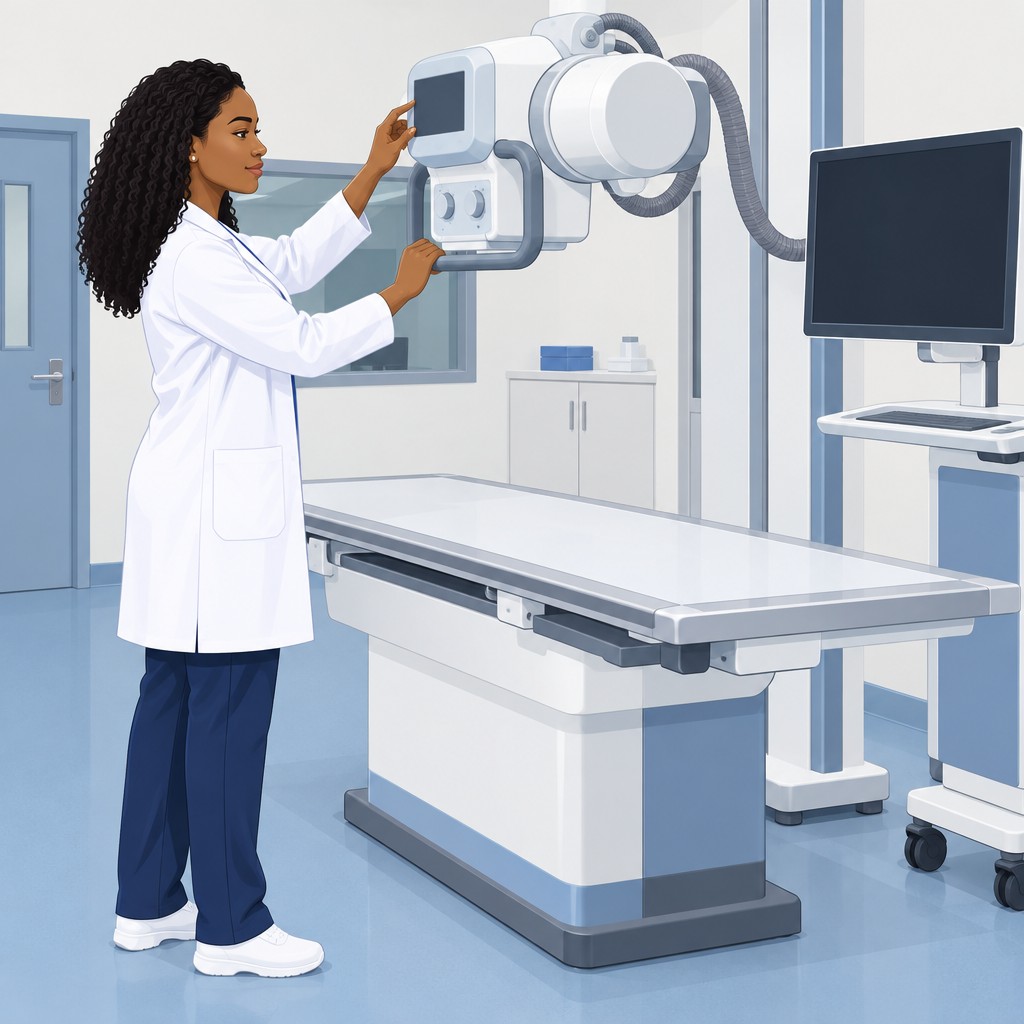
Financial Barriers to Radiography Technology
High costs create a major barrier to adopting new radiography technologies in Nigeria.
Healthcare facilities must fund equipment purchases and staff training before using advanced systems.
Because many hospitals and clinics operate with limited budgets, they may struggle to make these investments.
Training and Education Limitations
Limited access to training and education also restricts technology adoption in Nigerian radiography.
Healthcare professionals may lack the skills and knowledge required to operate advanced radiography equipment.
Consequently, improper equipment use could compromise the quality of patient care.
Resistance to Changing Traditional Practices
Some healthcare professionals resist replacing familiar radiography methods with newer technologies.
Instead, they may continue using conventional practices because those methods feel more familiar.
As a result, resistance can slow innovative technique adoption and restrict healthcare service advancement.
Strengthening Radiography Technology Adoption
Healthcare facilities can improve adoption by addressing financial barriers and expanding training opportunities.
Additionally, professionals can encourage innovation by supporting effective changes in radiography practice.
These efforts can help Nigeria strengthen radiography services and improve patient care outcomes.
Learn More: Challenges Facing Medical Biochemistry in Nigeria
Initiatives to Promote Technological Advances in Radiography
Several initiatives can promote technological advances in Nigerian radiography.
These initiatives connect professionals with expertise, equipment, training, and research opportunities.
Together, they can strengthen radiography practice and support locally relevant technological development.
Collaboration with International Organizations
International partnerships help Nigerian radiographers stay updated with global advancements.
Furthermore, these partnerships can provide equipment, training, and knowledge-sharing opportunities.
By working with global experts, Nigerian radiographers can enhance their professional skills.
Training Programs for Radiographers
Specialized training programs prepare radiographers to use advanced technology effectively.
Additionally, continuing education and workshops improve understanding of new radiography tools.
Equipment-specific training can increase the efficiency and accuracy of diagnostic procedures.
Research and Development in Medical Imaging Technology
Investment in research and development can foster innovation in radiography techniques and equipment.
Moreover, local research initiatives can produce solutions tailored to Nigeria’s healthcare needs.
Radiography advances require continued commitment to medical imaging research and development.
Technological advances in radiography have reshaped healthcare delivery in Nigeria.
They support diagnostic accuracy, treatment planning, and patient outcomes across the country.
Improved Patient Care
Healthcare professionals can use advanced imaging technology to assess patients more effectively.
Earlier disease detection allows clinicians to begin treatment promptly.
Consequently, patients may experience improved outcomes and higher survival rates.
Enhanced Training and Education
Radiography technology also strengthens training opportunities for Nigerian healthcare professionals.
Students can practice with state-of-the-art equipment before entering their careers.
This practice helps prepare students for their professional responsibilities.
Cost-Effective Radiography Solutions
Advanced radiography technology can require substantial initial investment.
However, accurate and efficient diagnostics can produce savings over time.
Patients may need fewer follow-up procedures, which can reduce overall healthcare costs.
Continued Development of Radiography Services
These advances demonstrate the importance of technological progress in Nigerian radiography.
Continued investment can support better patient care and healthcare outcomes.
Further development of this field should remain a healthcare priority.
Additional Resources
Google search results for Technological Advances in Radiography in Nigeria Health Sciences
Bing search results for Technological Advances in Radiography in Nigeria Health Sciences


