



Roles of Radiography and Radiology
Radiography and radiology are fundamental components of the medical field.
Radiography involves capturing body images using x-rays to diagnose and treat medical conditions.
Radiology is the medical specialty that interprets these images to provide accurate diagnoses.
Both radiography and radiology play crucial roles in modern medicine by facilitating early disease detection.
These imaging techniques help physicians make informed decisions about patient care and treatment.
Radiography usually begins the diagnostic process by providing images for radiologists to analyze.
Radiology encompasses imaging techniques like x-rays, MRIs, CT scans, ultrasounds, and nuclear medicine scans.
Using these imaging modalities, radiologists provide comprehensive assessments of a patient’s health status.
Radiographers and radiologists collaborate closely to ensure accurate diagnoses and optimal treatment plans.
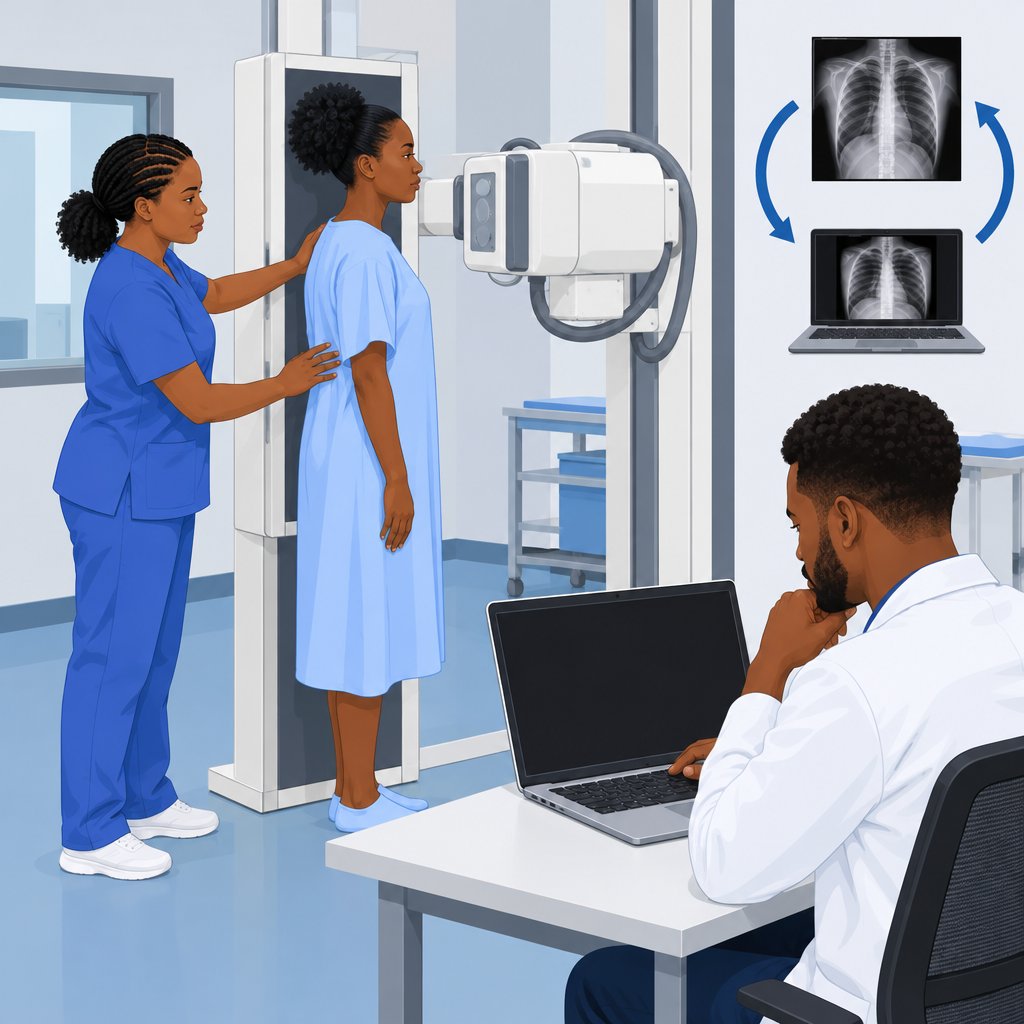
Radiographers operate imaging machines, while radiologists interpret images and provide diagnostic reports to treating physicians.
Radiography and radiology work together to improve patient outcomes and enhance healthcare quality.
Definition and Scope
Radiography uses X-rays to create images of structures inside the body.
Radiology interprets medical images to help diagnose and treat diseases.
The scope includes X-ray exams, CT scans, MRIs, and mammograms.
- Radiographers capture images while working directly with patients.
- Radiologists analyze images and use their findings to make diagnoses.
Shared Contributions to Healthcare
Both fields support modern healthcare through medical imaging.
Together, they help healthcare professionals diagnose and monitor many medical conditions.
Radiographers and radiologists often collaborate within multidisciplinary healthcare teams.
- Both fields visualize internal structures for patient assessment.
- Both rely on medical imaging technology to support clinical decisions.
- Both contribute to comprehensive patient care through professional cooperation.
Professional Differences
Radiography centers on obtaining images through several imaging modalities.
Radiology centers on interpreting images and guiding diagnosis or treatment.
These different responsibilities create distinct professional roles within medical imaging.
- Radiographers perform imaging procedures and maintain direct patient contact.
- Radiologists interpret images and may perform biopsies or image-guided interventions.
- Radiographers capture clinical images, whereas radiologists evaluate their findings.
Educational Requirements for Imaging Professionals
Career preparation requires education, practical training, certification, and professional licensing.
Radiographers and radiologists follow different educational pathways for their professional responsibilities.
Both careers require significant time and effort before individuals can practice successfully.
Radiographer Education and Certification
Prospective radiographers typically earn an associate or bachelor’s degree from an accredited radiography program.
These programs teach anatomy, physiology, patient care, radiation physics, and image evaluation.
Students also complete clinical rotations to gain hands-on experience in medical settings.
After completing their program, candidates must pass the American Registry of Radiologic Technologists exam.
The ARRT exam certifies radiographers and supports their professional licensure.
Radiologist Training and Qualifications
Radiologists are medical doctors who specialize in diagnosing and treating conditions through medical imaging.
They begin by completing a bachelor’s degree before entering medical school.
Medical school typically requires four years and leads to an MD or DO degree.
After medical school, aspiring radiologists complete a four-year radiology residency.
During residency, they train in imaging techniques and diagnostic procedures.
Some radiologists pursue fellowship training in subspecialties such as neuroradiology or interventional radiology.
Following residency and fellowship training, radiologists seek board certification through the American Board of Radiology.
The ABR exam evaluates their knowledge and skills in radiology.
Professional Licenses and Ongoing Certification
Both professions require appropriate certifications and licenses before professionals practice independently.
Radiographers renew ARRT certification every two years by completing continuing education requirements.
Radiologists maintain professional credentials through board certification from the American Board of Radiology.
This certification demonstrates that radiologists meet established standards of knowledge and skill.
Transform Your Career with Expert Guidance
Get personalized mentorship consulting that’s tailored to your unique path. Our expert advice is actionable and exclusive.
Get StartedTherefore, education and credentialing provide the foundation for successful careers in radiography and radiology.
Explore Further: Nutrition and Dietetics: Ethical Considerations Nigeria
Radiographer Responsibilities
Radiographers support patient care by conducting imaging procedures requested by physicians.
They help produce images that assist diagnosis and treatment.
During each exam, they prioritize patient safety, comfort, and accurate positioning.
- Radiographers perform X-rays, CT scans, MRIs, and other requested imaging procedures.
- They follow strict protocols that protect patients during imaging examinations.
- They position patients correctly to obtain accurate images and reduce radiation exposure.
- They operate and maintain imaging equipment for reliable performance and quality images.
- They collaborate with radiologists and healthcare professionals when reviewing imaging results.
Radiologist Responsibilities
Radiologists are medical doctors who interpret medical images to diagnose and treat diseases.
They evaluate studies and communicate findings to physicians involved in patient care.
They also may perform procedures guided by imaging.
- Radiologists review and interpret X-rays, CT scans, MRIs, and ultrasounds.
- They consult referring physicians about findings and possible diagnostic tests or treatments.
- They perform image-guided procedures, including biopsies and drainage procedures.
- They provide reports and recommendations based on imaging findings.
- They stay current with imaging technology and techniques to improve diagnostic accuracy.
Differences Between Clinical Roles
Radiographers interact directly with patients during imaging examinations.
They follow protocols established by radiologists and referring physicians.
Radiologists focus on interpretation, diagnostic decisions, and recommendations for care.
Radiologists also collaborate with healthcare professionals to develop treatment plans.
Therefore, radiographers emphasize safe image acquisition, while radiologists guide clinical decisions.
Uncover the Details: Spotlight on Nigerian Dietetics Research Papers
Equipment and Technology in Medical Imaging
Radiography tools primarily capture images of structures inside the body.
Radiographers use several types of equipment during imaging procedures.
These tools support the production of images for medical evaluation.
- X-ray machines produce electromagnetic radiation to create images.
- Computed Radiography systems use imaging plates to capture X-ray images.
- Digital Radiography systems use digital sensors to capture X-ray images.
- Fluoroscopy machines provide real-time imaging during medical procedures.
Radiology uses additional technologies to support image interpretation and diagnosis.
These technologies provide detailed views of internal structures and bodily functions.
Radiologists use several advanced imaging systems during diagnostic evaluations.
- Magnetic Resonance Imaging uses magnetic fields and radio waves to create detailed images.
- Computed Tomography scanners use X-rays to create cross-sectional body images.
- Ultrasound machines use high-frequency sound waves to produce internal images.
- Nuclear medicine imaging uses radioactive substances to create diagnostic images.
How Imaging Technology Supports Patient Care
Radiography equipment generally offers simpler functions focused on capturing static images.
Radiology equipment provides more advanced imaging and supports detailed analysis.
Therefore, each field contributes differently to the diagnostic process.
Radiographers capture initial images that help healthcare professionals assess medical conditions.
Their work provides a baseline for further investigation by radiologists.
Meanwhile, radiologists interpret advanced images and develop precise diagnostic assessments.
MRI, CT scans, and other technologies help radiologists understand patient conditions more comprehensively.
As a result, imaging findings can support informed treatment decisions.
Radiography and radiology share the goal of diagnosing medical conditions through imaging.
However, their equipment and technologies reflect their different roles in patient care.
See Related Content: Pathology Labs and Facilities in Nigeria
Radiography Specializations
Radiography includes focused practice areas that support different imaging services.
These areas let professionals concentrate on specific technologies and patient needs.
Each specialization supports a distinct role within medical imaging practice.
- Mammography specialists perform breast imaging that supports early breast cancer detection.
- Computed tomography technologists create detailed cross-sectional images using CT scanners.
- Magnetic resonance imaging technologists use magnetic fields and radio waves to image internal organs and tissues.
- Nuclear medicine technologists use radioactive materials to diagnose and treat medical conditions.
- Ultrasound sonographers use sound waves to produce diagnostic images of the body.
Radiology Subfields
Radiology contains several subfields that address different imaging and interpretation needs.
Each subfield emphasizes particular body systems, procedures, or imaging materials.
These areas help radiologists develop focused expertise within medical imaging.
- Diagnostic radiologists interpret medical images to help diagnose and treat diseases and injuries.
- Interventional radiologists perform minimally invasive procedures with imaging guidance.
- Nuclear radiologists interpret images produced with radioactive substances.
- Neuroradiologists focus on imaging the brain, spinal cord, and central nervous system.
- Musculoskeletal radiologists image bones, joints, and related soft tissues.
Career Paths Through Specialization
Specialization can influence the work settings and opportunities available to imaging professionals.
For example, mammography technologists may work in women’s health clinics or breast imaging centers.
Similarly, specialized training can improve competitiveness for positions requiring focused technical knowledge.
Professionals with specialized expertise may also qualify for advancement and increased earning potential.
Furthermore, specialization supports professional growth by deepening knowledge within a selected imaging area.
Experienced specialists can contribute to improvements in imaging technology and professional practice.
Therefore, radiography and radiology specialties offer varied routes for development within medical imaging.
Gain More Insights: Radiography Specializations: Options Available in Nigeria
Career Opportunities and Growth
Career prospects for radiographers remain promising because healthcare settings steadily need imaging services.
Meanwhile, radiologists access diverse opportunities through specialized medical image interpretation.
Technology advances create additional specialties and leadership pathways for both professions.
- Radiographers can find promising jobs as healthcare settings steadily need imaging services.
- They may work in hospitals, clinics, imaging centers, or research facilities.
- As technology advances, new opportunities emerge across various specialties.
- For example, MRI, CT, and mammography specialties offer additional career paths.
- Radiologists also access broad opportunities through specialized medical image interpretation.
- They can work in hospitals, private practices, academic institutions, or teleradiology services.
- Additionally, subspecialties include neuroradiology, musculoskeletal radiology, and interventional radiology.
- They may also pursue research, teaching, or administrative roles within radiology.
- Radiographers can advance by earning certifications and specializing in advanced imaging techniques.
- With experience and further education, they may become chief technologists or department managers.
- Furthermore, some move into education, instruction, sales, or marketing for imaging equipment companies.
- Others explore quality assurance, radiation safety, or regulatory compliance roles.
- Radiologists can advance by completing fellowships in radiology subspecialties.
- They may become private practice partners, academic department chairs, or imaging center directors.
- Moreover, leadership roles in professional organizations allow them to influence policy and advocacy.
- Research, publishing, and conference presentations can help them advance knowledge and expertise.
Collaboration and Career Potential in Medical Imaging
Radiography and radiology remain distinct but interconnected fields within healthcare.
Radiography captures body images through various imaging techniques.
Radiology interprets those images to support diagnosis and treatment.
These fields differ in patient involvement, practice scope, and educational requirements.
Radiographers work directly with patients while capturing images.
Radiologists are specialized physicians who interpret images and help diagnose conditions.
Therefore, both professions contribute essential expertise to patient care.
Radiographers obtain high-quality images that support clinical decisions.
Radiologists analyze those images and provide treatment recommendations.
Without their collaboration, accurate diagnoses and effective care would become more difficult.
Moreover, both professions offer rewarding healthcare careers with opportunities for growth and advancement.
People who enjoy hands-on patient interaction may prefer radiography.
Those who prefer analyzing complex medical images may choose radiology.
As technology advances, healthcare providers will continue needing skilled imaging professionals.
Consequently, interested individuals can explore either path according to their skills and goals.
Additional Resources
Google search results for Radiography vs. Radiology: Key Differences Explained Health Sciences
Bing search results for Radiography vs. Radiology: Key Differences Explained Health Sciences


