



Introduction
A prosthesis replaces a missing body part.
Recent advances in prosthetic technology improve functionality and quality of life.
In Nigeria, supporting organizations help individuals with limb loss access innovative and affordable prosthetic solutions.
Additionally, these organizations provide resources, training, and support for patients and healthcare professionals.
Consequently, they promote inclusivity and empowerment within the community.
Overview of Prosthesis Technology
Prosthesis technology develops artificial body parts for people with missing or damaged limbs.
Designers create these devices to improve function, appearance, comfort, and mobility.
Each prosthetic device receives customization according to the individual’s anatomy and needs.
Definition of Prosthesis
A prosthesis is an artificial device that replaces a missing body part.
Specialists customize each device to fit the user’s anatomy.
The device provides support and assists movement during daily activities.
Types of Prosthetics Available
Prosthetic devices serve different purposes depending on the missing limb and the user’s requirements.
Some designs restore movement, while others primarily replicate the limb’s appearance.
External support systems can also assist people with mobility impairments.
- Upper Limb Prosthetics: These devices replace all or part of a missing arm or hand.
- Lower Limb Prosthetics: These devices replace a missing foot, leg, or lower-limb section.
- Exoskeleton Prosthetics: These systems provide external support for people with mobility impairments.
- Cosmetic Prosthetics: These devices focus on reproducing the appearance of a missing limb.
Advancements in Prosthesis Technology
Recent developments have expanded the functionality, comfort, and durability of prosthetic devices.
Engineers now combine electronic controls, customized production, sensors, and advanced materials.
These technologies help prosthetic limbs more closely mimic natural movement and appearance.
- Myoelectric Prosthetics: These devices use electrical muscle signals to control movement.
- 3D Printing: This process creates precise and customized devices quickly and affordably.
- Sensor Technology: Sensors help devices adjust grip strength and movement through feedback.
- Nanotechnology: This technology supports lighter, stronger, and more durable prosthetic materials.
Nigerian Organizations Supporting Prosthesis Technology
Several organizations in Nigeria support prosthesis technology for people with limb loss.
These organizations provide resources, funding, and education related to prosthetic solutions.
Their support helps improve access to prosthetic devices for individuals who need them.
The Need for Organizations Supporting Prosthesis Technology in Nigeria
Nigeria faces a substantial need for organizations that support prosthesis technology.
Accidents, illnesses, and conflicts have increased the number of people requiring prosthetic limbs.
These organizations can help more individuals regain mobility, functionality, and independence.
High Demand for Prosthetic Limbs
Nigeria’s large population contributes to significant demand for prosthetic services.
Furthermore, accidents and illnesses can leave individuals needing artificial limbs.
Conflicts have also increased the number of people seeking prosthetic support.
Limited Access to Affordable Prosthetics
Many Nigerians cannot afford the high cost of prosthetic limbs.
Additionally, limited insurance coverage makes prosthetic technology even less accessible.
Consequently, many people who need prosthetics remain unable to obtain suitable options.
Organizational Support for Prosthetic Access
Supporting organizations can connect people with affordable prosthetic limbs.
They can work with manufacturers, medical professionals, and other partners.
Moreover, these partnerships can improve the availability of prosthetic technology.
Rehabilitation and Adaptation Services
Organizations may also provide rehabilitation services for people receiving prosthetic limbs.
They can offer training that helps individuals adapt to their new limbs.
Through this support, recipients can better use prosthetics in daily activities.
See Related Content: Historical Development of Anatomical Pathology in Nigeria
Nigerian Organizations Supporting Prosthesis Technology
Several Nigerian organizations support prosthesis technology and improve access to prosthetic care.
These organizations help people with physical disabilities pursue greater independence and fulfillment.
They combine awareness efforts, funding, medical collaboration, rehabilitation, and professional advocacy.
- The Bridge Clinic Foundation
- The Body Mechanics
- Society of Nigerian Doctors for the Physically Challenged
The Bridge Clinic Foundation
The Bridge Clinic Foundation supports prosthesis technology in Nigeria.
Transform Your Career with Expert Guidance
Get personalized mentorship consulting that’s tailored to your unique path. Our expert advice is actionable and exclusive.
Get StartedThe organization recognizes how quality prosthetic limbs can improve daily life for people with physical disabilities.
Its programs raise awareness about prosthesis technology and provide funding for people who need prosthetic devices.
The foundation also collaborates with medical professionals to improve access to current prosthetic advancements.
The Body Mechanics
The Body Mechanics creates custom prosthetic limbs for people with specific needs.
Its team tailors each device to support an appropriate fit and practical functionality.
The organization also provides rehabilitation programs for people adapting to prosthetic limbs.
Additionally, it works with medical professionals and orthopedic specialists to support client care.
Society of Nigerian Doctors for the Physically Challenged
The Society of Nigerian Doctors for the Physically Challenged brings together medical professionals.
Its members work to improve life quality for people with physical disabilities.
The society advocates for advances in prosthesis technology and better access to essential support.
It also provides training and educational programs that strengthen professional knowledge about prosthetic care.
Through collaboration with other stakeholders, the society supports a more comprehensive prosthetic care system.
Collaborative Support for Prosthetic Care
These organizations contribute significantly to prosthesis technology and disability support in Nigeria.
Their combined efforts help people with physical disabilities access resources and pursue improved quality of life.
Continued awareness, funding, collaboration, and advocacy can strengthen prosthetic care for people who need it.
Learn More: Physiotherapy for Chronic Pain: Nigerian Perspective
Initiatives and Programs Supporting Prosthesis Technology
Nigerian organizations support prosthesis technology through practical programs for people who need limb replacement.
These programs combine equipment, rehabilitation, and public education.
Together, they address financial, physical, and emotional challenges associated with limb loss.
Free Prosthetic Limb Distribution
Organizations provide free prosthetic limbs to amputees who cannot afford them.
This support can improve mobility and help recipients manage daily activities.
Additionally, organizations work with prosthetic manufacturers to promote proper fitting and suitable quality.
They also arrange follow-up care and adjustments for comfort and functionality.
Rehabilitation Services for Amputees
Organizations also offer rehabilitation services after limb loss.
These services may include physical therapy, occupational therapy, and psychological support.
Therapists help amputees learn to use prosthetic limbs and adapt to daily tasks.
Furthermore, counseling and support groups address emotional challenges linked to limb loss.
Education and Awareness Campaigns
Education and awareness campaigns explain the benefits of prosthesis technology.
Workshops, seminars, and outreach programs introduce available prosthetic limb options.
These activities also challenge stigma and encourage greater acceptance of limb differences.
Moreover, organizations collaborate with schools and community groups to promote inclusion.
Greater awareness can encourage people with limb loss to seek appropriate support.
Delve into the Subject: Biomedical Technology vs Biomedical Engineering
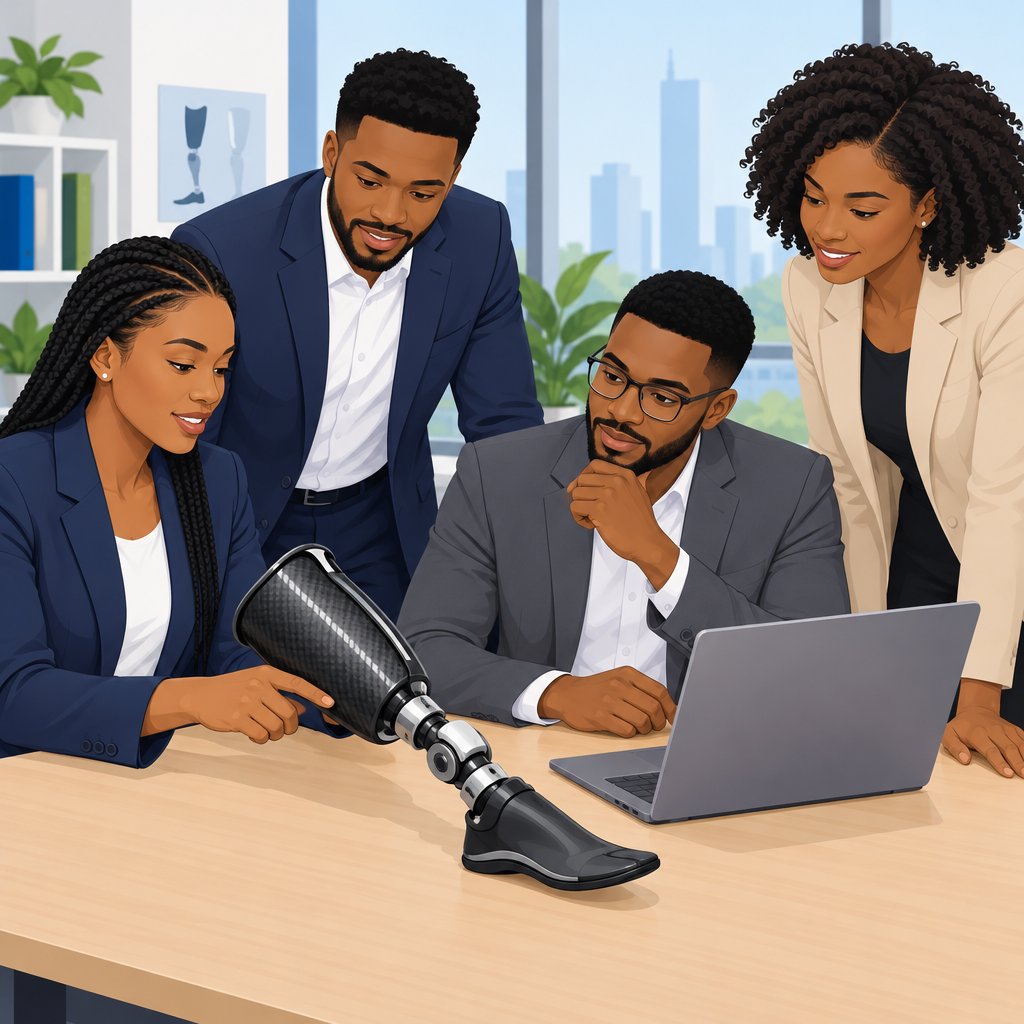
Success Stories from Prosthetic Support Organizations
Receiving a prosthetic limb has changed many individuals’ lives across Nigeria.
These individuals describe how prosthetics have improved their mobility and daily experiences.
Their testimonials show how prosthetic support can help people regain independence.
Personal Testimonials from Amputees with Prosthetics
Mary lost her leg in a car accident.
After a Nigerian organization provided her with a prosthetic leg, she regained mobility.
She expressed gratitude for the support and assistance she received.
Similarly, James lost his arm in a work-related accident.
With a prosthetic arm, he continued working and providing for his family.
These experiences demonstrate the meaningful effects of prosthetic technology on individuals’ lives.
Improved Quality of Life and Mobility
Many prosthetic users now participate in daily activities more easily.
For example, prosthetic technology can support walking, running, and participation in sports.
Greater independence and mobility can also strengthen mental and emotional well-being.
These outcomes highlight the value of organizations supporting prosthetic technology in Nigeria.
By providing prosthetic limbs, organizations can improve physical health and overall quality of life.
The resilience of prosthetic users can inspire others facing similar challenges.
Find Out More: Medical Microbiology Internships in Nigeria
Challenges Faced by Organizations Supporting Prosthetic Technology in Nigeria
Organizations supporting prosthetic technology in Nigeria face several challenges when helping people who need these services.
These challenges include financial limitations, limited awareness, and insufficient government support.
Addressing these barriers requires cooperation among organizations, government agencies, private donors, and civil society.
Funding and Resource Limitations
Funding remains a major challenge for organizations supporting prosthetic technology in Nigeria.
Developing and providing prosthetic devices requires significant financial resources.
Consequently, limited funding restricts material purchases, professional recruitment, and expansion into more communities.
Government Awareness and Support
Government awareness and support also remain limited for prosthetic care initiatives.
Although government agencies support healthcare initiatives, prosthetic care receives insufficient attention.
Therefore, organizations often depend on private donations and partnerships to maintain their operations.
Accessibility in Rural Areas
Rural accessibility creates another serious obstacle for prosthetic support organizations.
Many people in remote villages cannot easily reach prosthetic services.
Poor infrastructure, limited transportation, and inadequate healthcare facilities intensify these access difficulties.
Organizations, government agencies, private donors, and civil society must collaborate to address these barriers.
Such cooperation can improve access to quality prosthetic care for people with limb loss.
It can also help organizations reach underserved communities and provide essential support more consistently.
International Collaboration for Prosthesis Technology
International partnerships can strengthen prosthesis technology support in Nigeria.
Local organizations can access expertise, resources, and advanced technology through global collaboration.
These relationships can expand the options available to people who use prosthetic devices.
Partnerships with Global Prosthetics Companies
Global prosthetics companies invest heavily in research and development.
Consequently, Nigerian organizations can learn about state-of-the-art devices through collaboration.
These devices can improve daily experiences for people who use prosthetic limbs.
International partners can also train local technicians and provide ongoing support.
Training and Skill Development for Local Technicians
Nigerian organizations also need strong training and skill development programs for local technicians.
Skilled local technicians help ensure that patients receive suitable care.
Therefore, organizations should combine formal education, practical experience, and continuing learning.
These efforts can strengthen the future workforce for prosthetic services in Nigeria.
- Organizations can collaborate with universities to create formal prosthetic technician training programs.
- These programs can teach prosthetic technology, fitting techniques, and patient care.
- Workshops can give technicians practical experience with fitting and adjusting prosthetic devices.
- Experienced professionals can guide technicians during hands-on training sessions.
- Continuing education can help technicians follow new prosthetic technologies and techniques.
Organizations in Nigeria play a crucial role in supporting individuals who need prosthetic care.
Notably, the Ogbonnaya Foundation provides prosthetic limbs.
It offers financial and emotional support to people who need prostheses.
Additionally, the organization runs awareness campaigns that educate the public.
Meanwhile, the LimbCare Foundation provides prosthetic services.
Through its work, the foundation helps amputees regain independence and confidence.
Together, these organizations improve the quality of life for amputees.
By expanding access to prosthetic technology, they help individuals live more fully.
Furthermore, their efforts help many Nigerians reintegrate into society.
Continued support remains essential for advancing prosthetic technology in Nigeria.
Greater support and awareness could help more people receive needed services.
Therefore, collective action can help create a more inclusive society.
Strengthening Prosthetic Support in Nigeria
These organizations provide more than physical assistance to people with prosthetic needs.
They also help restore dignity and confidence.
Continued support can strengthen their work and improve future access.
Raising awareness can encourage broader support for people who need prostheses.
Additional Resources
Google search results for Nigerian Organizations Supporting Prosthesis Tech Medical
Bing search results for Nigerian Organizations Supporting Prosthesis Tech Medical


