




Current State of Pharmaceutical Technology in Nigeria
Nigeria’s pharmaceutical technology sector continues to grow.
However, the sector still faces several challenges.
These challenges affect the sector’s ongoing development.
Challenges Faced in the Industry
Limited infrastructure hinders pharmaceutical technology development.
Furthermore, inadequate funding restricts progress across the industry.
An inadequate regulatory framework also creates additional barriers.
Importance of Technological Advancements in Healthcare
Enhanced pharmaceutical technology can improve drug production.
It can also increase access to medicines.
Additionally, technological advancements can enhance patient care.
Current Pharmaceutical Technology Infrastructure in Nigeria
- Nigerian pharmaceutical infrastructure includes laboratories, manufacturing plants, and research facilities.
- Furthermore, companies use technology for drug development, quality control, and inventory management.
- Major industry participants include May & Baker, Chi Pharmaceuticals, and Emzor.
Technology’s Impact on Pharmaceutical Processes
- Technology has improved efficiency and productivity across pharmaceutical processes in Nigeria.
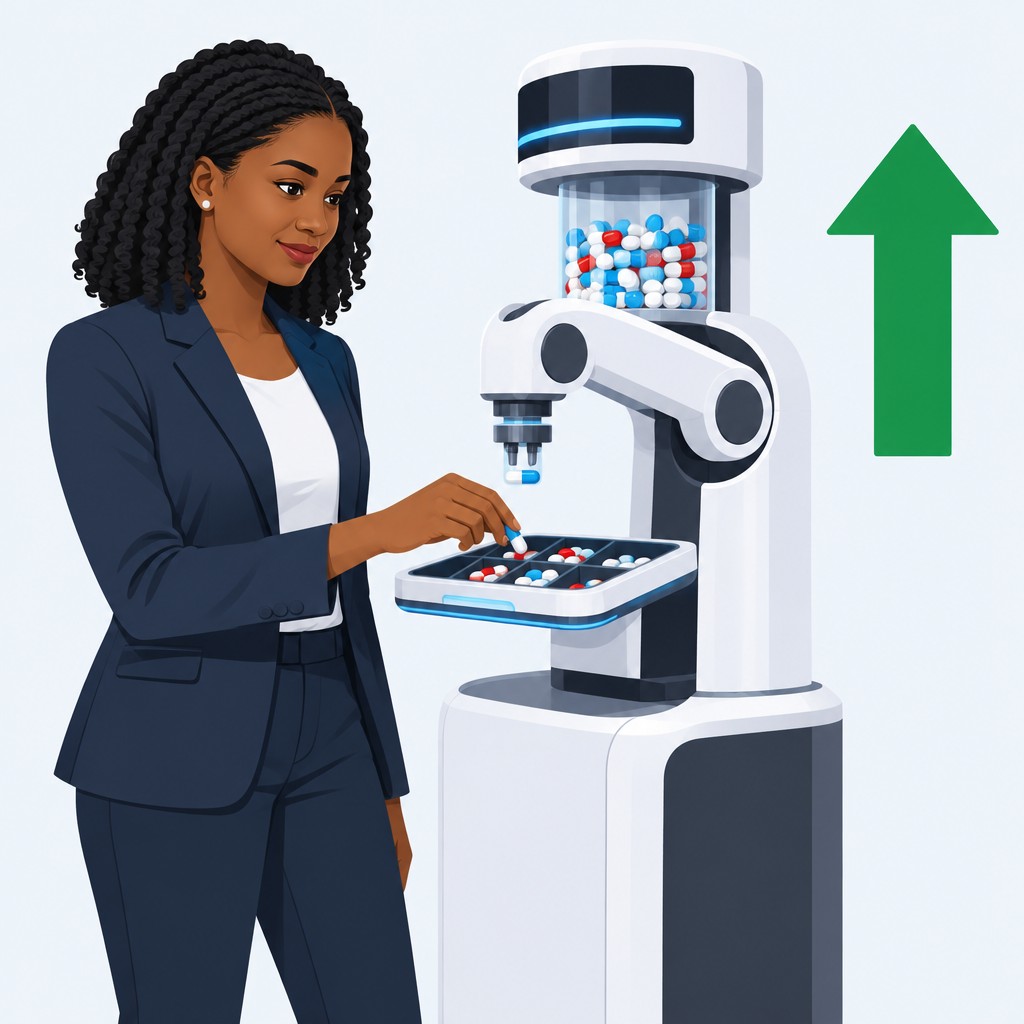
- Moreover, automation streamlines production, reduces human error, and supports quality control standards.
- Digital tools, including Electronic Health Records, improve patient care and medication management.
Challenges and Opportunities in Pharmaceutical Technology
- Inadequate funding limits research and development of advanced pharmaceutical technologies.
- However, partnerships with foreign firms can provide access to new technologies and expertise.
- Government tax breaks and grants could encourage investment in pharmaceutical technology.
Emerging Trends in Pharmaceutical Technology
- Personalized medicine uses genetic data to tailor treatments to individual patients.
- Additionally, artificial intelligence and machine learning analyze data for drug discovery and development.
- Nanotechnology supports targeted drug delivery while improving efficacy and minimizing side effects.
Regulatory Oversight of Pharmaceutical Technology
- The National Agency for Food and Drug Administration and Control oversees drug approval and quality control.
- Manufacturers must follow international standards, including Good Manufacturing Practices, for market access.
- Regulatory bodies must update guidelines for safe and ethical technology use.
Strategic Priorities for Pharmaceutical Technology
- Nigeria’s pharmaceutical technology sector offers significant opportunities for innovation and growth.
- With suitable investments, partnerships, and regulations, Nigeria could develop advanced pharmaceutical capabilities.
- Stakeholders must collaborate to use technology effectively and improve healthcare delivery and outcomes.
Challenges Hindering Pharmaceutical Technology Advancements
- Regulatory barriers and policies affecting innovation
- Funding and investment challenges affecting research and development
- Shortages of skilled pharmaceutical technology professionals
Nigeria’s pharmaceutical technology sector faces several challenges that hinder future advancements.
Regulatory barriers and policies significantly influence innovation across the pharmaceutical industry.
Strict regulations can delay the introduction of new technologies and pharmaceutical products.
Lengthy approval processes often slow the adoption of innovative solutions.
Additionally, unclear and inconsistent regulatory frameworks create uncertainty for companies investing in research and development.
This uncertainty can discourage companies from introducing new technologies.
Consequently, limited innovation can restrict the sector’s growth.
Funding and investment challenges also limit pharmaceutical research and development.
Without adequate financial support, companies may struggle to complete essential studies and trials.
Limited funding sources and high development costs create significant barriers to technological advancement.
Furthermore, insufficient investment can impede innovation and slow progress across the field.
Nigeria also faces a shortage of skilled professionals in pharmaceutical technology.
Technological progress requires a workforce capable of developing and implementing new solutions.
However, trained professionals remain limited in pharmaceutical engineering, biotechnology, and data analytics.
This shortage reduces pharmaceutical companies’ capacity to drive innovation and improve healthcare outcomes.
Stakeholders must collaborate to address these barriers and strengthen technological advancement.
Regulatory bodies can streamline approval processes and provide clearer guidance.
Companies and other stakeholders can also secure stronger support for research and development.
Meanwhile, investment in professional training can expand the skilled workforce.
By addressing these challenges, Nigeria can create a more supportive environment for pharmaceutical innovation.
With sustained stakeholder commitment, the pharmaceutical sector can achieve stronger growth and development.
Find Out More: Overview of Experimental Pharmacology in Nigeria
Opportunities for Growth and Development
- Telemedicine and digital health solutions offer promising opportunities for innovation in Nigeria.
- International collaborations can provide expertise and resources for pharmaceutical technology advancements.
- Government initiatives and incentives can support healthcare technology projects and innovation.
Technology creates numerous growth opportunities in Nigeria’s pharmaceutical sector.
By leveraging these opportunities, Nigeria can improve healthcare outcomes.
It can also build a more efficient and effective healthcare system.
Telemedicine Services for Underserved Communities
Telemedicine uses technology to provide remote medical services.
These services can include consultations, diagnosis, and treatment.
Telemedicine can improve healthcare access for underserved populations in remote Nigerian communities.
Digital Health Solutions for Better Care
Digital health solutions include mobile applications, wearable devices, and cloud-based platforms.
These technologies can help healthcare providers deliver better patient care.
They can also strengthen patient engagement, improve outcomes, and reduce healthcare costs.
Transform Your Career with Expert Guidance
Get personalized mentorship consulting that’s tailored to your unique path. Our expert advice is actionable and exclusive.
Get StartedInternational Collaboration and Knowledge Transfer
International partnerships can drive technological advancements in pharmaceutical technology.
Nigerian pharmaceutical companies can access advanced technologies, research, and global best practices.
These collaborations can support knowledge transfer and capacity building within Nigeria’s pharmaceutical industry.
Government Support for Healthcare Innovation
Government initiatives and incentives can encourage technological advancements in healthcare.
The Nigerian government promotes healthcare innovation through programs such as the National Health ICT Strategic Framework.
This framework uses information and communication technology to enhance healthcare delivery and improve health outcomes.
Future Directions for Pharmaceutical Technology
Nigeria’s pharmaceutical technology sector holds significant promise for future growth.
Telemedicine, digital health, international partnerships, and government support can transform healthcare delivery.
These opportunities can expand access to quality healthcare services for Nigerian citizens.
See Related Content: Pharmacist Salaries and Job Outlook in Nigeria
Impact of Technology on Healthcare Delivery
- Advancements in pharmaceutical technology can enhance patient care and outcomes.
- Telemedicine and remote consultations can increase accessibility and convenience.
- Personalized medicine and precision healthcare can transform treatment strategies.
In recent years, technology integration into pharmaceutical practices has improved healthcare delivery in Nigeria.
These advancements can improve patient care and treatment outcomes.
First, pharmaceutical technology enables providers to personalize treatment plans.
Genetic testing and data analytics help providers tailor medication regimens to individual needs.
This approach can produce more effective treatment outcomes.
Additionally, telemedicine and remote consultations are increasingly popular in Nigeria’s underserved rural areas.
Patients can consult healthcare professionals remotely, reducing travel and improving access to medical care.
Moreover, telemedicine can streamline healthcare delivery through faster diagnoses and treatment plans.
Consequently, patients may experience better outcomes, lower costs, and greater system efficiency.
Furthermore, precision healthcare uses data-driven insights to optimize treatment strategies.
Providers can analyze patient data and biomarkers to improve diagnostic accuracy.
They can also tailor treatment plans to individual patients.
Therefore, technology has the potential to transform healthcare delivery in Nigeria.
As technology advances, pharmaceutical practices may support better patient care and outcomes.
Uncover the Details: Pharmaceutical Chemistry vs. Medical Chemistry in Nigeria
Adoption of Digital Health Solutions
Digital health solutions can improve pharmaceutical services and healthcare access in Nigeria.
They can also streamline operations, strengthen patient care, and extend services to underserved communities.
Furthermore, electronic records, telepharmacy, and telehealth can support more connected healthcare delivery.
Importance of Electronic Health Records
Electronic health records allow healthcare providers to access and share patient information electronically.
Consequently, EHRs can reduce errors, improve care coordination, and support real-time data exchange.
Within pharmaceutical services, EHRs enable accurate prescription processing and medication adherence monitoring.
Significance of Telepharmacy Services
Telepharmacy provides pharmaceutical services remotely through digital communication tools.
These services include medication counseling, therapy management, and prescription verification.
Therefore, patients in underserved areas can receive expert advice without traveling long distances.
Benefits of Telehealth in Rural and Underserved Communities
Telehealth connects patients with healthcare professionals through virtual consultations and digital platforms.
It also supports remote monitoring of chronic conditions and digital health education.
In rural communities, telehealth can connect remote populations with medical expertise and healthcare resources.
Examples of Successful Digital Health Initiatives in Nigeria
Several Nigerian digital health initiatives demonstrate technology’s potential to expand healthcare access.
These platforms support virtual consultations, diagnostic services, medication ordering, and pharmaceutical assistance.
Additionally, they show how digital tools can strengthen healthcare delivery across different communities.
- Babyl: Babyl provides virtual doctor consultations and health advice through mobile phones.
- MDaaS Global: MDaaS Global uses telemedicine and technology to improve access to diagnostic services.
- Seamless Pharmacy: Seamless Pharmacy enables patients to order medicines and access pharmaceutical services digitally.
These initiatives illustrate the transformative potential of digital health in Nigeria.
By adopting EHRs, telepharmacy, and telehealth, pharmaceutical services can improve efficiency and health outcomes.
Discover More: Regulatory Bodies Governing Clinical Pharmacy in Nigeria
Future Trends in Pharmaceutical Technology
Several emerging technologies are reshaping pharmaceutical technology and supporting more efficient healthcare solutions.
These developments include artificial intelligence, data analytics, 3D printing, and blockchain technology.
Together, they can improve drug discovery, medication production, and supply chain transparency.
- Artificial intelligence and data analytics are revolutionizing drug discovery processes.
- Three-dimensional printing is supporting the development of personalized medications.
- Blockchain technology is improving pharmaceutical supply chain management and drug tracking.
Artificial intelligence and data analytics are making significant advances in pharmaceutical technology.
Researchers can use these technologies to examine vast amounts of data efficiently.
By analyzing patterns, AI can help identify potential drug candidates more quickly.
It can also predict drug interactions, side effects, and efficacy with greater accuracy.
Meanwhile, 3D printing is changing how pharmacists produce personalized medications.
This technology allows pharmacists to create doses tailored to individual patients.
Consequently, personalized doses may improve treatment outcomes and reduce adverse reactions.
Furthermore, 3D printing can produce small batches of specialty drugs cost-effectively.
Blockchain technology is also gaining attention within pharmaceutical supply chain management.
Its secure and transparent structure allows stakeholders to track drug movements in real-time.
This tracking process can help prevent counterfeit medications and protect supply chain integrity.
These technologies could support groundbreaking pharmaceutical advancements in Nigeria.
They may improve drug discovery, personalize medication production, and strengthen supply chain transparency.
Ultimately, these advances can support better healthcare outcomes for the Nigerian population.
Strategic Priorities for Pharmaceutical Technology in Nigeria
The future of pharmaceutical technology in Nigeria holds strong potential to transform healthcare delivery.
Therefore, stakeholders must embrace technology to improve drug production, distribution, and patient care.
Government, industry leaders, and healthcare professionals should collaborate and invest in this sector.
Moreover, shared investment in research and development can strengthen Nigeria’s position in African pharmaceutical technology.
Prioritizing innovation and cutting-edge technologies can support growth and improve healthcare outcomes for Nigerians.
Additional Resources
Google search results for The Future of Pharmaceutical Technology in Nigeria Pharmaceutical
Bing search results for The Future of Pharmaceutical Technology in Nigeria Pharmaceutical


