




Child Health Policy in Nigeria
Government policies on child health shape the well-being of Nigeria’s younger population.
These policies matter because many children face difficulties accessing healthcare.
Therefore, effective health planning remains essential for Nigerian children.
Current Government Policies on Child Health
The Nigerian government implements the National Strategic Health Development Plan.
The plan focuses on improving maternal and child health.
It also seeks to reduce child mortality and expand quality healthcare access.
Challenges Affecting Children’s Healthcare Access
Despite these policies, children in Nigeria still face major healthcare barriers.
For example, rural areas often lack adequate healthcare infrastructure.
Consequently, children in those areas may struggle to receive timely medical care.
Additionally, poverty prevents many families from affording healthcare services.
This economic hardship can contribute to malnutrition and other health problems.
Priorities for Better Child Health
Government efforts have improved child health policy, but significant challenges remain.
Improving healthcare infrastructure would help children receive essential medical services.
Reducing poverty could also improve families’ ability to obtain healthcare.
Finally, broader healthcare access can help more Nigerian children lead healthy lives.
Historical Overview of Child Health Policies in Nigeria
- In earlier years, the Nigerian government introduced initiatives to improve child health.
- The National Program on Immunization protected children from preventable diseases.
- Additionally, the Child Rights Act emphasized children’s health and well-being.
- However, implementation faced several challenges and shortcomings.
- Consequently, immunization coverage increased, and awareness of child rights improved.
- Yet, many children lacked healthcare access and received inconsistent quality of care.
Current Child Health Policies in Nigeria
- Recently, the government launched the Basic Health Care Provision Fund.
- This fund aims to improve children’s access to primary healthcare services.
- The National Strategic Health Development Plan prioritizes child health.
- It targets lower child mortality and improved nutrition.
- Meanwhile, the government continues establishing primary healthcare centers.
- Authorities also train healthcare workers to provide quality child healthcare.
- Furthermore, UNICEF and WHO support government child health programs.
- Nevertheless, inadequate funding and resources continue to hinder progress.
- Stronger partnerships can help government agencies, organizations, and communities achieve better results.
Future Prospects and Recommendations for Child Health
- Future progress requires greater investment in healthcare infrastructure and human resources.
- Also, the government should monitor and evaluate child health programs.
- Such reviews can confirm program effectiveness and reach among target populations.
- Community engagement and education can increase awareness of child health and nutrition.
- Moreover, international partnerships can provide additional resources and expertise.
- Advocates should support breastfeeding, vaccination, and maternal healthcare policies.
- A sustainable system should consistently prioritize children’s health and well-being.
Current Status of Child Health in Nigeria
- Nigeria records about 120 child deaths per 1,000 live births.
- Malaria, pneumonia, malnutrition, and diarrhea commonly affect children.
- However, socio-economic differences limit access to healthcare services.
- Financial constraints prevent many children from receiving adequate medical care.
- Furthermore, rural communities face limited access to healthcare facilities.
- Consequently, children in rural areas experience higher mortality rates.
You Might Also Like: The Importance of Dental Therapy in Rural Areas
Key Government Policies on Child Health
- The government implements free primary healthcare services for children in Nigeria.
- Health authorities provide essential vaccines to prevent common childhood diseases.
- Support programs help eradicate malnutrition among vulnerable children.
Scope and Effectiveness
- Free primary healthcare services cover a wide range of medical needs.
- Vaccine programs have significantly reduced preventable diseases.
- Nutrition support programs have improved the overall health of children.
Find Out More: Success Stories in Medical Rehabilitation Nigeria
Challenges Facing Child Health Policy Implementation
Government policies on child health face barriers that weaken their implementation.
These barriers affect funding, infrastructure, workforce capacity, awareness, coordination, and accountability.
Addressing these challenges can help government agencies deliver child health services more effectively.
- Identify barriers that hinder government child health policies.
- Address funding, infrastructure, and human resource challenges.
Barriers to Successful Implementation
First, limited public awareness reduces understanding of child health policies.
Political instability and government changes can disrupt policy continuity.
Furthermore, weak coordination among agencies and stakeholders hinders effective implementation.
Finally, limited monitoring and evaluation create unclear accountability and obscure policy impacts.
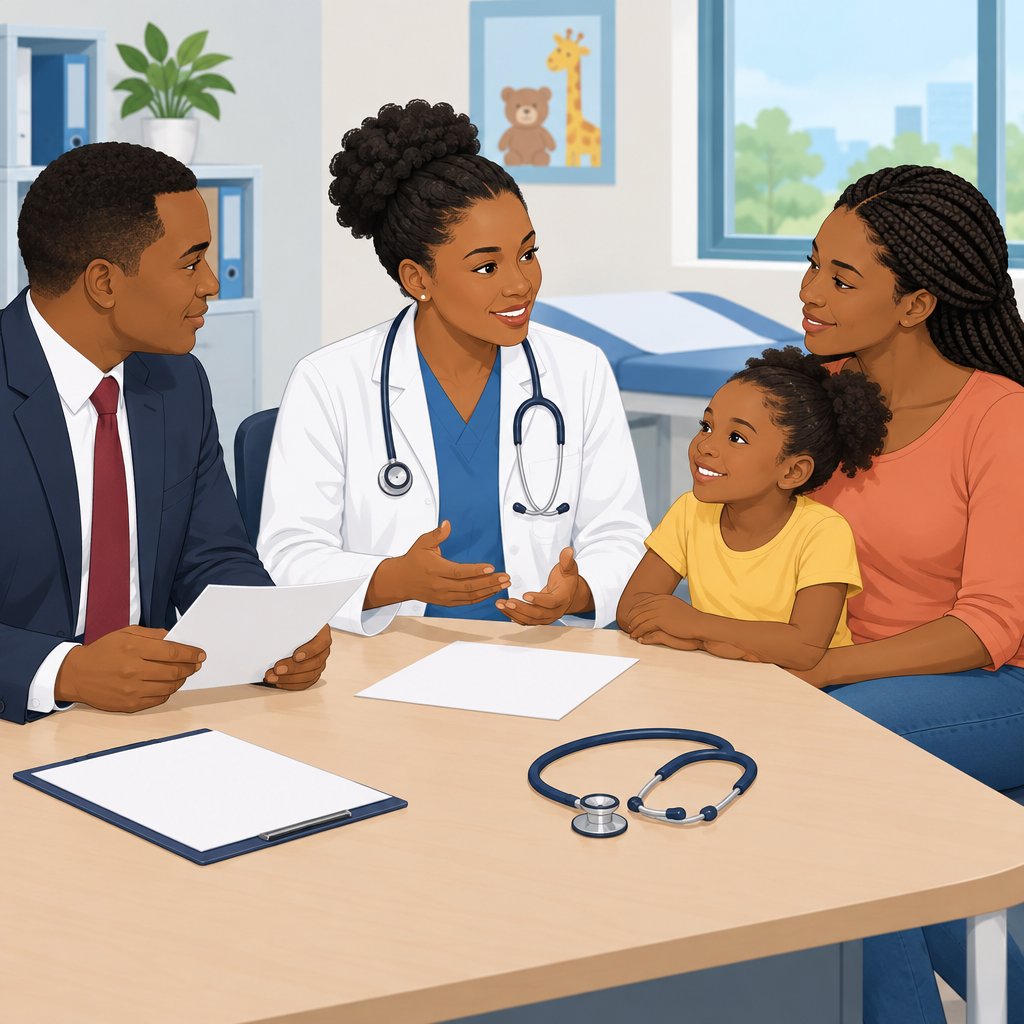
Funding Challenges Affecting Child Health Programs
Inadequate budget allocations limit the scope of child health interventions.
Moreover, delayed fund disbursement and resource mismanagement weaken implementation efforts.
Dependence on donor funding exposes programs to external influence and financial fluctuations.
Consequently, insufficient resources prevent successful interventions from expanding nationwide.
Infrastructure Challenges Limiting Access
Inadequate healthcare facilities in rural areas restrict access to essential child health services.
Additionally, limited medical equipment and supplies reduce the quality of pediatric care.
Poor transportation systems also limit healthcare access for children in remote communities.
Inadequate sanitation facilities further contribute to infectious diseases among children.
Human Resource Challenges in Child Healthcare
A shortage of skilled healthcare professionals impedes service delivery, especially in underserved areas.
Limited training and professional development opportunities affect healthcare workers’ quality of care.
Meanwhile, poor working conditions and low salaries increase staff turnover.
Insufficient workforce planning creates uneven health worker distribution and deepens disparities.
Strengthening Child Health Policy Implementation
Nigeria can improve child health policy implementation through coordinated action.
Therefore, government agencies should improve awareness, funding, infrastructure, and workforce capacity.
Overcoming these barriers can support children’s well-being and healthy development.
You Might Also Like: Alumni Success Stories from Nigerian Medical Schools
Transform Your Career with Expert Guidance
Get personalized mentorship consulting that’s tailored to your unique path. Our expert advice is actionable and exclusive.
Get StartedPartnerships between Nigeria and International Organizations
Nigeria has established partnerships with international organizations to improve child health outcomes.
The World Health Organization provides technical assistance and support for developing and implementing child health programs.
The United Nations Children’s Fund also supports child health initiatives in Nigeria.
- The United Nations Children’s Fund supports child health initiatives in Nigeria.
- UNICEF works with the Nigerian government to implement immunization programs and provide nutritional support.
- UNICEF also helps improve children’s access to healthcare services.
- The Bill & Melinda Gates Foundation has invested resources to address child health challenges in Nigeria.
Impact of Foreign Aid and Technical Assistance
Foreign aid and technical assistance have significantly influenced child health outcomes in Nigeria.
These resources improve immunization coverage, reduce child mortality, and expand access to essential healthcare services.
Technical assistance helps Nigeria develop policies and programs that prioritize child health and well-being.
- Foreign aid helps Nigeria strengthen healthcare infrastructure and train healthcare workers.
- It also supports evidence-based interventions that prevent and treat childhood illnesses.
- International organizations help Nigeria develop policies and programs that prioritize child health.
Discover More: Managing High-Risk Pregnancies in Nigeria
Community Engagement and Empowerment
Community participation plays a crucial role in safeguarding child health.
When local residents support child well-being initiatives, the entire community benefits.
This collaborative approach helps children receive necessary support and resources to thrive.
Strategies for Empowering Families and Local Communities
- Education and Awareness: Families learn about nutrition, hygiene, and preventive healthcare measures.
- Training and Capacity Building: Workshops equip community members to address child health issues.
- Advocacy and Networking: Families advocate for child health rights and connect with community stakeholders.
- Resource Mobilization: Communities access resources and funding for child health programs and initiatives.
- Collaboration with Healthcare Providers: Families, leaders, and professionals strengthen child health services together.
Consequently, families and communities can prioritize children’s well-being.
Furthermore, informed decisions help create a sustainable framework for promoting child health in Nigeria.
Therefore, the entire community benefits when people use knowledge and resources effectively.
Future Directions and Recommendations
Nigeria can improve child health by strengthening healthcare systems, funding programs, and addressing social conditions.
These recommendations support wider access to essential services for children and families.
Additionally, technology and community-focused approaches can help extend healthcare services to underserved populations.
Strengthening Primary Healthcare Systems
Strong primary healthcare systems can improve access to essential services for children.
Furthermore, better infrastructure can support consistent and higher-quality care.
Training and deploying healthcare workers can help services reach children at the grassroots level.
- Investing in primary healthcare infrastructure can improve accessibility and quality of care.
- Training and deploying more healthcare workers can expand grassroots healthcare coverage.
Increasing Funding for Child Health Programs
Additional funding can help child health programs expand their coverage and impact.
Moreover, adequate resources can support essential services for more children.
Public-private partnerships can provide further financial support for important healthcare activities.
- Allocating more resources can strengthen child health programs and expand their reach.
- Exploring public-private partnerships can provide additional funding for essential services.
Improving Nutrition Interventions
Nutrition interventions can improve the health status of children experiencing malnutrition.
Targeted programs can address nutritional needs among vulnerable children.
Caregiver education can encourage proper feeding practices and support breastfeeding.
- Implementing nutrition programs can support malnourished children and improve their health status.
- Educating caregivers can promote proper feeding practices and breastfeeding.
Enhancing Immunization Coverage
Expanded immunization coverage can help protect more children from preventable diseases.
Reaching remote areas requires stronger campaigns and reliable community-based communication.
Health education can also address vaccine hesitancy through informed community engagement.
- Strengthening immunization campaigns can reach more children, especially in remote areas.
- Community engagement and health education can address vaccine hesitancy.
Prioritizing Maternal and Child Health Services
Comprehensive maternal and child health services can support mothers and children together.
These services can promote well-being throughout pregnancy and childhood.
Stronger antenatal care can help monitor and support women during pregnancy.
- Providing comprehensive services can protect the well-being of mothers and children.
- Strengthening antenatal care can support women throughout their pregnancies.
Addressing Socioeconomic Determinants of Health
Social and economic conditions strongly influence children’s access to healthcare and healthy living environments.
Policies addressing poverty and education can support better child health conditions.
Clean water, sanitation, and hygiene can help prevent diseases among children.
- Implementing policies on poverty, education, and social factors can support child health.
- Promoting clean water, sanitation, and hygiene can help prevent diseases.
Advancing Technology and Innovation in Healthcare
Technology can extend healthcare services to underserved populations.
Telemedicine and digital health solutions can improve access to healthcare support.
Research and development can strengthen the diagnosis and treatment of childhood illnesses.
- Using telemedicine and digital health solutions can reach underserved populations.
- Encouraging research and development can improve childhood illness diagnosis and treatment.
Implementing these recommendations can help Nigeria improve child health outcomes.
Innovative solutions can also support a healthier future generation.
Government Action for Better Child Health in Nigeria
Government policies on child health in Nigeria play a crucial role in safeguarding children’s well-being.
Comprehensive healthcare programs can address the various health challenges Nigerian children face.
Therefore, the government must prioritize child health and allocate sufficient resources for quality healthcare services.
Moreover, vaccination, nutritional support, and disease prevention strategies can improve children’s health outcomes.
Child well-being remains a fundamental indicator of national development and prosperity in Nigeria.
Additional Resources
Google search results for Government Policies on Child Health in Nigeria Medical
Bing search results for Government Policies on Child Health in Nigeria Medical


