



Introduction
Optometry is a healthcare profession that focuses on eye care and vision health.
Additionally, optometrists help prevent and treat diseases affecting the eyes.
In Nigeria, optometry significantly supports public health by improving access to vision care.
Benefits of Optometry in Public Health
Optometrists detect eye diseases early, helping patients avoid preventable vision loss.
They also provide corrective lenses and visual aids that improve daily quality of life.
Furthermore, optometry promotes proper eye care practices throughout communities.
Community Outreach and Education
Optometrists conduct eye screenings and outreach programs for underserved populations.
Through education, they explain why regular eye examinations support overall health.
Consequently, optometry campaigns increase awareness of common eye conditions and prevention strategies.
Collaboration with Public Health Initiatives
Optometrists collaborate with public health agencies to address eye care needs in Nigeria.
They also contribute to policies that promote vision health nationally.
Through these efforts, optometry helps reduce visual impairment across the Nigerian population.
Historical Development of Optometry in Nigeria
Pioneering optometrists introduced optometry to Nigeria during the early twentieth century.
The profession gained recognition during the 1950s.
Nigeria established its first optometry training program during that period.
- Early practitioners helped establish optometry within Nigeria’s healthcare system.
- The first training program created a foundation for professional development.
- Recognition encouraged the profession’s continued growth across the country.
Optometry Education and Professional Growth
Optometry education in Nigeria has expanded since the profession’s early development.
More universities and colleges now offer optometry courses.
These institutions produce an increasing number of optometrists for the country.
- Training institutions provide structured education in optometry.
- Universities and colleges support the profession’s expanding educational system.
- Graduating optometrists contribute to the availability of eye care services.
Regulation and Technological Progress
The Optometry and Dispensing Opticians Registration Board of Nigeria oversees professional practice.
Regulatory standards support the delivery of quality eye care services.
Technological advances have improved diagnostic and treatment methods.
- ODORBN regulates optometry practice in Nigeria.
- Professional standards guide the delivery of eye care services.
- Modern equipment improves examination accuracy and treatment efficiency.
Current Practice and Public Health Impact
Optometry services operate in urban centres and major towns throughout Nigeria.
However, rural and remote communities remain underserved because optometrists are unevenly distributed.
Optometrists also face inadequate infrastructure, limited resources, and continuing professional development needs.
Nevertheless, collaboration with other healthcare professionals can strengthen eye care delivery.
Regular examinations help identify eye diseases early and support vision correction.
These services contribute to the health and well-being of Nigerians.
- Urban centres generally provide greater access to optometry services.
- Rural areas need improved access to qualified optometrists and resources.
- Healthcare collaboration creates opportunities to improve national eye care delivery.
Role of Optometrists in Public Health
Optometrists provide comprehensive eye exams, vision screenings, and corrective lenses in public health settings.
They also diagnose and treat glaucoma, cataracts, and diabetic retinopathy.
Furthermore, regular eye exams can reveal early signs of diabetes, hypertension, and high cholesterol.
- Optometrists identify and manage systemic conditions through eye examinations.
- They work closely with primary care physicians, ophthalmologists, and other healthcare providers.
- This multidisciplinary approach supports early detection and management of various health issues.
Learn More: Benefits of Physiotherapy for Nigerians' Health
Vision Problems in Nigeria
Over 1.1 million Nigerians have visual impairment, according to a World Health Organization report.
Limited access to eye care services and low public awareness contribute to this high prevalence.
Common conditions include refractive errors, cataracts, glaucoma, and age-related macular degeneration.
Optometrists’ Role in Vision Assessment
Optometrists assess visual health through comprehensive eye examinations.
They detect and diagnose refractive errors and various ocular diseases.
They also prescribe eyeglasses, contact lenses, and vision therapy when appropriate.
Value of Early Detection and Intervention
Early detection helps optometrists prevent further deterioration of eye health.
Timely intervention helps manage glaucoma before it causes irreversible vision loss.
Prompt treatment can improve quality of life and reduce financial pressure on individuals and healthcare systems.
Transform Your Career with Expert Guidance
Get personalized mentorship consulting that’s tailored to your unique path. Our expert advice is actionable and exclusive.
Get StartedYou Might Also Like: Microbiological Safety Standards in Nigeria
Barriers to Optometry Access in Nigeria
Many Nigerians face difficulty accessing optometry services, particularly in rural and underserved areas.
Several factors limit access to comprehensive eye care throughout the country.
These barriers can delay essential examinations, treatment, and vision support.
- Many remote areas in Nigeria lack facilities and equipment for comprehensive eye care.
- Nigeria has too few optometrists to meet every individual’s eye care needs.
- Limited transportation can prevent rural residents from reaching optometry clinics.
- Some Nigerians lack information about the importance of regular eye examinations.
Initiatives Expanding Eye Care in Underserved Areas
Several initiatives now address unequal access to eye care services in Nigeria.
These efforts bring essential services closer to people living in remote communities.
They also support local care delivery through partnerships, training, and technology.
- Mobile eye care clinics bring services directly to rural communities.
- Training helps community health workers provide basic eye care services.
- Non-profit partnerships help extend eye care services into remote areas.
- Telemedicine platforms connect individuals with optometrists through virtual consultations.
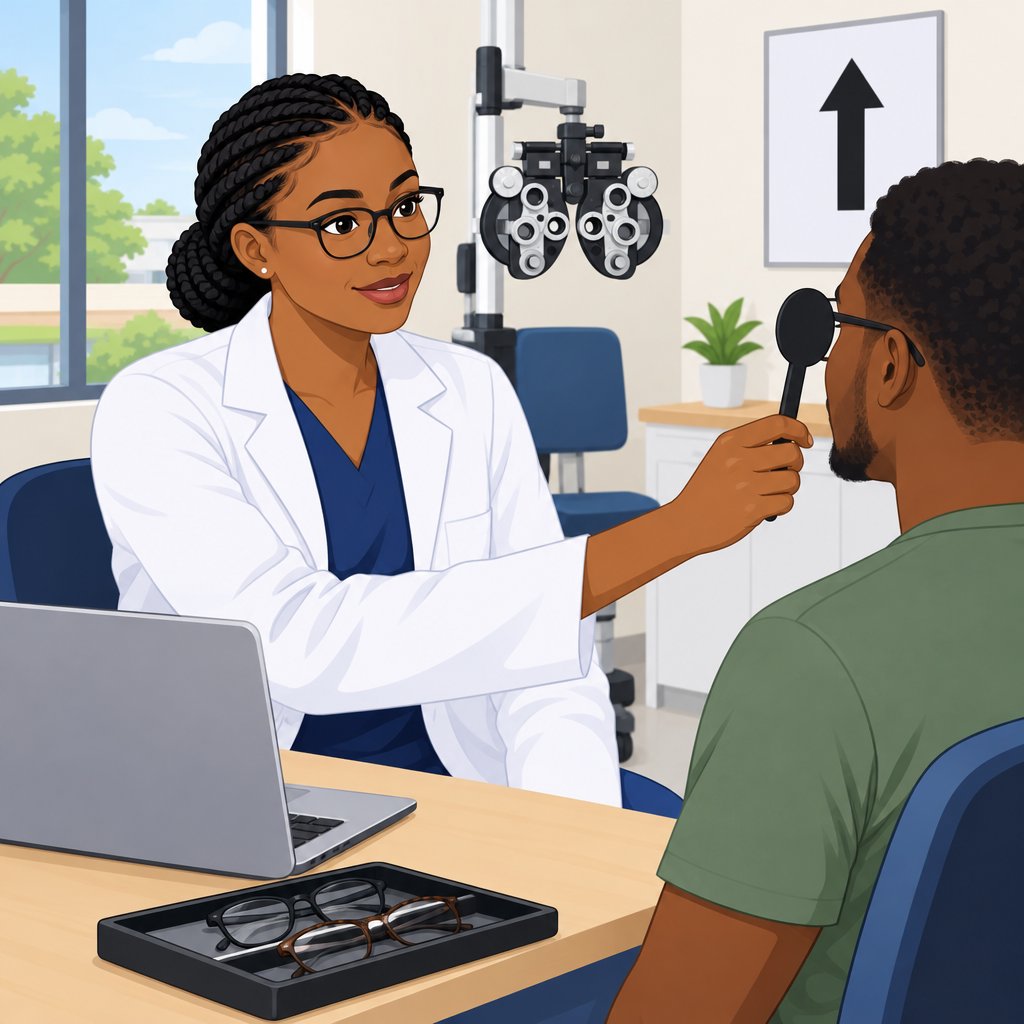
Importance of Affordable and Available Optometry Services
Affordable and available optometry services can improve public health outcomes for Nigerians.
Accessible care helps people identify eye conditions early and address them promptly.
Furthermore, improved eye health can support daily activities, productivity, and quality of life.
- Affordable examinations support early detection and treatment of eye health problems.
- Accessible services can reduce preventable blindness and related vision loss.
- Quality eye care can improve vision and overall quality of life.
- Better eye health can strengthen productivity and economic development in Nigeria.
Addressing these access barriers can help more Nigerians receive quality eye care.
Continued efforts can strengthen public health and reduce the burden of eye-related diseases.
See Related Content: Anatomy Textbooks Recommended in Nigeria
Public Health Campaigns and Awareness
Public health campaigns can improve awareness of vision health and eye care.
They can encourage regular eye check-ups and promote early detection of eye conditions.
Additionally, these campaigns can support proper eye care practices across communities.
Importance of Creating Awareness About Vision Health
Vision problems can significantly affect an individual’s quality of life.
They can affect daily activities, job performance, and overall well-being.
Therefore, public education can help prevent vision-related issues and promote good eye health.
Regular eye check-ups support early detection of eye conditions.
Role of Optometrists in Public Health Campaigns
Optometrists play a vital role in public health campaigns about vision health.
They use their expertise to educate the public about the importance of eye health.
They also explain common eye conditions and promote preventive measures.
Furthermore, optometrists can collaborate with healthcare professionals and community organizations.
They can also work with government agencies to develop effective campaigns.
These campaigns can target groups or communities at risk of vision problems.
Successful Eye Health Campaigns in Nigeria
Nigeria has conducted several public health campaigns promoting eye health.
These initiatives have raised awareness about vision care among the public.
One notable example is the Vision 2020: The Right to Sight initiative.
The initiative aims to eliminate avoidable blindness by the year 2020.
Through this campaign, optometrists and healthcare professionals worked together.
They provided free eye screenings and distributed eyeglasses.
They also educated the public about the importance of eye care.
As a result, many people received early detection and treatment for eye conditions.
This support led to improved vision outcomes and better quality of life.
Uncover the Details: Online Courses for Biomedical Technology in Nigeria
Training and Education for Optometrists
Optometry training in Nigeria combines theoretical study with supervised clinical practice.
Students develop knowledge and skills that support quality eye care delivery.
Continuous learning helps optometrists maintain effective and current professional practice.
Optometry Training Programs in Nigeria
Universities and colleges across Nigeria offer optometry training programs.
These programs combine classroom instruction with practical clinical experience.
Students study eye anatomy, physiology, and common eye diseases.
They also learn refraction, contact lens fitting, and vision therapy.
Furthermore, students gain experience in eye clinics and hospitals.
Qualified optometrists supervise this practical training.
Consequently, graduates strengthen the abilities required for public eye care.
Continuous Education and Professional Development
Continuous education helps Nigerian optometrists follow developments within optometry.
New technologies, treatments, and research findings regularly influence clinical practice.
Therefore, optometrists must consistently improve their knowledge and practical skills.
Continuing education introduces diagnostic tools, treatment options, and management strategies.
It also helps practitioners strengthen their approaches to different eye conditions.
Moreover, conferences and workshops encourage professional networking and knowledge exchange.
Seminars can also clarify changing regulations and practice guidelines.
Public Health Value of Optometry Education
Well-trained optometrists support stronger eye care services throughout Nigeria.
Their training enables them to recognize various eye conditions accurately.
They manage conditions ranging from infections and refractive errors to glaucoma and cataracts.
Additionally, optometrists prescribe corrective lenses, contact lenses, and low vision aids.
These services can improve visual function and support patients’ quality of life.
Early detection and management can help prevent avoidable vision loss.
Optometrists also educate communities about regular eye examinations and proper eye hygiene.
They promote measures that reduce eye injuries and support healthier vision.
As a result, effective training strengthens eye care and benefits public health.
Policy and Regulation in Optometry Practice
Policy and regulation shape professional optometry practice in Nigeria.
They establish expectations for qualified practitioners and support consistent eye-care services.
Effective oversight can strengthen public confidence in optometry.
Current Regulations Governing Optometry Practice in Nigeria
In Nigeria, the Optometrists and Dispensing Opticians Registration Board of Nigeria regulates optometry practice.
The board ensures that only qualified professionals practice optometry in the country.
Optometrists must obtain and periodically renew licenses to demonstrate competency and compliance with board standards.
Importance of Enforcing Standards and Regulations
Standards help optometrists provide accurate diagnoses, suitable treatments, and preventive care.
Regulatory enforcement promotes consistent professional conduct across eye-care practices.
As a result, patients can receive safer and more reliable services.
Suggestions for Improving Policies and Regulations
Several policy improvements could strengthen optometry’s contribution to public health in Nigeria.
These measures can support professional competence, regulatory compliance, and public participation.
They can also encourage cooperation between optometrists and government agencies.
- Require continuing education so optometrists remain updated on advancements in the field.
- Conduct regular audits and assessments to monitor compliance with regulations and standards.
- Collaborate with government agencies to develop policies addressing Nigerian population needs.
- Educate the public about regular eye check-ups and early disease detection.
- Invest in research to identify emerging trends and develop innovative eye-care solutions.
Optometry’s Contribution to Nigerian Public Health
Optometrists provide essential eye care services that support public health across Nigeria.
They detect and manage eye conditions while promoting healthier vision practices.
Consequently, early treatment can prevent blindness and improve many Nigerians’ quality of life.
Additionally, optometrists teach communities about proper eye care and regular examinations.
These efforts increase public awareness of vision health and encourage timely professional attention.
Therefore, optometry remains an essential part of Nigeria’s public health system.
Government bodies and healthcare organizations should prioritize accessible vision health initiatives.
Individuals can also support these efforts by seeking regular eye examinations.
Furthermore, investment in optometry services can expand access to necessary care.
Awareness campaigns can strengthen understanding of eye health across the population.
Together, stakeholders can help create a healthier and brighter future for Nigerians.
Additional Resources
Google search results for Impact of Optometry on Nigerian Public Health Medical
Bing search results for Impact of Optometry on Nigerian Public Health Medical


