



Eye Care Innovation in Nigeria
Eye care remains important in Nigeria because vision problems affect many people.
Therefore, optometrists play an important role in developing innovative eye care solutions.
They help address the country’s significant eye health needs.
Eye Health Challenges in Nigeria
Nigeria faces various eye health challenges.
Cataracts, glaucoma, and refractive errors affect millions of individuals.
Meanwhile, rural communities have limited access to quality eye care services.
Innovative Practices by Nigerian Optometrists
Nigerian optometrists have developed innovative strategies for addressing eye care needs.
They have implemented mobile eye clinics.
These clinics help reach underserved communities.
History of Eye Care in Nigeria
Traditional healers and herbalists once provided most eye care in Nigeria.
They used herbs, plants, and rituals to address eye ailments.
Over time, Western medicine introduced new approaches to eye treatment.
Hospitals and clinics gradually expanded these modern services.
Consequently, optometrists and ophthalmologists gained greater prominence within the healthcare system.
Traditional Methods and Modern Practices
Traditional methods remain deeply rooted in Nigerian culture.
However, modern practices have improved the quality of eye care.
Traditional healers may lack formal training for complex eye conditions.
Therefore, they may not manage complicated conditions effectively.
By contrast, optometrists and ophthalmologists receive extensive professional education.
They provide care based on established evidence and clinical training.
Modern diagnostic tools support accurate and efficient evaluations.
These tools help clinicians identify glaucoma, cataracts, and diabetic retinopathy earlier.
Additionally, surgical advances have made treatments safer and more effective.
Evolution of Eye Care Services
Eye care services have evolved to address changing population needs.
The government established vision centers and outreach programs in rural areas.
These initiatives serve underserved communities with essential eye health services.
Meanwhile, technology has transformed service delivery across Nigeria.
Telemedicine and mobile eye clinics connect remote communities with quality care.
As a result, patients can avoid long journeys for some services.
International collaborations also support training and research in optometry.
Future Prospects for Nigerian Eye Care
Nigerian optometrists have connected traditional experience with modern professional care.
Their work supports more comprehensive and accessible services for the population.
Continued progress in technology and education may strengthen Nigeria’s eye care future.
Technological Advancements in Eye Care
Technological advancements have transformed eye care worldwide.
Nigerian optometrists increasingly use these innovations in clinical practice.
Consequently, technology supports more precise assessment and treatment of eye conditions in Nigeria.
Advanced Equipment Used by Nigerian Optometrists
Nigerian optometrists invest in advanced equipment to improve patient care.
Clinics use tools such as optical coherence tomography and automated refraction systems.
These technologies help practitioners examine eye structures and assess vision more accurately.
Optical coherence tomography provides detailed images of internal eye structures.
Transform Your Career with Expert Guidance
Get personalized mentorship consulting that’s tailored to your unique path. Our expert advice is actionable and exclusive.
Get StartedThose images support more accurate diagnoses and better treatment planning.
Additionally, digital retinal imaging systems help practitioners identify retinal problems early.
Early detection can help prevent vision loss and related complications.
Technology’s Impact on Eye Diagnosis and Treatment
Technology has strengthened the diagnosis and treatment of several eye conditions in Nigeria.
Corneal topography machines map the surface of the cornea.
This mapping supports the diagnosis of keratoconus and astigmatism.
Furthermore, automated perimetry devices improve the detection of visual field defects.
Optometrists can therefore identify conditions such as glaucoma earlier.
Telemedicine platforms also allow optometrists to monitor patients remotely.
They can provide timely interventions when patients require additional care.
Together, these technologies have improved care standards and patient outcomes.
Find Out More: Challenges in the Radiography Profession in Nigeria
Collaboration Among Healthcare Professionals
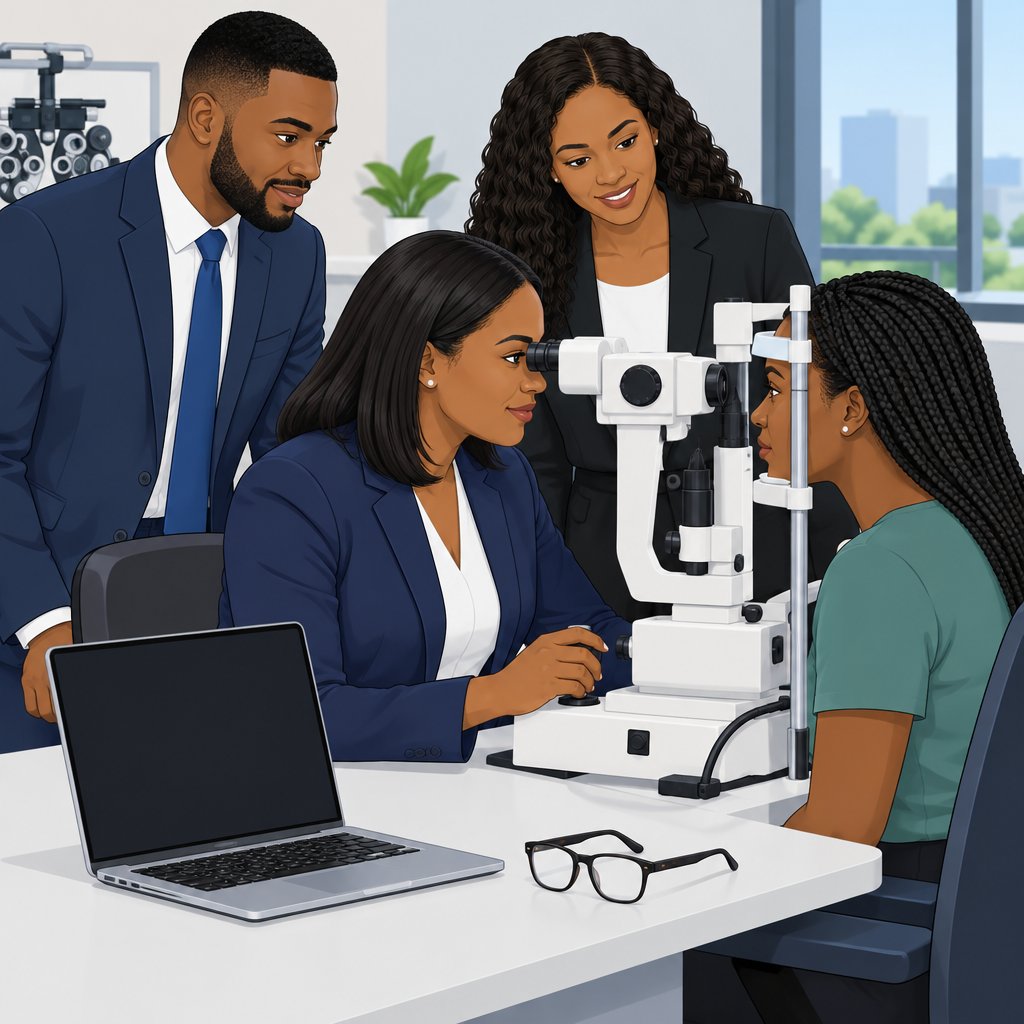
Nigerian optometrists recognize collaboration as essential for providing comprehensive eye care.
They work with ophthalmologists, nurses, and primary care physicians to support patient treatment.
This cooperation helps patients receive coordinated care and appropriate professional support.
Eye Care Integration Within Primary Healthcare
Nigerian optometrists integrate eye care services into primary healthcare centers.
This initiative increases access to eye care for people in remote and underserved areas.
Primary healthcare integration brings essential vision services closer to communities.
Interdisciplinary Approaches to Eye Care
An interdisciplinary approach supports holistic and patient-centered eye care.
Optometrists and other healthcare professionals can address vision problems and related health concerns.
Shared knowledge allows healthcare teams to identify conditions that may affect eye health.
Benefits of Coordinated Eye Care
Team-based care strengthens the delivery of eye health services.
Healthcare professionals can combine their expertise to support more effective patient management.
Consequently, patients can receive timely referrals and appropriate treatment.
- Enhanced patient outcomes: Coordinated care and shared expertise can improve patient outcomes.
- Access to specialized care: Partnerships can connect patients with ophthalmologists and other specialists when necessary.
- Early detection and prevention: Interdisciplinary care can support early detection and prevention of eye diseases.
Team-Based Eye Care for Nigerian Communities
These innovations demonstrate the value of collaboration, integration, and interdisciplinary eye care.
By working together, optometrists can address the eye care needs of Nigerian communities.
This team-based approach can support better eye health outcomes across the population.
Explore Further: Continuing Education for Optometrists in Nigeria
Community Outreach Programs
- Nigerian optometrists provide free eye care services to underserved communities.
- They conduct educational workshops and awareness campaigns about eye health.
Nigerian optometrists use outreach programs to connect underserved communities with essential eye care services.
These initiatives help people access vision care despite limited healthcare resources.
Furthermore, optometrists combine clinical services with education to address community eye health needs.
Providing Free Eye Care Services
Optometrists provide free eye examinations, glasses, and treatment for common eye conditions.
They establish temporary clinics within communities and serve people regardless of their ability to pay.
As a result, residents can receive basic eye care without facing immediate financial barriers.
These services help identify vision problems among people who may not recognize their need for care.
Outreach teams then help address those problems through examinations, corrective glasses, or appropriate treatment.
Educational Workshops and Awareness Campaigns
Alongside clinical services, Nigerian optometrists organize educational workshops and eye health awareness campaigns.
These activities teach communities about common eye conditions and the value of regular eye examinations.
They also explain practical ways to protect vision from potential damage.
By sharing clear information, optometrists help residents make informed decisions about their eye health.
Consequently, these campaigns support efforts to prevent vision loss and promote community well-being.
Through direct services and public education, Nigerian optometrists improve access to essential eye care.
Their community-focused approach helps more people recognize and address vision problems.
It also demonstrates how healthcare professionals can support underserved populations through practical outreach.
You Might Also Like: Insurance Coverage for Restorative Dental Work
Research and Development in Eye Care
Nigerian optometrists advance eye care through research and clinical development.
They investigate eye conditions and evaluate approaches that may improve patient care.
Their work strengthens evidence for diagnosis, treatment, and future eye care practices.
Role of Nigerian Optometrists in Research and Clinical Trials
Optometrists conduct studies and clinical trials alongside their clinical responsibilities.
These activities generate data about eye condition prevalence, causes, and treatment options.
Additionally, research findings can guide improvements in eye care services across Nigeria.
Development of Treatments and Interventions for Eye Conditions
Through research, Nigerian optometrists develop and refine interventions for diverse eye conditions.
They assess existing methods while exploring alternative approaches to patient treatment.
Consequently, their efforts support more effective and accessible care for patients.
- Development of new pharmaceutical treatments for eye diseases.
- Exploration of alternative therapies for common eye conditions.
- Advancements in surgical techniques for complex eye surgeries.
- Introduction of diagnostic tools for early detection of eye diseases.
By engaging in research, Nigerian optometrists introduce innovative treatments and interventions.
These efforts can improve eye health and vision outcomes for patients.
Furthermore, their commitment supports continued growth within the optometry profession.
Learn More: Role of Professional Bodies in Nigerian Medical Education
Expanding Access Through Innovative Eye Care
Nigerian optometrists continue developing innovative approaches that expand access to essential eye care.
Teleoptometry services help them provide consultations beyond traditional clinical settings.
Furthermore, these professionals address eye care challenges through new techniques and practical solutions.
Beyond treating conditions, they emphasize prevention and encourage patients to protect their vision.
Their commitment strengthens access to professional eye care across Nigeria.
Key Practices Shaping Nigerian Eye Care
The discussion highlighted teleoptometry as an important method for delivering remote eye care consultations.
Teleoptometry enables optometrists to connect with patients who may face challenges accessing regular services.
Technology also supports more responsive patient care and strengthens the delivery of eye health services.
Meanwhile, Nigerian optometrists combine treatment with preventive guidance to promote lasting eye health.
These practices demonstrate how optometrists continue shaping the future of eye care in Nigeria.
Prioritizing Professional Eye Health Support
Readers should prioritize their eye health by arranging regular check-ups with qualified optometrists.
Regular professional care can support early detection and timely treatment of eye conditions.
Seeking optometric services in Nigeria also supports broader efforts to improve eye health outcomes.
By acting proactively, individuals can make vision care an important part of their health routine.
Together, patients and optometrists can support better eye health across Nigeria.
Additional Resources
Google search results for Innovations in Eye Care by Nigerian Optometrists Medical
Bing search results for Innovations in Eye Care by Nigerian Optometrists Medical


