



Introduction
COVID-19 has profoundly affected medical education in Nigeria.
The pandemic disrupted educational systems and created challenges for institutions, educators, and students.
Because medical training supports competent healthcare delivery, these disruptions may influence future patient care.
Global Effects of COVID-19
The pandemic closed schools, colleges, and universities across many countries.
Consequently, institutions shifted rapidly toward online learning, creating difficulties for teachers and students.
However, medical training requires practical experience that virtual instruction cannot fully reproduce.
Importance of Medical Education in Nigeria
Medical education prepares Nigerian healthcare professionals to serve the population.
Therefore, training quality directly influences patient care and broader healthcare outcomes.
Yet pandemic restrictions disrupted traditional teaching methods and raised concerns about future preparation.
Impact on Medical Education in Nigeria
Nigerian educational institution closures significantly interrupted medical education.
Students missed clinical rotations, hands-on practice, patient interactions, and other valuable learning experiences.
As a result, graduation and licensure could face delays, affecting the country’s healthcare workforce.
These disruptions highlight the need for innovative solutions that preserve quality medical training during pandemic challenges.
Transition to Online Learning
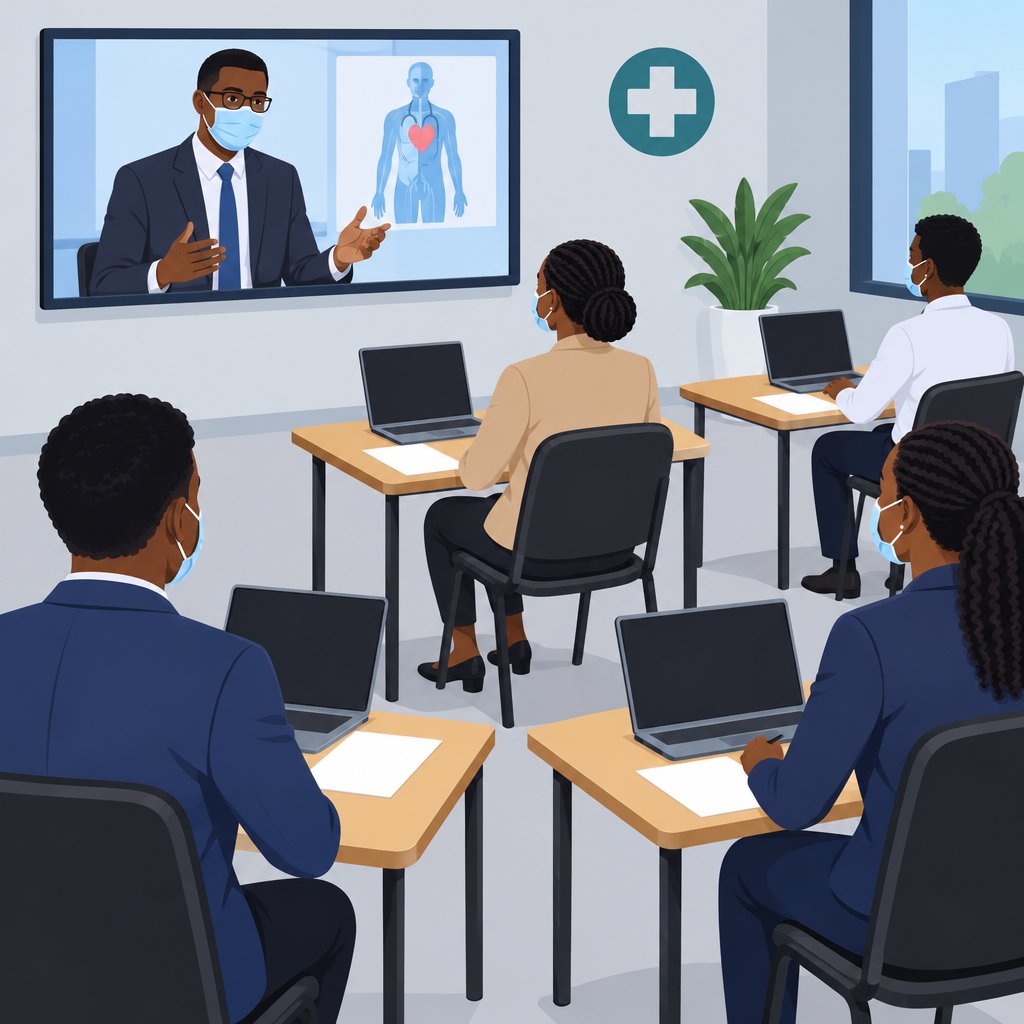
Medical schools in Nigeria shifted rapidly to online learning during the COVID-19 pandemic.
This approach helped institutions continue medical education while following safety protocols.
Furthermore, online instruction supported educational continuity during unprecedented challenges.
Challenges Affecting Students and Faculty
However, limited technology access and unreliable internet connections affected students in remote areas.
Additionally, limited technical skills made virtual teaching difficult for students and faculty members.
Moreover, scheduling conflicts complicated coordination between students and faculty during online sessions.
- Students from remote areas often faced limited access to technology and internet connectivity.
- Students and faculty members needed stronger technical skills for smoother virtual classes.
- Different schedules made it difficult to coordinate virtual learning sessions.
- Virtual instruction could not fully replace hands-on experiences for developing practical medical skills.
Effectiveness of Online Medical Education
Despite these difficulties, online learning gave students flexible access to lectures and study materials.
Virtual platforms also helped medical schools continue teaching their core curriculum.
Furthermore, interactive tools encouraged engagement and collaboration during virtual classes.
- Students could access lectures and study materials at convenient times and personal paces.
- Virtual platforms supported continued delivery of the core medical curriculum.
- Interactive tools promoted engagement and collaboration among students and faculty members.
- Online assessments provided immediate feedback that supported student learning and understanding.
Consequently, online learning helped preserve the continuity of medical education in Nigeria.
Students and faculty adapted to new methods despite the initial obstacles.
This adaptability supported the continued quality of medical education during the pandemic.
Disruption of Clinical Training
- COVID-19 severely disrupted clinical training for medical students in Nigeria.
- Many medical schools suspended clinical rotations and practical sessions to follow safety protocols.
- Consequently, students received less exposure to real patient interactions and hands-on experience.
Implications of Reduced Patient Interactions
- Medical students develop essential communication and clinical skills through patient interactions.
- Furthermore, hands-on experience helps students understand diagnosis and treatment procedures.
- Therefore, limited patient contact may weaken empathy and understanding among future healthcare professionals.
Potential Long-Term Effects on Healthcare Professionals
- Limited hands-on experience could create practical skill gaps among future healthcare professionals.
- As a result, future doctors may struggle to provide quality care without sufficient practical training.
- Moreover, these effects may reduce clinical competence and confidence among healthcare professionals.
Explore Further: Profiles of Notable Veterinarians in Nigeria
Medical Research During the Pandemic
COVID-19 significantly changed medical research practices in Nigeria.
The pandemic disrupted projects requiring face-to-face interactions or laboratory work.
Furthermore, many students and researchers shifted their attention toward COVID-19 studies.
- Travel restrictions limited students’ access to research facilities.
- Virtual research opportunities helped students continue their academic development.
- Remote collaboration allowed students to develop valuable communication skills.
- These changes reduced attention toward some other medical research areas.
Research Collaborations and Medical Conferences
International research collaborations faced difficulties during the pandemic.
Travel restrictions made in-person meetings more difficult for research teams.
Nevertheless, researchers increasingly used virtual platforms to maintain collaborative work.
- Virtual meetings helped researchers continue exchanging information across physical boundaries.
- Medical conferences moved online or faced postponement during the pandemic.
- Online conferences reduced opportunities for direct networking among researchers.
- Limited face-to-face contact also restricted informal exchanges of ideas.
The Role of Research in Medical Education
Research gives medical students practical experience and supports advances in medical knowledge.
Students who conduct research can follow new developments within their fields.
Additionally, research strengthens critical thinking, problem-solving, and analytical abilities.
- Research enables students to contribute to existing medical knowledge.
- Research activities help students develop skills needed for medical careers.
- Research findings can improve patient care and treatment options.
- Healthcare practices can benefit from evidence produced through medical research.
Constraints Affecting Medical Research
Despite its value, medical research in Nigeria encountered several pandemic-related setbacks.
Restricted movement prevented some students from conducting experiments and collecting data.
Moreover, economic pressures reduced available funding and delayed some research projects.
- Limited facility access prevented some researchers from completing laboratory activities.
- Funding reductions created delays across various research projects.
- Pandemic-related uncertainty affected students’ ability to concentrate on research tasks.
- Stress and uncertainty also affected students’ mental health.
Adaptation in Medical Research Practice
Researchers adapted their methods as the pandemic changed access to facilities and participants.
Virtual opportunities allowed students and researchers to continue contributing despite physical restrictions.
Transform Your Career with Expert Guidance
Get personalized mentorship consulting that’s tailored to your unique path. Our expert advice is actionable and exclusive.
Get StartedThese adaptations encouraged innovation in how medical research could proceed.
You Might Also Like: Biomedical Technology Conferences and Events Nigeria
Mental Health Challenges in Medical Education
- Medical students and faculty face mental health challenges during the pandemic.
- The healthcare community experiences increased stress, anxiety, and burnout levels.
- Coping mechanisms and support systems remain crucial for mental well-being.
Medical education in Nigeria has faced significant disruption during COVID-19.
Both medical students and faculty have also experienced serious mental health challenges.
Pandemic uncertainty and demanding medical training have increased stress and anxiety across healthcare communities.
This pressure has weakened mental well-being for many people in the healthcare community.
As medical students continue their education during the pandemic, they face several unique challenges.
They must adapt to online learning while managing demanding academic responsibilities.
They also fear contracting the virus during clinical rotations.
Furthermore, witnessing pandemic-related suffering can create lasting emotional strain.
These pressures can increase student stress and contribute to burnout.
Faculty members have likewise experienced heightened stress and anxiety during this period.
They suddenly shifted to online teaching and rapidly learned unfamiliar technologies.
At the same time, they must maintain high-quality education for their students.
Consequently, these added responsibilities intensify already demanding faculty roles.
Medical schools and healthcare institutions should explore coping mechanisms and support systems available in Nigeria.
Counseling services, support groups, and wellness programs can help healthcare workers manage stress and anxiety.
In addition, institutions can create cultures that encourage open communication and mutual support.
Encouraging students and faculty to seek help can make mental healthcare easier to access.
Normalizing mental health discussions can reduce isolation and encourage timely support.
Likewise, community and solidarity can strengthen resilience during difficult periods.
Prioritizing well-being can help healthcare communities navigate pandemic challenges with greater strength.
Learn More: Mental Health Challenges in Nigerian Medical Schools
Delayed Graduation and Licensure
Many medical students in Nigeria face potential graduation and licensure delays because COVID-19 disrupted medical education.
Exam cancellations and rescheduling have disrupted student timelines, creating uncertainty and stress.
Consequently, delayed workforce entry could affect healthcare delivery across Nigeria.
- Many students may graduate later than originally planned.
- Exam disruptions have created uncertainty about academic progress.
- Delayed licensure may postpone students’ professional careers.
Academic Challenges Affecting Medical Students
Lockdowns and restrictions extended academic calendars for many students.
Institutions also struggled to provide required clinical experiences and hands-on training.
Those limitations complicated students’ preparation for graduation requirements.
- Extended academic calendars prolonged students’ periods of study.
- Restricted clinical access limited practical skills development.
Changes to Graduation and Licensure Processes
Universities postponed graduation ceremonies or held them virtually during the pandemic.
Authorities delayed licensure examinations or conducted them online.
Students questioned whether online assessments remained valid and fair.
- Postponed ceremonies reduced opportunities to celebrate academic achievements traditionally.
- Online examinations raised concerns about assessment validity and fairness.
Pressure on Nigeria’s Healthcare System
Delayed entry could worsen Nigeria’s existing shortage of healthcare professionals.
Healthcare facilities may struggle to maintain quality care and meet demand.
Therefore, workforce delays could create broader challenges for healthcare delivery.
- Fewer new graduates may enter healthcare facilities during the delay.
- Existing staff may face greater pressure while vacancies remain unfilled.
Stakeholders must address these educational and professional delays.
They should implement effective solutions that support students and protect healthcare delivery.
Coordinated action can reduce the pandemic’s long-term effects on medical education in Nigeria.
Discover More: Latest Research in Paediatrics in Nigeria
The COVID-19 pandemic continues to disrupt sectors globally, including medical education in Nigeria.
Medical schools have adjusted their curricula to address challenges created by the changing educational environment.
These adjustments support high-quality education while institutions manage pandemic-related restrictions.
Adaptation of Medical Education Curricula
Medical schools must include pandemics, public health emergencies, and telemedicine within their curricula.
This broader training can prepare students to respond effectively during future healthcare crises.
Furthermore, institutions have introduced innovative approaches to maintain educational continuity during disruptions.
- Curriculum adaptation: Schools can teach pandemic response, emergency preparedness, and telemedicine skills.
- Innovative teaching: Online platforms, virtual simulations, and teleconferencing support lectures and practical sessions.
- Technology implementation: Virtual reality, augmented reality, and artificial intelligence create interactive learning experiences.
- Clinical engagement: These technologies allow students to practise skills and participate in virtual patient consultations.
- Professional preparation: Adapted curricula can develop resilience, adaptability, and agility among future healthcare professionals.
Moreover, these changes help students manage unforeseen challenges throughout their professional practice.
Medical schools therefore strengthen education by combining curriculum changes with appropriate technologies.
These efforts can help future healthcare professionals respond more effectively to similar crises.
Strengthening Medical Education After COVID-19
The COVID-19 pandemic has significantly affected medical education in Nigeria.
Medical students struggled to access practical training and gain sufficient hands-on experience.
Meanwhile, faculty members quickly adapted to online teaching methods to continue instruction.
These changes could influence the long-term quality of medical education across the country.
Therefore, stakeholders must provide additional support and resources to reduce these challenges.
Students and faculty need technology, reliable internet connectivity, and training for the new learning environment.
By investing in these areas, Nigeria can help medical education continue despite the pandemic.
Additional Resources
Google search results for Impact of COVID-19 on Medical Education in Nigeria Medical
Bing search results for Impact of COVID-19 on Medical Education in Nigeria Medical


