



The State and Future of Medical Rehabilitation in Nigeria
Medical rehabilitation remains in its infancy in Nigeria.
However, limited resources and accessibility continue to affect its development.
Medical rehabilitation plays a crucial role in the healthcare system.
It enhances patients’ quality of life.
This blog post analyzes and predicts the future of medical rehabilitation in Nigeria.
Current Challenges Affecting Medical Rehabilitation
- Limited awareness and understanding of medical rehabilitation
- Restricted access to rehabilitation facilities and services
- Shortages of trained rehabilitation professionals
- Inadequate funding and resources for rehabilitation programs
Medical rehabilitation in Nigeria faces several challenges that require coordinated attention.
First, many people do not understand what rehabilitation involves.
They may also overlook rehabilitation’s importance during recovery from illness or injury.
Consequently, some individuals may not seek services that could support their recovery.
Access presents another significant concern, particularly in rural communities.
Healthcare resources remain limited in many rural areas.
Therefore, residents may struggle to reach appropriate rehabilitation facilities and services.
Without timely care, individuals may experience difficulty regaining function and independence.
This restricted access can affect their health and well-being for extended periods.
Furthermore, Nigeria lacks enough trained professionals to meet rehabilitation needs.
Rehabilitation requires specialized knowledge and practical skills.
However, too few qualified professionals currently provide these services.
As a result, patients may face delayed care or receive lower-quality services.
Training institutions can help address this shortage by preparing more rehabilitation professionals.
Improved recruitment and retention can also strengthen the available workforce.
Funding shortages create an additional barrier to effective rehabilitation.
Rehabilitation facilities need adequate resources, equipment, therapies, and staff.
Insufficient funding can prevent programs from meeting patient needs.
It can also limit the quality of care and patient progress.
For this reason, decision-makers should allocate adequate funding to rehabilitation programs.
Increased public awareness can encourage more people to seek rehabilitation services.
Expanded facilities can improve access for underserved communities.
Additional professional training can strengthen service delivery.
Strategic investment can help Nigeria improve rehabilitation access and quality.
Growth Opportunities in Medical Rehabilitation
- Population aging and rising chronic diseases are increasing demand for rehabilitation services.
- New technologies and innovative approaches are expanding medical rehabilitation options.
- International partnerships can strengthen rehabilitation services in Nigeria.
Nigeria’s aging population and rising chronic diseases will increase demand for rehabilitation services.
Longer lives may increase the need for specialized care that improves patients’ quality of life.
Additionally, emerging technologies can make rehabilitation more effective and accessible.
Virtual reality therapy and robotic assistive devices may transform rehabilitation delivery in Nigeria.
International partnerships can provide resources, expertise, and funding for rehabilitation services.
They can also support knowledge exchange and capacity building among healthcare professionals.
By using these opportunities, Nigeria can develop a stronger and more sustainable rehabilitation system.
Such a system can meet population needs and improve healthcare outcomes.
Learn More: Benefits of Being an Anaesthesiologist in Nigeria
Government plays a crucial role in shaping medical rehabilitation’s future in Nigeria through targeted initiatives and programs.
Importance of Government Support
- Government support funds research and development in medical rehabilitation.
- These resources improve rehabilitation services and strengthen available care across Nigeria.
- Furthermore, government funding trains healthcare professionals in current rehabilitation techniques and technologies.
Regulatory Frameworks and Standards
- The government should establish frameworks that monitor rehabilitation services throughout Nigeria.
- Clear standards help rehabilitation facilities deliver high-quality care and treatment to patients.
- Additionally, regulatory bodies can enforce ethical practices and professional guidelines within rehabilitation services.
Incentives for Healthcare Providers
- Government incentives can encourage providers to build and maintain rehabilitation facilities.
- Tax breaks and subsidies can attract private investment in rehabilitation services.
- Moreover, training incentives can attract more professionals to rehabilitation medicine.
Therefore, government involvement can expand access to high-quality medical rehabilitation services for individuals who need them.
Transform Your Career with Expert Guidance
Get personalized mentorship consulting that’s tailored to your unique path. Our expert advice is actionable and exclusive.
Get StartedYou Might Also Like: Barriers to Mental Health Care Access in Nigeria
Collaboration with Stakeholders
- Partnerships with healthcare institutions, NGOs, and community organizations can expand rehabilitation access.
- Patients and families can participate in decision-making and treatment planning.
- Education institutions can strengthen training and certification programs for rehabilitation professionals.
Stakeholder collaboration is essential for advancing medical rehabilitation in Nigeria.
Healthcare institutions, NGOs, and community organizations can expand services for people who need rehabilitation.
These partnerships can also improve coordination among providers and support more accessible care.
Healthcare institutions provide medical care and support for people with disabilities or injuries.
Through collaboration, rehabilitation centers can address patients’ physical, emotional, and social needs.
NGOs advocate for disability rights and provide important support services.
Rehabilitation facilities can gain resources and expertise by partnering with disability-focused NGOs.
Community organizations often maintain strong connections within local communities.
They can identify people who need rehabilitation services and facilitate appropriate referrals.
Additionally, community organizations can provide continuing support for patients and their families.
Patient and family involvement keeps rehabilitation services centered on individual needs.
Healthcare providers can listen to patients’ concerns and preferences during treatment planning.
This approach supports treatment plans that reflect patient goals and remain practical over time.
Education institutions can strengthen training and certification programs for rehabilitation professionals.
Universities, colleges, and vocational training centers can help prepare staff for high-quality patient care.
These institutions can also support research and innovation in medical rehabilitation.
Joint research projects, clinical trials, and technology initiatives can help rehabilitation centers improve treatment and care.
Strong stakeholder partnerships can expand access, improve care quality, and encourage innovation.
See Related Content: Best Dental Clinics for Kids in Nigeria
Integration with Primary Healthcare
- Medical rehabilitation needs integration into primary healthcare systems.
- Primary care providers need training to identify and refer patients needing rehabilitation services.
- Healthcare providers need streamlined communication and coordination for comprehensive patient care.
Importance of Integrating Medical Rehabilitation into Primary Healthcare Systems
Medical rehabilitation supports the overall healthcare system in Nigeria.
Integrating rehabilitation into primary healthcare systems gives patients earlier intervention.
It also supports personalized care.
Training Primary Care Providers to Identify and Refer Patients
Primary care providers may lack awareness of rehabilitation’s importance.
Training helps providers identify patients who need rehabilitation services.
They can then refer those patients to appropriate facilities.
Communication and Coordination for Comprehensive Patient Care
Effective communication connects primary care providers, rehabilitation specialists, and other healthcare professionals.
Coordination helps patients receive comprehensive care.
Clear referral protocols support seamless transitions between healthcare settings.
You Might Also Like: How Anaesthesia is Administered in Nigerian Clinics
Technology and Innovation
- Adoption of tele-rehabilitation and digital health solutions to reach underserved populations
- Incorporation of virtual reality, robotics, and other advanced technologies in rehabilitation therapy
- Research and development of new treatment modalities and interventions for improved patient outcomes
Technology plays a crucial role in shaping the future of medical rehabilitation in Nigeria.
Innovative solutions can enhance care quality and expand access to rehabilitation services.
Healthcare providers can use these tools to support patients across the country.
Adoption of Tele-rehabilitation and Digital Health Solutions
Tele-rehabilitation enables healthcare providers to deliver remote rehabilitation services to individuals facing access difficulties.
This technology can benefit underserved populations in rural areas and people with mobility limitations.
Digital health solutions, such as mobile apps and wearable devices, can enhance patient engagement.
These tools can promote self-management of rehabilitation exercises.
They provide real-time feedback, monitoring, and support, empowering patients during recovery.
Incorporation of Virtual Reality, Robotics, and Advanced Technologies
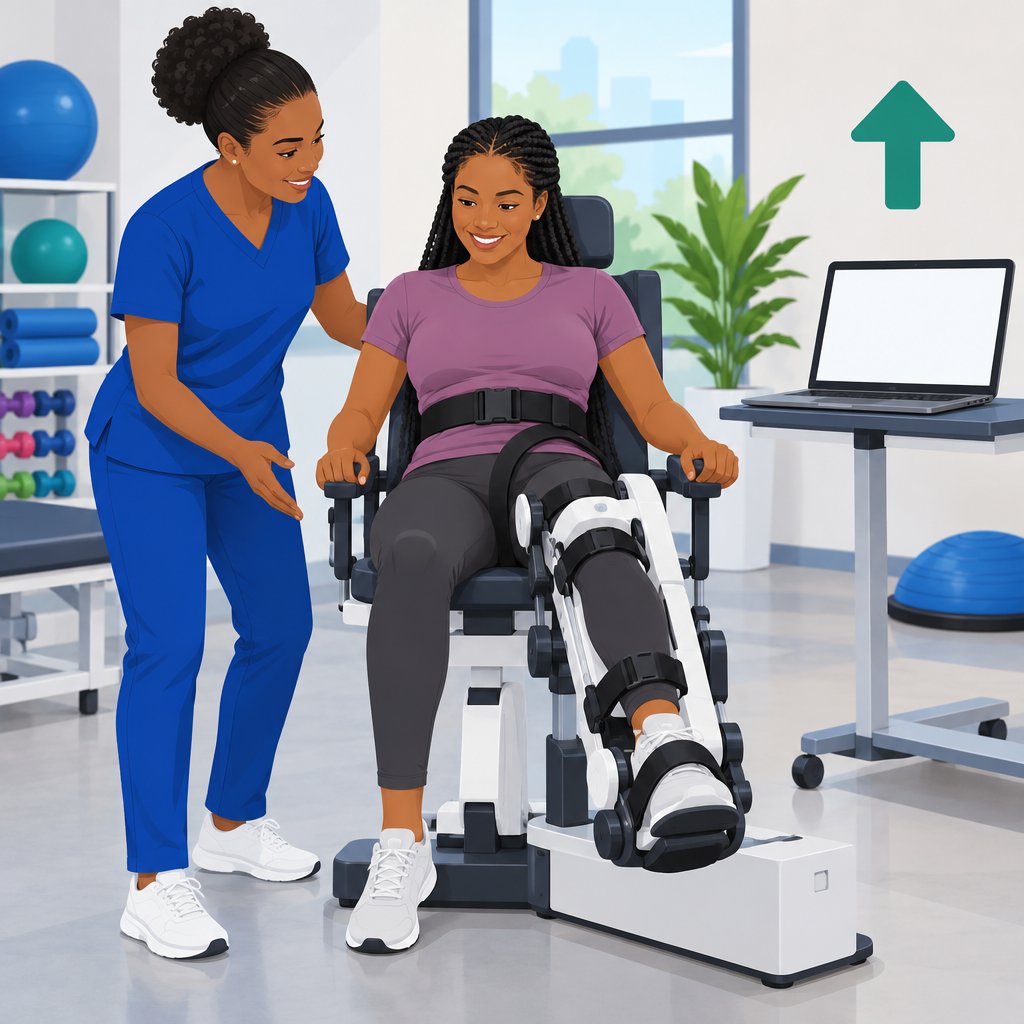
Virtual reality and robotics offer exciting possibilities in rehabilitation therapy.
Virtual reality simulations can create immersive environments for practicing functional tasks and improving motor skills.
Robotics can assist or enhance physical therapy exercises, making them more precise and effective.
These technologies make rehabilitation more engaging and interactive.
They also allow therapists to tailor treatment plans to individual needs.
Personalized interventions can help patients achieve better outcomes and faster recovery.
Research and Development of New Treatment Modalities
Ongoing research and development efforts are essential for driving innovation in medical rehabilitation.
These efforts can improve patient outcomes and address diverse rehabilitation needs.
Healthcare providers can explore new treatment modalities for individuals with varying conditions and disabilities.
Collaboration between clinicians, researchers, and technology experts can advance rehabilitation therapy.
Professionals can share knowledge and expertise to develop evidence-based practices.
These practices can maximize treatment effectiveness and promote long-term recovery.
Technology and innovation hold great promise for medical rehabilitation in Nigeria.
Tele-rehabilitation, digital health solutions, virtual reality, and robotics can enhance patient care nationwide.
Building a Stronger Rehabilitation System
Nigeria’s medical rehabilitation sector has strong potential for growth and development.
By implementing innovative strategies, healthcare providers can improve the quality of patient care.
Moreover, government agencies, healthcare providers, and private organizations must collaborate.
These stakeholders should invest in advancing medical rehabilitation services across the country.
Together, stakeholders can create an inclusive, accessible, and effective rehabilitation system.
Such a system can address the needs of individuals seeking treatment.
Through shared commitment, stakeholders can positively influence Nigeria’s healthcare sector.
Additional Resources
Google search results for Future of Medical Rehabilitation in Nigeria Medical
Bing search results for Future of Medical Rehabilitation in Nigeria Medical


