




Radiographers’ Role in Healthcare
Radiographers play a crucial role in healthcare by performing diagnostic imaging examinations.
Through these examinations, they capture internal images that support accurate disease diagnosis.
Additionally, their work makes a significant contribution to modern healthcare.
Education and Training
- Requirements to become a radiographer
- Specialized training in various imaging technologies
- Continuous education to stay updated on advancements in the field
Aspiring radiographers must meet specific requirements before they can start practicing in the field.
These requirements typically include completing a formal education program, obtaining certification, and obtaining a state license.
Most radiographers begin by earning an associate’s or bachelor’s degree in radiologic technology from an accredited program.
These programs cover fundamental topics such as anatomy, patient care, radiation physics, and medical ethics.
After completing their education, radiographers must obtain certification from the American Registry of Radiologic Technologists (ARRT) or another certifying organization.
This certification demonstrates competence and remains required by most employers.
Specialized Training in Various Imaging Technologies
Once certified, radiographers may pursue specialized training in specific imaging technologies.
These technologies include MRI, CT scans, and mammography.
This additional training allows radiographers to work in specialized areas of radiography.
Specialized training typically combines classroom instruction with hands-on experience.
Radiographers learn to operate and maintain specialized equipment.
They also learn to interpret results and ensure patient safety during imaging procedures.
Some specialized training programs require radiographers to complete supervised clinical hours.
Radiographers must complete these hours before becoming fully certified in specific imaging modalities.
Continuous Education for Imaging Advancements
Radiography continues to evolve as professionals develop new technologies and techniques.
Radiographers must pursue continuous education and professional development to remain current.
This preparation helps them provide effective care to patients.
Continuing education courses address advancements in imaging technology.
They also cover procedural changes, updated protocols, and developments in patient care.
Radiographers may pursue advanced certifications to strengthen their skills and knowledge.
Many employers require radiographers to complete continuing education credits each year.
These credits help radiographers maintain their certification and licensure.
Regular education keeps radiographers informed about current developments in their field.
It also supports consistent, high-quality patient care.
Education and training prepare radiographers for their professional responsibilities.
Meeting requirements, gaining specialized skills, and pursuing further education support continued professional development.
Imaging Techniques Used in Diagnosis
Radiographers use several imaging techniques to examine different parts of the body.
Each technique supports diagnosis by showing specific tissues, structures, or functions.
Therefore, clinicians select methods that match the suspected disease or condition.
- Radiographers use X-rays, CT scans, MRIs, ultrasounds, and nuclear medicine scans.
- Each technique serves a specific purpose when diagnosing different diseases.
- X-rays commonly examine bone fractures, lung conditions, and dental issues.
- CT scans provide detailed images of organs, blood vessels, and bones.
- MRIs clearly show soft tissues, including the brain, muscles, and joints.
- Ultrasounds show internal organs, blood flow, and fetal development.
- Nuclear medicine scans help diagnose cancer and heart diseases.
Diagnostic Uses of Imaging Techniques
These imaging methods help clinicians identify diseases and assess internal changes.
For example, each method reveals different abnormalities within the body.
Consequently, clinicians can compare imaging findings with symptoms and medical history.
- X-rays can detect fractures, infections, tumors, and lung diseases.
- CT scans can identify tumors, internal injuries, and blood clots.
- MRIs provide detailed images of brain tumors, spinal injuries, and joint conditions.
- Ultrasounds monitor fetal development, gallstones, and heart conditions.
- Nuclear medicine scans detect tumors, assess organ functions, and monitor disease progression.
Selecting an Appropriate Imaging Technique
Clinicians must select the appropriate imaging technique to support an accurate diagnosis.
Using an unsuitable technique may cause misinterpretation and an incorrect diagnosis.
Radiographers consider the patient’s condition, symptoms, and medical history before selecting an examination.
- Accurate diagnosis supports timely treatment and better patient outcomes.
- Appropriate imaging can reduce the need for additional tests.
- Fewer unnecessary tests can help minimize healthcare costs.
- Patient symptoms guide the choice of an imaging technique.
- Medical history also influences the selected imaging examination.
You Might Also Like: How to Brush Kids' Teeth Properly in Nigeria
Collaboration with the Healthcare Team
Radiographers collaborate with healthcare professionals when supporting disease diagnosis.
Transform Your Career with Expert Guidance
Get personalized mentorship consulting that’s tailored to your unique path. Our expert advice is actionable and exclusive.
Get StartedThey work closely with doctors, nurses, and specialists throughout patient care.
This teamwork helps healthcare professionals make informed decisions from imaging findings.
- Radiographers work closely with doctors, nurses, and other healthcare professionals.
- They communicate findings and observations to the healthcare team.
- They discuss suitable patient care actions based on imaging results.
Radiographers share imaging findings clearly with the healthcare team.
This communication keeps team members informed about the patient’s condition.
The team may recommend further tests or consult specialists after reviewing imaging results.
Radiographers may also support referrals to other healthcare professionals.
By sharing information, healthcare professionals coordinate diagnosis and treatment planning effectively.
Uncover the Details: Role of Community Health Workers in Paediatrics
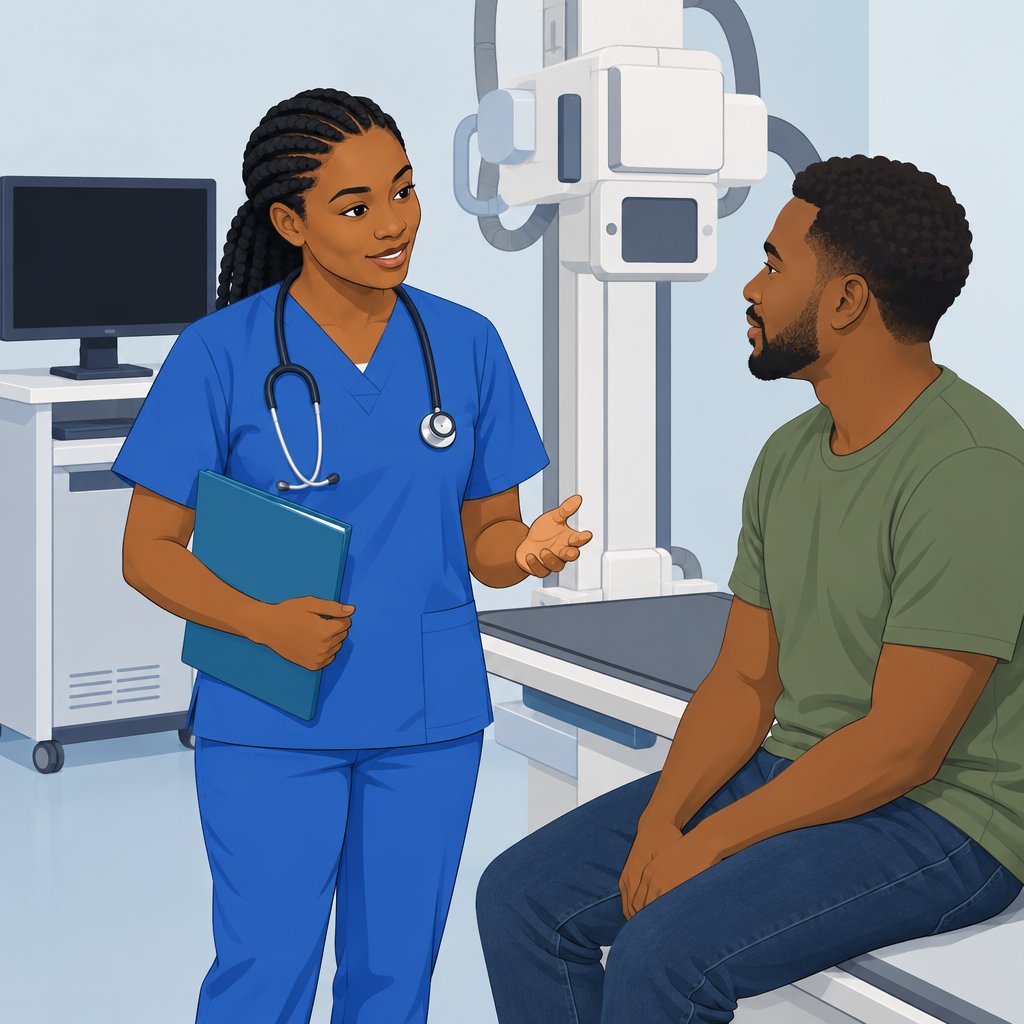
Detecting Abnormalities Through Imaging
Radiographers capture images that reveal tumors, infections, organ damage, and other abnormal changes.
These findings give physicians evidence for diagnosing conditions and planning appropriate care.
By comparing images, clinicians can identify changes that may signal disease progression.
Producing Images for Accurate Assessment
Radiographers position patients carefully to obtain clear views of the areas under examination.
They adjust imaging settings and follow safety procedures while completing each examination.
High-quality images help physicians assess abnormalities with greater accuracy.
Supporting Early Disease Recognition
Early imaging can reveal disease changes before conditions become more advanced.
Radiographers examine patients with unexplained pain, breathing difficulties, or injuries.
The resulting images provide information that helps physicians confirm diagnoses and select treatment plans.
Prompt imaging can support earlier intervention when abnormalities appear.
Assessing Injuries and Treatment Changes
Radiographers help assess fractures, internal injuries, and soft tissue damage.
X-rays and CT scans can show the location and severity of musculoskeletal injuries.
Physicians use these findings to decide whether patients need immobilization, surgery, or other treatment.
In cancer care, repeated scans can show changes in tumor size and shape.
These comparisons also help clinicians evaluate treatment effectiveness.
Find Out More: Essential Skills for Nigerian Veterinary Students
Radiation Safety and Patient Care
Radiation safety and patient care remain critical parts of radiographers’ responsibilities during disease diagnosis.
- Radiographers follow safety protocols during imaging procedures.
- They minimize radiation exposure without compromising diagnostic quality.
- They provide comfort and support during imaging sessions.
Radiographers protect patients and staff by following strict safety protocols throughout imaging procedures.
Additionally, they minimize radiation exposure while obtaining high-quality diagnostic images.
They select an appropriate radiation dose for each specific imaging examination.
This approach supports accurate results without unnecessarily exposing patients to radiation.
Meanwhile, radiographers provide care and support during imaging sessions.
Patients may feel anxious or uncomfortable during unfamiliar imaging procedures.
Therefore, radiographers communicate compassionately and help patients feel more at ease.
Their support can help patients remain still and cooperative during the procedure.
Consequently, compassionate care contributes to a smoother imaging experience and supports effective diagnostic work.
By combining safety practices with patient-centered care, radiographers support accurate disease diagnosis and treatment planning.
Uncover the Details: Microbiology Labs in Nigerian Universities
Imaging Expertise That Supports Disease Diagnosis
Radiographers support early disease detection through medical imaging.
They produce detailed images that help physicians assess patient conditions accurately.
Additionally, their positioning skills help imaging equipment capture useful views.
Meanwhile, radiographers operate X-ray, MRI, CT, and ultrasound equipment.
These modalities help clinicians examine and monitor many medical conditions.
Furthermore, radiographers follow established protocols during every examination.
Technical Practice That Strengthens Medical Interpretation
Radiographers apply safety protocols while preparing patients for imaging.
They also help healthcare teams select suitable examinations for individual conditions.
Consequently, their technical work strengthens medical interpretation and treatment planning.
Additional Resources
Google search results for Role of Radiographers in Diagnosing Diseases Medical
Bing search results for Role of Radiographers in Diagnosing Diseases Medical


