




Introduction
Medical laboratory scientists analyze bodily fluids and tissues.
They use these analyses to help diagnose diseases.
Specialization ensures accuracy and expertise in this field.
Clinical Chemistry Specialization
Clinical Chemistry belongs to Medical Laboratory Science and supports disease diagnosis and monitoring.
It examines chemicals and analytes in blood, urine, and cerebrospinal fluid.
Clinical chemists use advanced instruments and methods to produce accurate results for patient care.
Roles and Responsibilities of Clinical Chemists
- Clinical chemists perform biochemical analyses on specimens to support disease diagnosis and treatment.
- They evaluate and validate results to maintain quality control and laboratory accuracy.
- Additionally, they interpret laboratory data and communicate findings to healthcare professionals.
- They develop and implement methodologies that improve laboratory efficiency and productivity.
- Furthermore, they participate in research and follow advancements in clinical chemistry technology.
Common Tests in Clinical Chemistry
- Complete Blood Count (CBC): This test assesses blood cell numbers and hemoglobin levels.
- Basic Metabolic Panel (BMP): This test measures electrolytes, glucose, and kidney function markers.
- Liver Function Tests (LFTs): These tests evaluate liver health through enzyme and protein analysis.
- Lipid Profile: This test measures cholesterol and triglycerides for cardiovascular risk assessment.
- Thyroid Function Tests: These tests measure hormones associated with hypothyroidism and hyperthyroidism.
Therefore, Clinical Chemistry supports the diagnosis, treatment, and monitoring of many medical conditions.
Its testing services make this specialization essential within Medical Laboratory Science.
Specializing in Hematology
Hematology focuses on blood, blood-forming tissues, and blood disorders.
This specialization requires knowledge of blood-related laboratory testing and disease detection.
Hematologists use this expertise to support accurate diagnoses and effective patient treatment.
Overview of Hematology Specialization
Hematology is a branch of medical laboratory science.
It examines blood, blood-forming tissues, and related disorders.
Additionally, hematologists help diagnose and manage various blood conditions.
Duties of Hematologists in the Laboratory
Hematologists analyze blood samples to identify abnormalities.
They measure blood cell counts, hemoglobin levels, and clotting functions.
Furthermore, they interpret laboratory results and support treatment planning.
- Hematologists conduct blood smears to examine blood cell morphology.
- They perform coagulation studies to assess clotting functions.
- They interpret test results and provide accurate diagnoses.
- They collaborate with healthcare professionals to develop treatment plans.
Blood Disorders Diagnosed and Managed by Hematologists
Hematologists identify and treat a wide range of blood disorders.
These conditions can affect red blood cells, white blood cells, platelets, or clotting.
Therefore, hematology training prepares laboratory scientists to evaluate these disorders accurately.
- Anemia involves a low red blood cell count.
- Leukemia is a cancer that affects white blood cells.
- Hemophilia is a genetic disorder that impairs blood clotting.
- Thrombocytopenia involves a deficiency of platelets in the blood.
By specializing in hematology, laboratory scientists develop skills for accurate diagnosis and effective treatment.
Delve into the Subject: Medical Lab Science vs. Other Health Science Courses
Microbiology in Medical Laboratory Science
Microbiology is a specialized field within medical laboratory science.
It focuses on studying microorganisms that can affect human health.
Microbiologists apply laboratory methods to support infectious disease diagnosis and patient care.
Responsibilities of Microbiologists
Microbiologists examine patient specimens to detect infectious microorganisms.
They identify pathogens and assess their responses to antimicrobial treatments.
Additionally, they support infection control and monitor changes in microbial resistance.
- They isolate and identify bacteria, viruses, fungi, and parasites.
- They perform antibiotic sensitivity testing to identify effective treatments.
- They test microbes for antibiotic resistance.
- They monitor and control infectious disease spread within healthcare settings.
Microbiology and Infectious Disease Diagnosis
Microbiologists help diagnose infectious diseases by identifying their causative agents.
Accurate and timely results help clinicians begin appropriate treatment for patients.
Furthermore, microbial testing guides healthcare providers when selecting antibiotics for bacterial infections.
- Microbiologists identify the agents responsible for infections.
- Timely diagnosis supports appropriate patient treatment.
- Microbiology helps prevent outbreaks and clarify disease transmission.
- Testing supports informed antibiotic selection.
Specimen Analysis and Microbial Identification
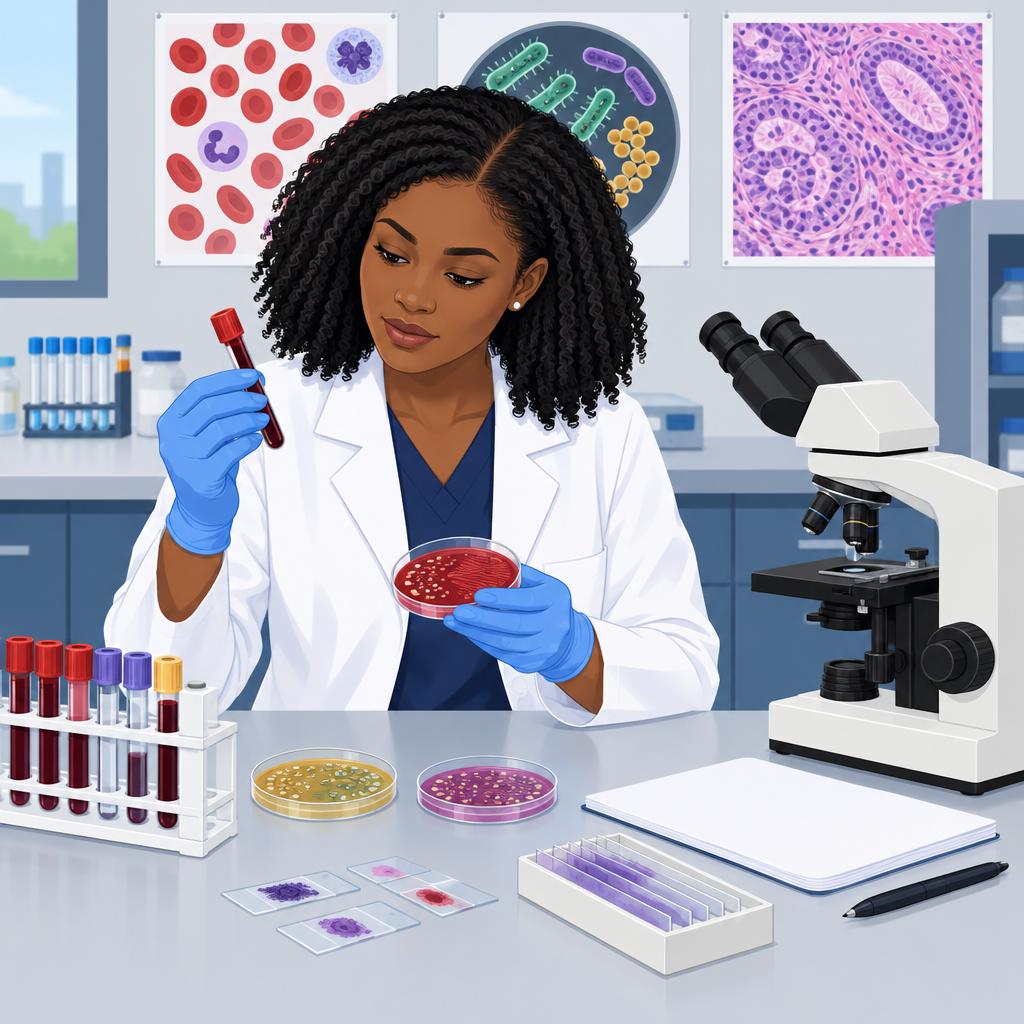
Microbiologists analyze blood, urine, sputum, and tissue specimens collected from patients.
They culture specimens on specialized media to encourage microbial growth.
Next, they identify the organisms through biochemical tests, molecular techniques, and microscopy.
Antibiotic Susceptibility Testing
Microbiologists perform susceptibility testing to measure bacterial responses to different antibiotics.
These findings help physicians prescribe effective treatments for bacterial infections.
Consequently, testing can reduce antibiotic misuse and limit the development of resistance.
Monitoring Antibiotic Resistance
Microbiologists monitor antibiotic resistance patterns across microbial populations.
This surveillance helps identify emerging resistance mechanisms.
Resistance data also guides prescribing changes and public health interventions.
Transform Your Career with Expert Guidance
Get personalized mentorship consulting that’s tailored to your unique path. Our expert advice is actionable and exclusive.
Get StartedClinical Collaboration and Patient Care
Microbiologists work closely with clinicians to provide accurate and timely laboratory results.
They communicate findings that influence patient care decisions.
They also collaborate with healthcare professionals to support better patient outcomes.
Infection Control and Outbreak Prevention
Microbiologists support infection control and prevention in healthcare settings.
They identify infectious agents and track their spread among patients and healthcare workers.
These activities help healthcare teams contain outbreaks and reduce infection risks.
Microbiology’s Contribution to Public Health
Microbiology supports the diagnosis and management of infectious diseases.
Microbiologists identify pathogens, determine susceptibility, and monitor resistance patterns.
Therefore, their work strengthens patient care and protects public health.
Discover More: Job Market Trends for Nigerian Physiologists
Immunology is a specialized field in medical laboratory science that studies the immune system.
Definition of Immunology Specialization
Immunology specialization examines how the immune system functions.
It also evaluates how the immune system responds to various pathogens.
Therefore, immunologists study immune activity through specialized laboratory analysis.
Functions and Responsibilities of Immunologists
Immunologists conduct laboratory tests that assess immune system function.
They identify abnormal immune responses that may indicate underlying health conditions.
Additionally, immunologists support result interpretation and improve testing methods through research.
- Immunologists conduct tests to assess immune system function.
- They identify abnormal immune responses linked to underlying health conditions.
- They collaborate with healthcare professionals to interpret results and develop treatment plans.
- They research technologies and techniques that improve immunology testing.
Importance of Immunology in Immune System Disorders
Immunology supports the diagnosis and monitoring of autoimmune diseases.
It also provides insight into allergies, HIV/AIDS, and other immune system conditions.
Furthermore, immunologists research infectious diseases and emerging pathogens.
- Immunology helps diagnose and monitor autoimmune diseases such as lupus and rheumatoid arthritis.
- It provides insights into allergies, HIV/AIDS, and other immune system disorders.
- Understanding immune disorders supports the development of targeted therapies and vaccines.
- Immunologists research infectious diseases and emerging pathogens.
Immunology specialization helps laboratories study immune disorders and support healthcare innovation.
Its findings contribute to treatment development and vaccine research.
Gain More Insights: Public Health Tech: Career Paths and Opportunities
Histopathology Specialization
Histopathology is a specialized field within medical laboratory science.
It examines tissues for microscopic changes caused by disease or injury.
Histopathologists analyze tissue samples to provide accurate and timely diagnoses.
Histopathologists and Tissue Disease Examination
Histopathologists identify diseases such as cancer, infections, and inflammatory conditions through tissue examination.
They use specialized stains and microscopy to visualize cellular structures and abnormalities.
Furthermore, they interpret tissue findings to determine disease nature, extent, and severity.
These interpretations help clinicians guide patient management and treatment decisions.
Common Histopathology Procedures and Techniques
Histopathologists use several procedures and techniques to analyze tissue samples accurately and efficiently.
- First, fixation preserves cellular structures and prevents decay by placing tissue samples in formalin.
- Next, embedding places samples in paraffin wax for thin sectioning.
- Sectioning cuts thin tissue slices with a microtome and mounts them on glass slides.
- Staining uses hematoxylin and eosin to highlight cellular components and structures.
- Using microscopy, histopathologists examine stained slides for abnormal tissue changes.
- Immunohistochemistry uses antibodies to detect specific tissue proteins and support disease diagnosis.
- Finally, molecular testing can identify genetic mutations associated with cancer or other diseases.
Explore Further: Women in Nigeria's Public Health Technology Sector
Specialization and Patient Care
Medical laboratory science offers specializations including clinical chemistry, hematology, microbiology, and immunology.
Each area supports disease diagnosis, treatment monitoring, and patient safety.
Moreover, specialization helps professionals build advanced skills and remain current with laboratory technologies.
Specialized training can also improve test accuracy.
Consequently, accurate results support more precise diagnoses and better treatment decisions.
By focusing on a laboratory discipline, professionals contribute to medical knowledge and patient well-being.
Additionally, specialization supports career growth while strengthening healthcare delivery.
Therefore, specialized laboratory practice remains important for improving patient care and outcomes.
Additional Resources
Google search results for Specializations in Medical Laboratory Science Health Sciences
Bing search results for Specializations in Medical Laboratory Science Health Sciences


