




Physiology is the study of how the body works, making it crucial in health sciences.
Understanding physiology helps professionals comprehend the body’s functions.
Exploring Health Sciences Through Physiology
Physiology examines the intricate workings of various bodily systems.
It explains the mechanisms behind normal bodily processes.
Moreover, health sciences rely on physiology for foundational knowledge.
Studying physiology enables health professionals to diagnose and treat patients effectively.
Importance of Physiology in Health Sciences
Physiology plays a critical role in health sciences education and practice.
Healthcare providers rely on physiology to care for patients.
Additionally, physiological knowledge guides clinical treatment plans and interventions.
Strong physiology knowledge helps professionals improve health outcomes.
Physiology serves as a cornerstone of health sciences.
It clarifies the human body’s inner workings, which supports healthcare.
Appreciating physiology’s importance enhances healthcare delivery.
A solid understanding of physiology remains fundamental for health professionals.
Historical Development of Physiology
Physiology has developed through observations, reasoning, experiments, and genetic research.
Ancient civilizations established early foundations for studying bodily functions.
Later discoveries transformed physiology into a scientific discipline.
Early Foundations of Physiological Study
- Ancient Egyptians documented aspects of the human body in medical texts.
- Greek thinkers, including Hippocrates and Aristotle, used observation and reasoning to study human physiology.
- During the Islamic Golden Age, Avicenna and Al-Razi advanced physiological knowledge through experiments and dissections.
- Renaissance interest in science produced major breakthroughs in anatomy and physiology.
Major Milestones in Physiological Research
- William Harvey’s seventeenth-century discovery of blood circulation transformed cardiovascular physiology.
- Ivan Pavlov’s early twentieth-century experiments on conditioned reflexes advanced neurophysiology.
- August Krogh received the 1920 Nobel Prize for studying blood-flow regulation in capillaries.
- The Human Genome Project revealed genetic insights into physiological processes during the late twentieth century.
Physiology supports health sciences by explaining mechanisms involved in normal and pathological conditions.
Researchers and healthcare professionals use this knowledge to develop treatments and interventions.
These efforts aim to improve human health and well-being.
Importance of Physiology in Health Sciences
Physiology supports health sciences by explaining how living systems function.
It connects cellular, tissue, and organ processes with medical understanding.
This knowledge helps professionals interpret health and disease.
Physiology as a Foundation for Medical Knowledge
Physiology examines functions and processes throughout the human body.
It explains how the body maintains homeostasis and responds to internal and external stimuli.
Researchers use these principles to investigate mechanisms associated with health and disease.
- Physiology studies the functions and processes of living organisms, including humans.
- It helps healthcare professionals understand homeostasis and bodily responses.
- Medical students use physiological principles to understand clinical medicine.
Physiology in Disease Diagnosis and Treatment
Clinicians need physiological knowledge to recognize abnormal body functions.
It supports accurate diagnosis by helping professionals identify system dysfunctions.
It also guides treatment choices by clarifying how interventions affect the body.
- Physiological knowledge helps healthcare professionals diagnose diseases accurately.
- It helps identify abnormalities within the body’s systems.
- Healthcare professionals use it to tailor treatment plans for individual patients.
- Clinicians consider physiological effects when selecting drugs or other interventions.
Normal physiological knowledge gives clinicians a reference for identifying disease-related changes.
It also supports informed decisions about patient care.
Gain More Insights: Top Public Health Technology Programs in Nigeria
Major Physiological Systems
Physiology examines several major systems that support normal body function.
These systems transport materials, exchange gases, and coordinate essential activities.
Together, they help the body maintain stable internal conditions.
- Cardiovascular system: This system transports nutrients, oxygen, hormones, and waste products throughout the body.
- Respiratory system: This system exchanges gases by bringing oxygen into the body and removing carbon dioxide.
- Nervous system: This system coordinates body actions through signals sent across a complex network of neurons.
Interdependence Among Body Systems
These systems work together to keep the body functioning properly and maintain homeostasis.
The cardiovascular system delivers oxygen and nutrients through blood vessels regulated by the nervous system.
Meanwhile, the respiratory system supplies oxygen to blood and removes carbon dioxide.
The nervous system controls breathing, heart rate, and other vital functions.
Therefore, dysfunction in one system can affect the performance of other systems.
Transform Your Career with Expert Guidance
Get personalized mentorship consulting that’s tailored to your unique path. Our expert advice is actionable and exclusive.
Get StartedThe heart pumps blood throughout the body, supplying tissues with nutrients and oxygen.
It also supports waste removal by circulating blood through body tissues.
Additionally, the respiratory system complements circulation through efficient gas exchange.
Endocrine Coordination of Physiological Processes
The endocrine system coordinates processes involving metabolism, growth, and development.
It works closely with cardiovascular, respiratory, and nervous systems to support organ and tissue function.
For example, stress can trigger adrenaline release, which affects heart rate, blood pressure, and breathing.
This response demonstrates how body systems coordinate their activities after external stimuli.
Understanding these relationships helps healthcare professionals assess, treat, and manage health conditions.
Recognizing system interdependence also supports efforts to promote well-being and prevent disease.
Uncover the Details: Radiology Career Opportunities for Women in Nigeria
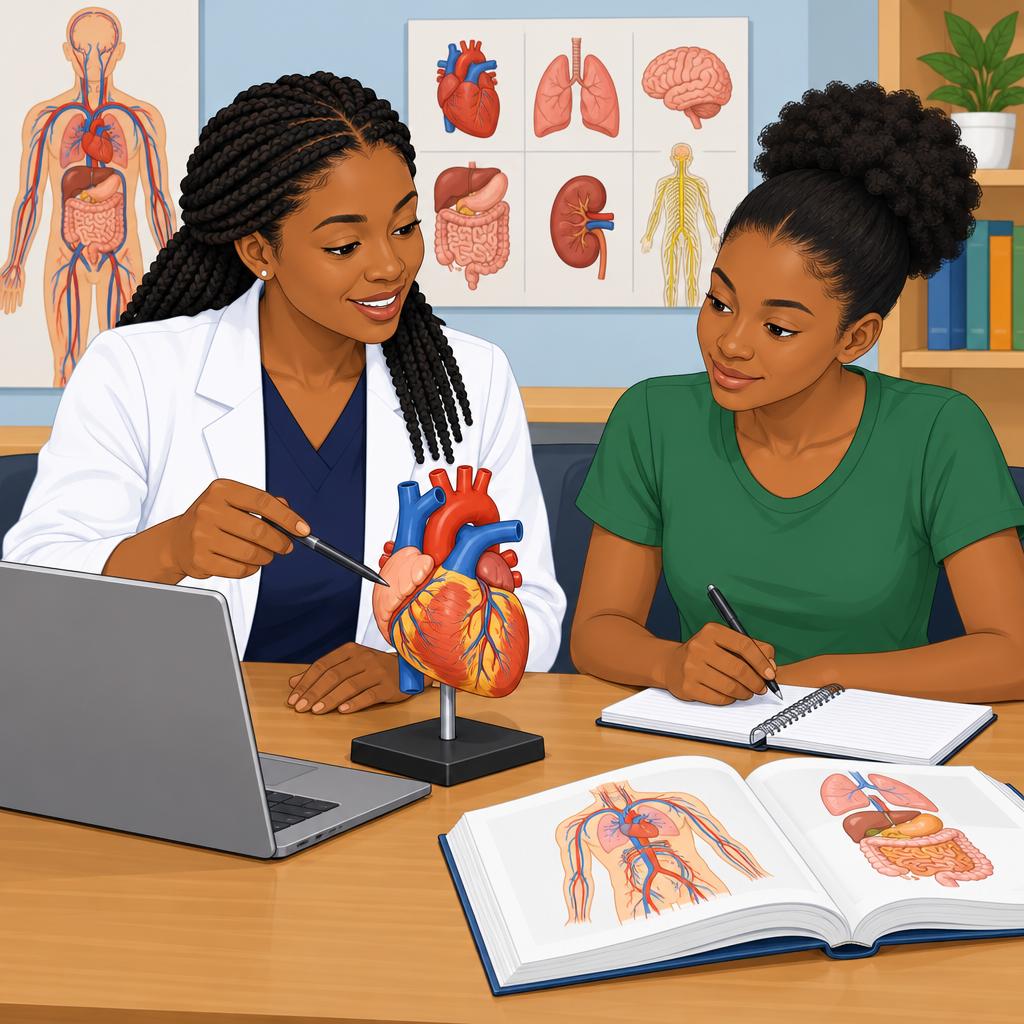
Physiology gives medical students a structured understanding of body function and responses to different stimuli.
Medical education uses this knowledge to connect biological processes with patient care.
Hands-on activities help aspiring healthcare professionals apply physiological concepts in practical settings.
Integration of Physiology into Medical School Curriculum
Medical schools typically include physiology as a core curriculum component.
Students encounter foundational topics early, including cell biology, neurophysiology, cardiovascular function, and respiratory mechanics.
Lectures, laboratories, and interactive activities show how organ systems maintain homeostasis and respond to changing conditions.
- Specialized courses can expand student knowledge of endocrinology, immunology, and exercise physiology.
- Physiology lessons explain how different organ systems work together within the body.
- Students connect physiological principles with disease mechanisms during clinical rotations.
- Clinical experiences also help students relate theoretical knowledge to treatment strategies.
- These curriculum components strengthen students’ preparation for healthcare practice.
Importance of Hands-On Learning and Practical Applications
Laboratory experiments reinforce physiological concepts through direct observation and practice.
Simulations and clinical case studies help students interpret clinical data and solve problems.
Moreover, role-playing activities let students practice patient care, diagnostic, and therapeutic procedures in controlled settings.
- Practical applications connect theoretical knowledge with real-world healthcare situations.
- Students develop problem-solving abilities through active physiological investigation.
- Interactive learning supports a broader understanding of human physiology and disease pathology.
- Hands-on experiences strengthen teamwork, communication, and collaboration among students.
- These skills prepare students to manage challenges within modern healthcare practice.
Integrating physiology throughout medical education helps students understand complex health needs.
Practical learning further prepares future healthcare professionals to provide competent and compassionate care.
Find Out More: How to Become a Medical Biochemist in Nigeria
Research Advancements in Physiology
Physiology has advanced significantly in recent years.
Researchers worldwide conduct groundbreaking studies across the field.
These discoveries are transforming understanding of the human body.
- Recent studies and discoveries in physiology
- New technologies and methodologies shaping physiological research
Recent Studies and Discoveries in Physiology
Recent research highlights the gut microbiome’s role in human health.
Trillions of digestive microbes regulate metabolism, immunity, and mental health.
Scientists have also identified new cell types within the human body.
These specialized cells perform unique functions.
Their discovery clarifies how organs and systems maintain homeostasis.
Additionally, advanced imaging technologies have transformed physiological research.
High-resolution MRI and CT scans reveal the body’s internal structures in unprecedented detail.
Researchers use these techniques to study organ function and disease progression.
New Technologies Shaping Physiological Research
Big data analytics and artificial intelligence now support complex physiological research.
Machine learning algorithms process vast datasets to identify patterns and predict outcomes.
Consequently, these tools accelerate discovery across the field.
Gene editing technologies, including CRISPR, let scientists modify genetic code precisely.
Researchers can examine specific genes and explore targeted therapies for genetic disorders.
Organ-on-chip technologies provide another important research model.
These microscale devices mimic human organ structure and function.
They help researchers study disease mechanisms and test drugs in laboratory settings.
Together, these methods deepen understanding of the body’s complex functions.
They also support the development of more effective healthcare treatments and interventions.
Delve into the Subject: Radiography Professional Associations in Nigeria
Applications of Physiology in Healthcare
Physiological principles support many medical specialties.
Healthcare professionals use physiology to understand body functions during diagnosis and treatment.
These principles also guide patient care, rehabilitation, and health education.
- Cardiology uses heart function and circulation knowledge to diagnose and treat heart diseases.
- Pulmonology studies the respiratory system to manage conditions such as asthma and COPD.
- Neurology examines brain and nerve function to address epilepsy and Parkinson’s disease.
Physiologists in Patient Care and Rehabilitation
Physiologists assess how patients respond to illness and treatment.
They interpret physiological data and collaborate with healthcare teams.
Additionally, physiologists help patients improve physical abilities and maintain healthy lifestyles.
- Assessment involves gathering data about patients’ physiological responses to illness or treatment.
- Diagnosis uses physiological test results to support accurate medical decisions.
- Treatment planning combines professional expertise to create effective treatment strategies.
- Rehabilitation uses exercise and therapy programs to improve patients’ physical abilities.
- Patient education promotes lifestyle changes that support health and well-being.
Healthcare Settings for Physiologists
Physiologists work across several healthcare and research environments.
Each setting allows them to evaluate physiological functions for different patient needs.
Moreover, their responsibilities range from patient monitoring to intervention research.
- Hospitals use physiologists to monitor physiological parameters during surgery or intensive care.
- Clinics employ physiologists to conduct cardiovascular and respiratory diagnostic tests.
- Rehabilitation centers use personalized therapy plans to support patient recovery.
- Research institutions investigate how interventions affect physiological functions.
Multidisciplinary Collaboration in Healthcare
Physiologists collaborate with professionals from several healthcare disciplines.
This teamwork combines physiological knowledge with medical, therapeutic, nutritional, and psychological support.
As a result, healthcare teams can address patient needs from multiple perspectives.
- Physicians use physiological insights to support medical decision-making.
- Nurses assist with monitoring vital signs and patient responses to treatment.
- Physical therapists help improve patients’ mobility and functional abilities.
- Nutritionists advise patients about dietary changes that support health and wellness.
- Psychologists address psychological aspects of illness and recovery.
Physiology’s Role in Modern Healthcare
Physiology guides medical specialties in diagnosing and managing various conditions.
Physiologists assess patients, interpret findings, and help plan treatments.
Through collaboration, healthcare professionals work to improve patient outcomes and quality of life.
Physiology and Health Stability
Physiology supports health sciences by explaining how the body functions.
This understanding helps professionals diagnose diseases and select effective treatments.
It also reveals mechanisms that connect normal function with health conditions.
Regulation Through Homeostasis
Homeostasis allows the body to maintain stability while environmental conditions change.
This balance supports health and well-being across many physiological processes.
For example, the body regulates temperature, pH levels, and nutrient balance.
Organ Systems and Clinical Understanding
Physiology clarifies how different organ systems perform their essential functions.
It examines cardiovascular, respiratory, and nervous system activity.
This knowledge supports the diagnosis and treatment of diseases affecting these systems.
For instance, cardiovascular physiology informs care for hypertension and arrhythmias.
Physiology and Therapeutic Innovation
Physiological research has advanced healthcare by revealing how the body responds to different stimuli.
Scientists use these insights to develop treatments and therapeutic approaches.
Research on immunity has supported vaccines and immunotherapies for infectious diseases and cancer.
These advances expand knowledge of human health and improve approaches to treating illness.
Additional Resources
Google search results for Role of Physiology in Health Sciences Health Sciences
Bing search results for Role of Physiology in Health Sciences Health Sciences


