



Anatomy Education in Nigeria
Anatomy education in Nigeria presents challenges involving limited resources and an outdated curriculum.
Therefore, educators need innovative approaches that respond effectively to these conditions.
Such approaches can make anatomy learning more engaging and accessible for students.
Challenges Affecting Anatomy Instruction
Many institutions have limited access to modern tools and equipment for practical demonstrations.
Consequently, limited equipment makes practical anatomy demonstrations more difficult.
Meanwhile, traditional lecture-based teaching may struggle to maintain student engagement.
Why Innovative Methods Matter
Educators can introduce digital anatomy software and interactive learning platforms.
These resources provide engaging and comprehensive materials for studying anatomical concepts.
As a result, students can strengthen understanding and retain information more effectively.
Educational Benefits of Innovation
Innovative methods promote active learning among anatomy students.
They also encourage critical thinking and problem-solving skills.
Furthermore, varied approaches can support different learning styles and improve academic performance.
Approaches for More Interactive Anatomy Learning
Hands-on practical sessions can involve students directly in anatomy learning.
Virtual dissection simulations can offer another way to explore anatomical structures.
Additionally, case-based learning and peer teaching encourage participation and collaboration.
Strengthening the Anatomy Learning Experience
By embracing innovative methods, educators can create a more stimulating anatomy environment.
This shift can help Nigerian institutions address resource and engagement challenges.
A dynamic learning environment can enhance students’ educational experience.
Use of Technology in Teaching
Technology now supports innovative anatomy teaching in Nigeria.
Students once relied mainly on textbooks and diagrams to understand anatomical concepts.
However, digital tools can make complex structures more visible and interactive.
- Educators can incorporate virtual reality and 3D models into anatomy lessons.
- Teachers can also use educational apps and online resources for interactive learning experiences.
Benefits of Virtual Reality and 3D Models
Virtual reality and 3D models help learners explore anatomy beyond flat illustrations.
They also encourage active participation through interactive quizzes and simulations.
Additionally, students can revisit difficult concepts and progress at their own pace.
- Enhanced visualization helps students examine anatomical structures in three-dimensional space.
- Interactive features encourage students to participate actively during learning activities.
- Personalized learning allows students to review complex concepts whenever necessary.
Integration of Educational Apps and Online Resources
Educational apps and online resources extend anatomy learning beyond scheduled lessons.
Students can access materials at convenient times and locations.
Furthermore, digital platforms connect theoretical knowledge with current research and practical scenarios.
- Accessible resources allow students and educators to obtain learning materials conveniently.
- Interactive app features can make anatomy learning more engaging and effective.
- Online materials help students connect theoretical knowledge with real-world applications.
- Collaborative platforms enable students to complete assignments and projects together.
These technologies can create a more dynamic and engaging anatomy learning environment.
They also help students develop digital skills needed in a technology-driven world.
Applying Anatomical Knowledge Through Case Studies
Problem-based learning engages anatomy students with real-life case studies in Nigeria.
Students apply theoretical knowledge to practical situations.
Consequently, they develop deeper understanding and stronger problem-solving skills.
Developing Critical Thinking Skills
Rather than memorizing facts and figures, students analyze and interpret information.
This process encourages critical thinking during complex problem-solving tasks.
Furthermore, it prepares students for real-world scenarios requiring careful judgment.
Strengthening Collaboration and Communication
Problem-based learning also fosters collaboration among anatomy students.
Students exchange ideas, share perspectives, and learn from one another during case studies.
This collaborative environment promotes teamwork and improves communication skills.
Making Anatomy Learning More Relevant
Real-life situations help students recognize the practical applications of anatomy.
As a result, the subject becomes more engaging and relevant.
Transform Your Career with Expert Guidance
Get personalized mentorship consulting that’s tailored to your unique path. Our expert advice is actionable and exclusive.
Get StartedMoreover, students may feel more motivated and develop greater interest in anatomy.
This approach can strengthen students’ understanding and improve their learning experience.
Uncover the Details: How to Start a Private Medical Practice in Nigeria
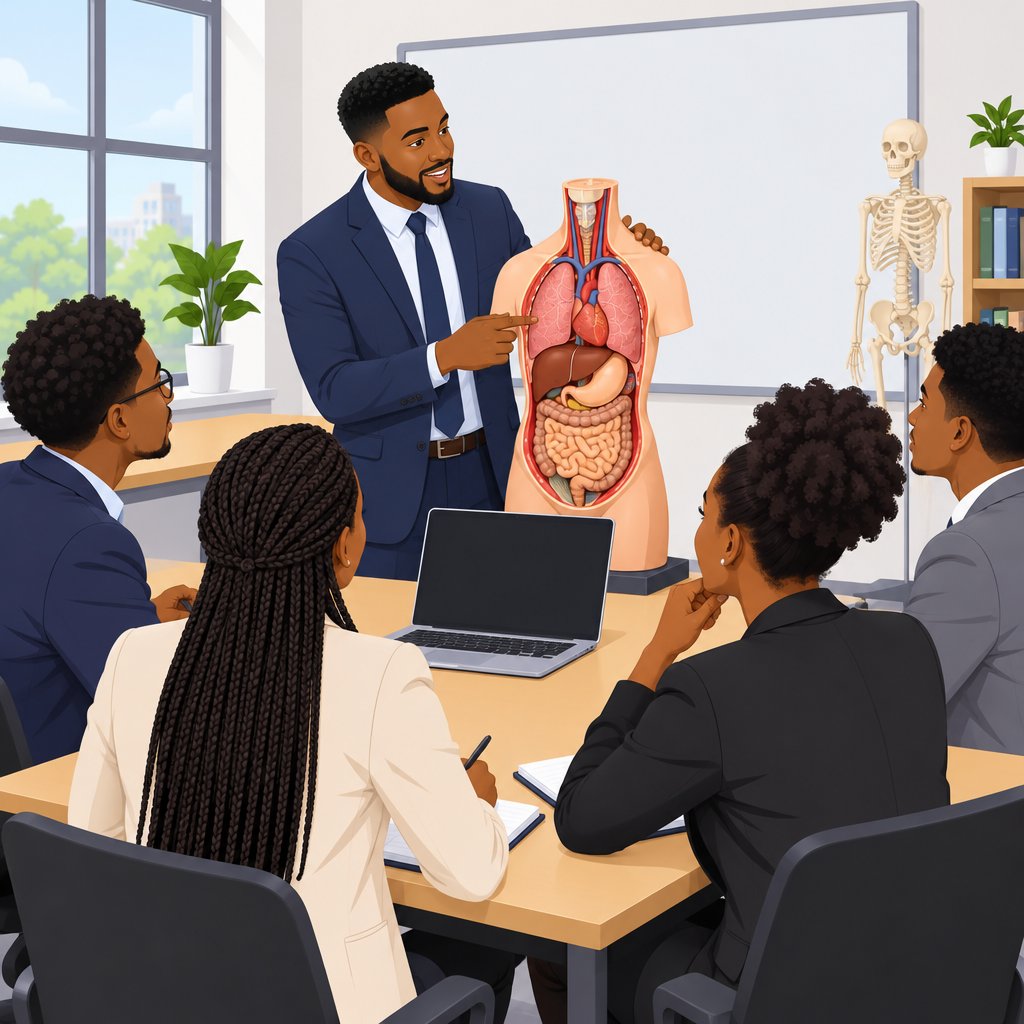
Collaborative Learning in Anatomy Education
Collaborative learning involves students working together to achieve a common goal.
In Nigerian anatomy education, this approach can strengthen students’ understanding and retention of complex anatomical concepts.
Group discussions allow students to examine anatomical concepts from different perspectives.
These exchanges can deepen understanding and reinforce learning.
- Group discussions and peer teaching deepen students’ comprehension of anatomical concepts.
- Teamwork and communication skills develop through the learning process.
Peer teaching helps students strengthen their own understanding while supporting classmates with difficult concepts.
Furthermore, this exchange creates a supportive environment for questions and clarification.
Group work requires students to communicate effectively, delegate tasks, and pursue shared objectives.
These skills remain valuable in professional settings that require teamwork and clear communication.
Educators can include group discussions, peer teaching activities, and group projects in their lesson plans.
Small-group activities can encourage active participation and engagement during classroom or virtual learning.
By encouraging cooperation, educators can create an interactive environment that supports academic success and personal growth.
Delve into the Subject: Understanding Preventive Dentistry in Nigeria
Hands-on Learning Experiences in Anatomy Education
Hands-on learning experiences deepen students’ understanding of the human body.
They help students apply theoretical knowledge to practical situations.
As a result, students can strengthen learning and retain information more effectively.
- Educators can organize anatomy dissection workshops and practical sessions for students.
- They can also arrange visits to medical museums and anatomy labs.
Anatomy Dissection Workshops and Practical Sessions
Dissection workshops give students direct experience with human cadavers.
During these sessions, students visually and physically explore body structures.
Experienced anatomy professors demonstrate proper techniques and explain anatomical structures.
Consequently, students develop spatial awareness and appreciate the body’s complexity.
Medical Museums and Anatomy Laboratory Visits
Visits to medical museums and anatomy labs create another practical learning opportunity.
Students can observe and interact with bones, organs, and anatomical models.
Medical museums also show anatomy’s history and reveal medical advancements.
Meanwhile, anatomy labs let students dissect and examine specimens under expert supervision.
These experiences connect classroom knowledge with direct observation and practical work.
Therefore, educators in Nigeria can enrich students’ anatomy learning journeys through carefully planned activities.
Such activities help students deepen their understanding of the human body.
Find Out More: Mental Health Support for Nigerian Children
Integrating Art Into Anatomy Education
Art can make anatomy lessons more engaging for students in Nigeria.
Drawing exercises help students visualize anatomical structures and remember important details.
Additionally, artistic activities encourage creativity and personal expression during anatomy learning.
- Drawing and sketching exercises support visualization and memorization.
- Creative expression encourages active participation in anatomy lessons.
Using Drawing Exercises To Study Anatomy
Educators can assign drawings of bones, muscles, and internal organs.
Students should focus on accurate details, proportions, and relationships between anatomical structures.
This hands-on process strengthens anatomical understanding while developing students’ artistic abilities.
Furthermore, students actively interpret complex information instead of relying only on written descriptions.
Exploring Anatomy Through Different Artistic Media
Teachers can extend anatomy activities beyond drawing through sculpting and painting.
Each artistic medium allows students to examine anatomical forms from different perspectives.
Consequently, students can develop a broader understanding of the body’s structures.
These activities also support creativity and critical thinking during anatomy instruction.
Understanding Connections Within the Human Body
Art helps students visualize how organs and body systems connect.
Students can represent these relationships through drawings, models, paintings, or other creative work.
This interconnected approach encourages students to relate separate anatomical structures.
As a result, art can support deeper understanding of human anatomy.
It can also create a dynamic learning environment that combines scientific knowledge with artistic expression.
Gain More Insights: Public Awareness of Oral Surgery in Nigeria
Multimedia resources support innovative Anatomy teaching in Nigeria.
They can make complex concepts more accessible and engaging.
Creating Video Tutorials
- Video tutorials give students visual representations of anatomical structures and functions.
- These tutorials break complex concepts into clear and manageable segments.
- Students can watch the videos at their own pace and improve comprehension.
Interactive Presentations
- Interactive presentations engage students by encouraging active participation during lessons.
- Quizzes and drag-and-drop exercises reinforce important learning outcomes.
- These presentations support visual and auditory learners through varied activities.
Improving Engagement and Retention
- Visual and auditory aids can increase student engagement and retention.
- Students may remember multimedia content more effectively than traditional lectures.
- Repeated multimedia presentations reinforce understanding and strengthen memory retention.
Therefore, multimedia resources can transform Anatomy learning for students in Nigeria.
They make complex anatomical concepts more accessible and engaging.
Advancing Anatomy Education Through Innovative Methods
Interactive 3D models, virtual dissection labs, and case-based learning offer effective approaches to anatomy education.
Moreover, continuous adaptation and improvement can strengthen anatomy education in Nigeria.
By embracing modern technology and innovative strategies, educators can enhance learning experiences for future healthcare professionals.
These approaches also equip students with the knowledge and skills needed to excel in their field.
Additional Resources
Google search results for Innovative Teaching Methods for Anatomy in Nigeria Medical
Bing search results for Innovative Teaching Methods for Anatomy in Nigeria Medical


