




Introduction
Understanding the anatomy curriculum in Nigeria supports medical education and professional practice.
Anatomy provides essential knowledge for diagnosing and treating patients.
Therefore, students and professionals benefit from developing a thorough understanding of human anatomy.
Anatomy Curriculum Content
The anatomy curriculum typically examines the structure and function of the human body.
It covers organs, tissues, bones, and systems within human anatomy.
Additionally, this study helps learners connect body structures with their functions.
Importance of Anatomy in Medical Education
Anatomy forms a foundation for medical practice in Nigeria.
It supports various medical specialties and strengthens clinical understanding.
Consequently, students can better understand the body’s intricacies during diagnosis and treatment.
Overview of Anatomy Curriculum in Nigeria
Nigeria’s anatomy curriculum develops students’ understanding of human body structure and function.
It combines gross anatomy, histology, embryology, and neuroanatomy within the learning experience.
Additionally, students use lectures, laboratory sessions, cadaver dissection, and formal assessments.
- Gross anatomy, histology, embryology, and neuroanatomy
- Lectures, practical laboratory sessions, and cadaver dissection
- Theoretical examinations and practical assessments
Structure and Content of the Curriculum
The curriculum uses modules that progressively develop students’ anatomical knowledge.
Early learning introduces anatomy, basic tissues, and organs.
Later modules examine regional anatomy, body systems, embryology, and radiological anatomy.
- Introduction to anatomy, basic tissues, and organs
- Regional anatomy covering skeletal, muscular, and nervous systems
- Advanced anatomy, embryology, and radiological anatomy
Comparison with Anatomy Curricula in Other Countries
Nigeria’s curriculum shares several features with anatomy programs in other countries.
However, teaching priorities and methods differ between national curricula.
For example, practical dissection, histological techniques, research methodology, and clinical integration receive varying emphasis.
- Nigeria strongly emphasizes hands-on learning through cadaver dissection
- Some countries emphasize histological techniques and research methodology more strongly
- Nigeria incorporates clinical correlations and case studies to a moderate extent
Challenges Affecting Anatomy Teaching
Limited resources make anatomy teaching difficult in many Nigerian educational institutions.
Anatomical models, specimens, and modern teaching aids remain unavailable or insufficient.
Furthermore, many institutions lack enough qualified and experienced anatomy teachers.
This shortage can reduce the quality of instruction students receive.
Students may also receive limited practical exposure because departments face resource constraints.
Without sufficient hands-on sessions, learners may struggle to understand real-life anatomical structures.
Practical experience helps students connect theoretical knowledge with anatomical specimens.
Strategies for Strengthening Anatomy Education
Government bodies, educational institutions, and stakeholders must collaborate to address these challenges.
Increased investment can improve facilities and support more effective anatomy instruction.
Additionally, stronger partnerships can expand practical learning opportunities for students.
- Government bodies can increase funding for anatomy departments and modern teaching resources.
- Institutions can recruit and train qualified teachers through programs and competitive incentives.
- Partnerships with healthcare facilities, museums, and research institutions can strengthen practical learning.
These measures can help departments provide students with more consistent exposure to anatomical specimens.
They can also improve teacher expertise and strengthen the quality of anatomy education.
As a result, students can learn anatomy within a more supportive and practical educational environment.
See Related Content: Role of Radiographers in Diagnosing Diseases
Several strategies can improve anatomy education in Nigeria.
These strategies address resources, teacher development, and international knowledge exchange.
Stakeholders should prioritize these initiatives to strengthen learning for anatomy students and teachers.
Investment in Modern Resources and Facilities
Modern resources can improve practical learning experiences for anatomy students.
Furthermore, suitable facilities can support effective demonstrations and hands-on activities.
Institutions can strengthen anatomy education by improving laboratories and providing dependable learning materials.
- Institutions should update anatomy laboratories with state-of-the-art equipment.
- They should ensure access to quality textbooks and teaching materials.
- Technology-driven learning tools can support anatomy instruction.
- Conducive learning environments can encourage valuable hands-on experiences.
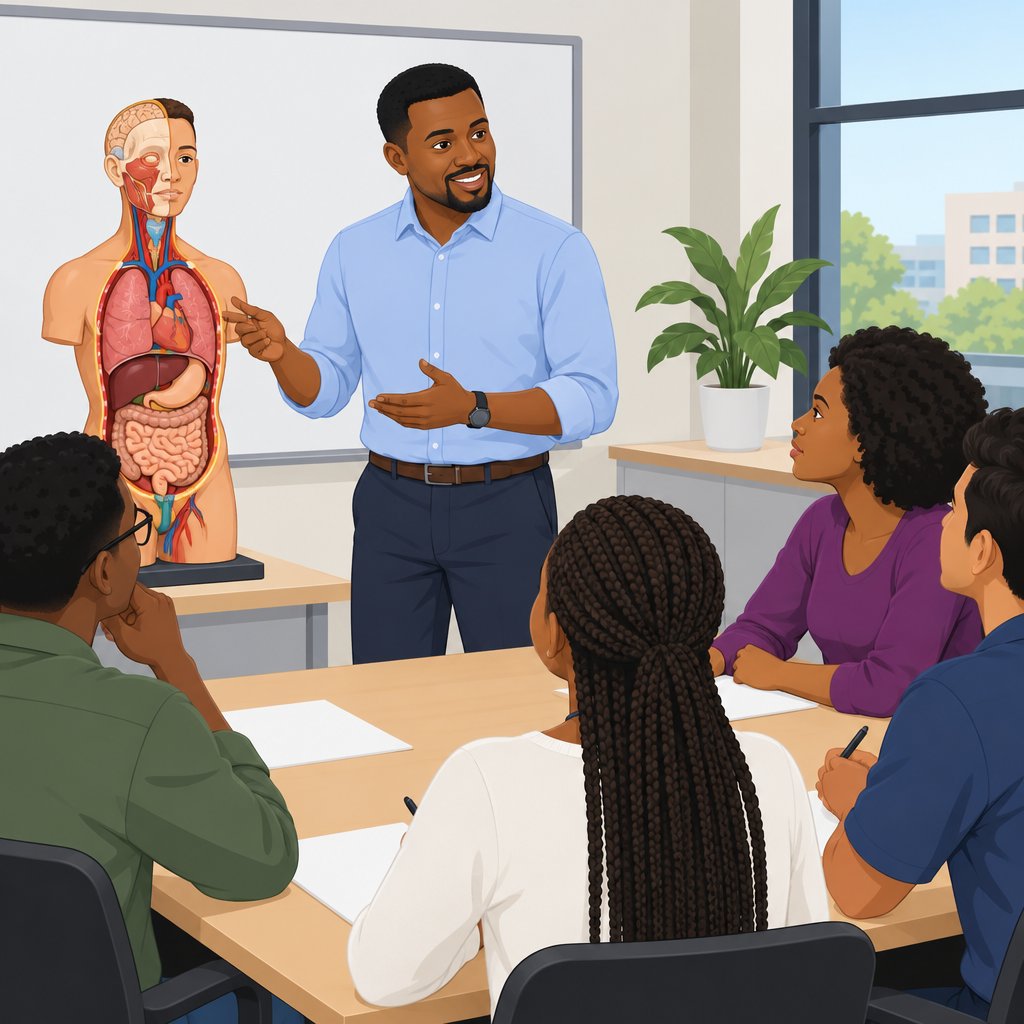
Training and Development Opportunities for Anatomy Teachers
Teacher development can strengthen anatomy instruction and improve classroom learning.
Moreover, innovative teaching methods can help teachers present anatomy concepts more effectively.
Transform Your Career with Expert Guidance
Get personalized mentorship consulting that’s tailored to your unique path. Our expert advice is actionable and exclusive.
Get StartedProfessional support can also encourage research participation and mentorship for new teachers.
- Institutions should provide continuous professional development programs for anatomy teachers.
- Workshops and seminars can introduce innovative teaching methods.
- Teachers should participate in conferences and research activities.
- Mentorship programs can support new anatomy teachers.
Collaborations with International Institutions for Knowledge Exchange
International collaboration can expand opportunities for knowledge exchange in anatomy education.
Additionally, partnerships can connect Nigerian anatomy departments with institutions worldwide.
Shared research and exchange activities can create valuable cross-cultural learning experiences.
- Institutions can establish partnerships with renowned anatomy departments worldwide.
- Exchange programs can support faculty and student development.
- Joint research projects can produce shared publications.
- Cross-cultural learning opportunities can broaden educational experiences.
Implementing these strategies can improve the quality of anatomy education in Nigeria.
Consequently, students and teachers can benefit from stronger learning and development opportunities.
Delve into the Subject: How to Brush Kids' Teeth Properly in Nigeria
Impact of Anatomy Education on Healthcare
- Stronger understanding of body structures and functions
- Sharper clinical skills and diagnostic abilities
- Greater capacity for anatomical research
An effective anatomy curriculum can strengthen medical education and support the wider healthcare system in Nigeria.
Students gain clearer knowledge of body structures and functions, preparing them for medical careers.
Consequently, they can apply anatomical knowledge when assessing and treating patients.
A strong foundation also helps practitioners perform procedures with greater precision and confidence.
Moreover, detailed anatomical knowledge encourages students to investigate questions about the human body.
Such research may support new treatments and therapies for patients and the medical community.
These educational benefits can help graduates contribute effectively through clinical practice and research.
Uncover the Details: Role of Community Health Workers in Paediatrics
Importance of Continuous Evaluation and Updates in Anatomy Curriculum
Continuous evaluation keeps anatomy education relevant to current medical practices and technologies.
Regular updates help educators respond to changing healthcare needs and societal trends.
Educators can incorporate new research findings and field advancements through ongoing curriculum reviews.
Evaluation identifies improvement areas and reveals gaps in the curriculum.
Consequently, updated teaching prepares students for modern healthcare challenges.
Relevance to Current Medical Practices and Technologies
Anatomy educators should align curriculum content with current medical practices and technologies.
This alignment introduces students to cutting-edge techniques and tools used in healthcare.
Relevant content prepares students for real-world situations during their careers.
Moreover, studying current practices helps students follow the evolving healthcare landscape.
Thus, graduates develop the knowledge and skills needed for professional success.
Adaptation to Changing Healthcare Needs and Societal Trends
A flexible anatomy curriculum can address changing healthcare needs effectively.
Adapting to societal trends helps educators address healthcare issues affecting communities.
It also supports topics such as preventive healthcare and patient-centered care.
Furthermore, the curriculum should reflect diverse patient populations and healthcare settings.
By responding to change, educators develop competent and compassionate healthcare providers.
Delve into the Subject: Essential Skills for Nigerian Veterinary Students
Strengthening Anatomy Education in Nigeria
Understanding Nigeria’s anatomy curriculum helps medical students build knowledge and skills for healthcare practice.
It establishes a foundation for understanding human body structures and supports effective professional preparation.
Therefore, stakeholders should prioritize anatomy education across Nigeria.
Government authorities, academic institutions, and healthcare organizations should invest in curriculum development, educator training, and essential learning resources.
These investments can provide medical students with comprehensive and high-quality anatomy education.
Consequently, stronger preparation can help graduates deliver optimal healthcare services and support better outcomes for the population.
Such commitment can also contribute to a stronger healthcare system in Nigeria.
Additional Resources
Google search results for Understanding Anatomy Curriculum in Nigeria Medical
Bing search results for Understanding Anatomy Curriculum in Nigeria Medical


