




Introduction
Studying anatomy in Nigerian universities involves in-depth knowledge of the human body’s structure and functions.
Understanding anatomy is crucial in the medical field because it provides a foundation for diagnosing and treating patients.
This blog post discusses the importance of studying anatomy in Nigerian universities and what students can expect from their coursework.
Overview of Anatomy Programs in Nigerian Universities
Anatomy forms a fundamental part of medical education in Nigerian universities.
The program develops students’ understanding of the human body’s structure and function.
It combines theoretical instruction with practical learning throughout the course.
Duration of the Program
Anatomy programs in Nigerian universities typically last four to six years.
Students receive theoretical and practical training during their studies.
Dissection laboratories and clinical settings provide important hands-on experience.
Curriculum Structure
The curriculum examines bones, muscles, organs, and body systems.
Students study regional anatomy involving the head, neck, thorax, abdomen, pelvis, and limbs.
The program also emphasizes relationships between body structures and their functions.
- The curriculum covers major anatomical structures and their locations.
- Students connect regional structures with their roles in the body.
- Practical sessions reinforce knowledge gained through classroom instruction.
Courses Covered in the Program
Students explore anatomy through several complementary courses.
These subjects address visible structures, microscopic tissues, development, and medical imaging.
Together, the courses support careers in medicine, surgery, research, and academia.
- Gross anatomy examines structures visible to the naked eye, including bones and muscles.
- Histology examines the microscopic structure of tissues and organs.
- Embryology examines human development from conception to birth.
- Neuroanatomy examines the brain, spinal cord, and peripheral nerves.
- Radiological anatomy uses X-rays, CT scans, and MRIs to examine anatomy.
The program gives students a strong foundation in human anatomy.
This foundation supports further work in medicine, surgery, research, and academia.
Admission Requirements for Studying Anatomy
Studying anatomy in Nigerian universities requires candidates to meet specific admission requirements.
Universities assess applicants through academic qualifications, entrance examinations, and additional program requirements.
Applicants should review each university’s requirements before submitting an application.
Academic Qualifications Needed
Applicants must hold a high school diploma or an equivalent qualification.
A strong science background helps candidates prepare for anatomy studies.
Universities may also specify required subjects and minimum grades.
- Applicants need a high school diploma or its equivalent.
- They should study science subjects, including Biology, Chemistry, and Physics.
- Strong grades in these subjects support admission applications.
- Some universities require particular subject combinations.
- Candidates should confirm academic requirements with each university.
Entrance Examinations and Interviews
Most universities require prospective students to complete entrance examinations.
These examinations commonly assess knowledge of Biology, Chemistry, and Physics.
Some institutions also interview candidates before making admission decisions.
- Most universities require candidates to take entrance examinations.
- Examinations may cover Biology, Chemistry, and Physics.
- Some universities conduct interviews to assess candidate suitability.
- Strong examination performance can improve a candidate’s admission prospects.
Additional Anatomy Program Requirements
Individual universities may set additional requirements for their anatomy programs.
These requirements can include specific certifications or healthcare-related experience.
Candidates should research each institution to understand its complete admission process.
- Some universities establish extra requirements for anatomy applicants.
- Specific certifications may form part of the application requirements.
- Some institutions may consider prior healthcare-related experience.
- Researching university requirements helps candidates prepare complete applications.
- Meeting additional requirements can strengthen an applicant’s admission prospects.
Learn More: Key Areas of Preventive and Social Medicine Practice
Challenges Faced by Students Studying Anatomy in Nigeria
Studying anatomy in Nigerian universities presents several challenges for students.
These challenges can hinder learning and affect the overall educational experience.
Students must navigate resource limitations, large classes, and restricted practical opportunities.
Limited Resources and Facilities
Many students encounter inadequate textbooks and limited study materials.
Outdated laboratory equipment can also make complex anatomical concepts harder to understand.
Furthermore, limited anatomical models and research resources can restrict effective experimentation.
- Inadequate textbooks and study materials
- Outdated laboratory equipment
- Limited access to anatomical models
- Insufficient research resources
Consequently, students may struggle to grasp complex anatomical concepts fully.
They may also find it difficult to perform experiments effectively.
These limitations can reduce their understanding and proficiency in anatomy.
Large Class Sizes
Large classes often create overcrowded lecture halls.
Transform Your Career with Expert Guidance
Get personalized mentorship consulting that’s tailored to your unique path. Our expert advice is actionable and exclusive.
Get StartedStudents may struggle to receive individualized attention from their instructors.
Additionally, crowded classrooms can limit interaction and opportunities for clarification.
- Overcrowded lecture halls
- Difficulty receiving individualized attention
- Limited interaction with professors
- Fewer opportunities to ask questions
As a result, students may find it harder to engage with course materials.
They may also participate less actively in academic discussions.
Limited feedback can further affect their academic progress and support.
Limited Practical Exposure
Practical exposure helps anatomy students develop essential professional skills.
However, some students receive insufficient opportunities for hands-on training.
Restricted dissection and clinical observation can limit their practical development.
- Insufficient hands-on training opportunities
- Limited cadaver dissection experience
- Fewer opportunities to apply theoretical knowledge
- Restricted access to clinical observation settings
Students need practical settings to strengthen dissection, observation, and analytical skills.
Without enough exposure, they may struggle to apply theoretical knowledge in laboratories.
These restrictions can hinder their professional growth and development.
Anatomy programs offer valuable opportunities to study the human body and its structures.
Nevertheless, resource limitations and restricted training can affect students’ educational journeys.
Students, educators, and policymakers can work together to create supportive learning environments.
Delve into the Subject: Biomedical Technology Startups in Nigeria
Opportunities Available for Anatomy Students
- Internship programs provide hands-on experience in various medical settings.
- Additionally, research opportunities allow students to explore new discoveries in anatomy.
- Furthermore, networking with anatomy professionals can lead to career opportunities and mentorship.
You Might Also Like: Nigerian Celebrities Speaking on Mental Health
Career Prospects for Anatomy Graduates in Nigeria
Anatomy graduates from Nigerian universities can pursue several professional opportunities.
These opportunities include healthcare, research, education, and related fields.
With experience and further training, anatomy professionals can contribute significantly to Nigeria’s healthcare system.
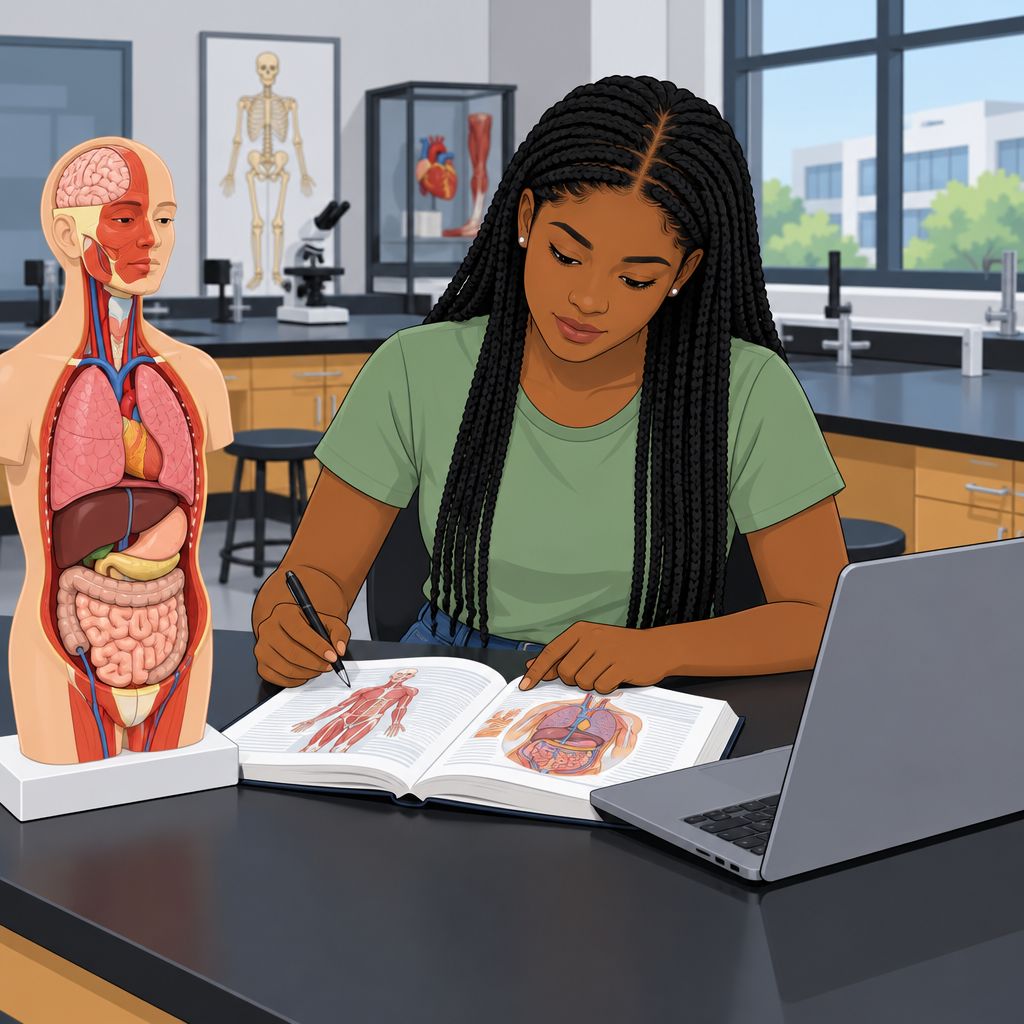
Healthcare Career Opportunities
Anatomy graduates can explore various positions within Nigeria’s healthcare sector.
For example, they may work as clinical anatomists, medical laboratory scientists, forensic anatomists, or medical researchers.
Hospitals, diagnostic centers, research institutions, and academic institutions may employ anatomy graduates.
Further Education Options
Graduates can pursue master’s or doctoral degrees in anatomy.
These advanced qualifications can support research careers, teaching positions, and specialized healthcare roles.
Additionally, postgraduate study in physiology, pathology, or biomedical sciences can broaden professional knowledge and skills.
Potential Salary Range for Anatomy Professionals
Anatomy professionals’ earnings in Nigeria depend on experience, skills, and industry.
Entry-level anatomy positions typically offer between NGN 50,000 and NGN 100,000 monthly.
With advanced qualifications and experience, professionals may earn between NGN 150,000 and NGN 300,000 monthly or more.
Healthcare positions generally offer higher salaries than research or academic roles.
Furthermore, additional education and specialized certifications may improve remuneration and career advancement opportunities.
Overall career growth allows anatomy professionals to support healthcare, research, and education in Nigeria.
You Might Also Like: Studying Radiology: Nigerian Student Experiences
Tips for Success in Studying Anatomy
Effective strategies can support success when students study anatomy in Nigerian universities.
Anatomy presents challenging concepts that require consistent preparation and focused learning.
These practical suggestions can help students approach their anatomy studies with confidence.
Time Management Strategies
A structured schedule helps students reserve sufficient time for anatomy revision.
Short study sessions can reduce burnout while keeping revision manageable.
Specific goals can maintain motivation and focus during each study session.
- Create a study schedule that allocates specific times for anatomy revision.
- Break study sessions into smaller, manageable periods to avoid burnout.
- Set specific goals for each study session to remain motivated and focused.
- Start anatomy revision early and follow your schedule to avoid procrastination.
- Use calendars, planners, and apps to organize your study activities.
Effective Study Methods
Active learning can improve understanding of complex anatomical concepts.
Regular practice can strengthen knowledge and help students retain important anatomical facts.
Tutorials, practical sessions, and online resources can supplement classroom learning.
- Use flashcards, diagrams, and group discussions to understand complex anatomical concepts.
- Practice past questions and quiz yourself regularly to test knowledge and retention.
- Attend anatomy tutorials, practical sessions, and workshops to deepen your understanding.
- Engage with anatomy videos, websites, and apps outside the classroom.
- Seek feedback from professors and peers to identify areas for improvement.
Seeking Help When Needed
Students should seek assistance whenever anatomical concepts become difficult to understand.
Study groups can encourage collaboration and provide different perspectives on complex structures.
Academic support and self-care can strengthen the learning experience and maintain balance.
- Contact professors, teaching assistants, or classmates when anatomical concepts cause difficulties.
- Form study groups to collaborate on challenging topics and share perspectives.
- Use tutoring centers, academic advisors, and study skills workshops on campus.
- Consider private tutors or online tutoring services for additional subject support.
- Practise self-care through exercise, adequate sleep, and stress management techniques.
Applying these strategies can help students navigate anatomy studies with greater confidence.
Consistent preparation and appropriate support can help students pursue their academic goals.
The Value of Anatomy Education in Nigeria
Studying anatomy in Nigerian universities offers a rich and rewarding experience.
Students explore the human body through comprehensive coursework and practical laboratory sessions.
These experiences help students develop valuable knowledge and skills.
Future anatomy students should pursue their passion and study the subject deeply.
This preparation can support careers in healthcare and research.
Students can also compare anatomy programs available across Nigeria.
Traditional classrooms and online courses provide opportunities for continued education and professional development.
Additional Resources
Google search results for Introduction to Studying Anatomy in Nigerian Universities Medical
Bing search results for Introduction to Studying Anatomy in Nigerian Universities Medical


