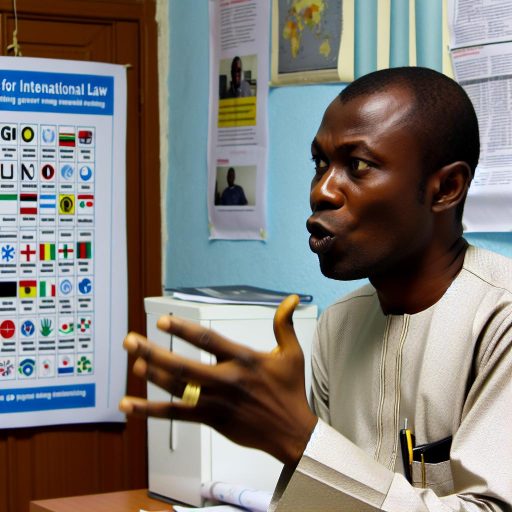
Legal Systems in Nigeria and International Law
Nigeria’s legal system combines common law, customary law, and Sharia law.
International law covers agreements and treaties between countries.
These agreements promote global cooperation and establish regulatory standards.
Comparing Nigerian and international law reveals similarities, differences, and legal practice standards.
Historical Development of Nigerian Law
Nigerian law developed through interactions between colonial institutions, local customs, and later national reforms.
These influences gradually shaped a legal framework that combines formal procedures with community-based practices.
Since independence, legal development has increasingly reflected Nigeria’s identity and local values.
Colonial Influence on the Nigerian Legal System
- British colonial rule significantly shaped Nigeria’s legal system.
- Colonial administrators introduced English common law and statutes.
- They imposed a legal framework based on British institutions.
- However, administrators also considered traditional norms and customs.
Evolution of Nigerian Law After Independence
- Nigeria gained independence from Britain in 1960.
- Afterward, lawmakers introduced reforms that expressed Nigerian identity.
- Constitutional developments continued to influence the legal landscape.
- Judicial decisions increasingly reflected local values.
Traditional Practices and the Formal Legal System
- Traditional practices relied on community norms and customs.
- Communities often used oral traditions to resolve disputes.
- The formal system introduced written laws and structured court procedures.
- The hybrid system seeks balance between traditional practices and formal institutions.
Legal Autonomy and Customary Integration
Colonial legacies, national reforms, and traditional practices continue to influence Nigerian law.
This development reflects Nigeria’s movement toward legal autonomy.
It also shows how local customs can operate within a formal legal framework.
Sources of Law in Nigeria
Nigerian law draws authority from several important sources.
These sources shape legal rules and support the administration of justice.
Together, they create a framework for governance and legal decision-making.
- Examination of the Constitution as supreme law in Nigeria
- Role of legislation in the Nigerian legal system
- Influence of case law and judicial precedent in Nigerian law
The Constitution as Supreme Law in Nigeria
The Constitution serves as Nigeria’s supreme law.
It establishes the framework for governing the country.
Additionally, it defines citizens’ fundamental rights and government structures.
It also divides powers between federal and state governments.
Therefore, every law, regulation, and official action must comply with its provisions.
Any conflicting law becomes null and void.
The Constitution requires a rigorous amendment process.
This process encourages careful consideration of proposed changes.
The Role of Legislation in the Nigerian Legal System
Legislation provides an important source of law in Nigeria.
The National Assembly makes federal laws within its constitutional authority.
Similarly, State Houses of Assembly make laws within their jurisdictions.
These laws bind individuals and entities within the relevant jurisdiction.
They address matters such as criminal, commercial, family, and administrative law.
The legislative process begins when lawmakers introduce bills.
Members then debate the proposals and review them through committees.
After passage, presidential or gubernatorial assent turns a bill into law.
The resulting law becomes enforceable within its applicable jurisdiction.
Case Law and Judicial Precedent in Nigerian Law
Judicial decisions significantly influence the development of Nigerian law.
Nigeria’s common law system gives important weight to decisions from higher courts.
These decisions establish principles for resolving similar disputes.
The Supreme Court’s decisions bind all lower courts in Nigeria.
Consequently, lower courts apply relevant precedents when deciding cases.
This approach promotes consistency and predictability in legal interpretation.
However, judges may depart from precedent in certain circumstances.
That flexibility helps courts respond to changing social values and circumstances.
These sources work together to create Nigeria’s legal framework.
They support the rule of law and protect individual rights.
Transform Your Career with Expert Guidance
Get personalized mentorship consulting that’s tailored to your unique path. Our expert advice is actionable and exclusive.
Get StartedGain More Insights: In-Demand Legal Disciplines in Nigeria: Where the Future Lies

Legal Education and Practice in Nigeria
Legal education and legal practice in Nigeria follow structured requirements for aspiring lawyers.
These requirements connect university study, practical training, and professional admission.
Moreover, Nigerian lawyers develop skills for domestic work and increasingly international legal matters.
Overview of Legal Education Requirements in Nigeria
Nigerian legal education operates under the oversight of the Nigerian Bar Association and the Council of Legal Education.
First, aspiring lawyers obtain law degrees from recognized universities.
Afterward, they attend the Nigerian Law School for one year of practical training.
Successful candidates then receive a call to the Nigerian Bar.
This admission allows them to practice as lawyers.
Comparison Between Nigerian Legal Profession and International Legal Practice Standards
Nigerian legal education resembles international standards because both require formal legal study.
However, practical training programs and specialization opportunities differ across jurisdictions.
Meanwhile, Nigerian training emphasizes Nigerian laws and legal systems.
International practice may address broader issues and require additional regional qualifications or certifications.
Impact of Globalization on Legal Education and Practice in Nigeria
Globalization has significantly influenced legal education and practice in Nigeria.
Multinational corporations and cross-border disputes require lawyers to address international legal issues.
Consequently, legal education places greater emphasis on international laws and legal procedures.
Lawyers who understand international practice standards can gain advantages in the global legal market.
Thus, globalization encourages greater convergence between Nigerian and international legal practices.
Learn More: Nigerian Responses to International Humanitarian Law
Human Rights and Justice in Nigeria
Nigeria recognizes human rights as fundamental within its legal system.
The 1999 Constitution guarantees rights to life, dignity, and freedom of expression.
Specific Nigerian laws also protect women, children, and persons with disabilities.
National Human Rights Protections
The National Human Rights Commission monitors and protects human rights in Nigeria.
These constitutional and statutory protections establish important safeguards for citizens.
However, effective enforcement remains necessary to protect those rights fully.
- The Constitution guarantees the right to life.
- It protects human dignity and freedom of expression.
- Specific laws protect women, children, and persons with disabilities.
- The National Human Rights Commission monitors human rights protections.
Nigeria and International Human Rights Standards
Nigeria is a signatory to several international human rights treaties, including the Universal Declaration of Human Rights.
Nevertheless, some Nigerian human rights laws fall short of international standards.
Reported violations include arbitrary detention, extrajudicial killings, and restrictions affecting journalists and activists.
- Nigeria recognizes several international human rights commitments.
- Arbitrary detention has raised concerns about human rights protection.
- Reports of extrajudicial killings have also created serious concerns.
- Critics have accused Nigeria of restricting journalists and activists.
Barriers to Accessing Justice
Nigeria faces several challenges in ensuring timely and fair access to justice.
A slow and inefficient judicial system often delays legal resolutions.
Additionally, corruption within the legal system can prevent fair outcomes.
- Judicial delays restrict timely access to justice.
- Corruption can hinder fair and effective legal resolutions.
- Indigent individuals often lack adequate legal representation.
- High legal costs further limit access for poor Nigerians.
Strengthening Human Rights and Justice
Nigeria has made progress by recognizing and protecting human rights.
However, continuing challenges require stronger protections and more effective legal processes.
Addressing these concerns would help Nigeria meet international standards and expand access to justice.
Delve into the Subject: Immigration Law in Nigeria: International Aspects
Nigeria’s Role in International Law Treaties and Agreements
Nigeria participates actively in international law through treaties and agreements that support cooperation and peaceful relations.
It has joined treaties covering human rights, trade, environmental protection, and security.
These commitments connect Nigeria’s domestic policies with recognized international standards.
Notably, Nigeria has ratified the United Nations Convention on the Law of the Sea.
UNCLOS establishes rules for ocean use, marine resources, and maritime boundaries.
Therefore, Nigeria accepts obligations concerning sustainable management and maritime dispute resolution.
Nigeria also belongs to the African Union and the Economic Community of West African States.
Through these organizations, it supports regional development, peace, security, and legal cooperation.
Differences Between Nigerian and International Legal Obligations
Nigeria must observe both domestic laws and international obligations.
Domestic laws apply within Nigeria, while international obligations arise from agreements among states.
However, the two systems differ in their sources, enforcement methods, and dispute processes.
Nigeria derives domestic laws from its Constitution, statutes, and judicial decisions.
By contrast, international law develops through treaties, conventions, and accepted customary practices.
These differences can create tension when domestic rules conflict with international commitments.
Nigerian courts, law enforcement agencies, and regulators enforce domestic legal requirements.
International obligations often require cooperation among states and international organizations.
Consequently, Nigeria may face practical challenges when enforcing obligations involving other countries.
Influence of International Law on Nigeria’s Domestic Legal System
International law influences Nigeria’s laws, court decisions, and government actions.
It also guides lawmakers and legal practitioners toward internationally recognized standards.
When Nigeria ratifies a treaty, the country must incorporate its provisions into domestic law.
Parliament may amend existing legislation or enact new rules to give those provisions legal effect.
This process helps align Nigerian law with Nigeria’s international commitments.
Additionally, courts may consider international norms in disputes involving cross-border transactions or alleged rights violations.
Such consideration can help courts apply standards of justice and fairness to international disputes.
It also strengthens the credibility and legitimacy of Nigeria’s legal system.
Find Out More: Role of Nigerian NGOs in International Law
Implications for Nigerian Legal Development
Comparing Nigerian and international law reveals important similarities and differences.
Nigerian law draws inspiration from international frameworks while incorporating indigenous elements.
Moreover, this comparison highlights the need to align Nigerian laws with international standards.
Such alignment can promote greater legal certainty within the Nigerian legal system.
The findings also identify areas where legal reforms could strengthen Nigeria’s legal system.
Future research should address legislative gaps, improve legal education, and increase public legal awareness.
Additionally, policies should support global best practices through capacity building and institutional reforms.
These measures can enhance the effectiveness of the Nigerian legal system.
Additional Resources
Google search results for Comparative Study: Nigerian and International Law Law
Bing search results for Comparative Study: Nigerian and International Law Law