



Cybersecurity Risks for Nigerian Businesses
Cybersecurity protects sensitive information in today’s digital age.
Nigerian businesses must understand the cyber threats that could affect their operations.
They can prepare by recognizing common attacks and strengthening their security practices.
Business Importance of Cybersecurity
Businesses store valuable data that attracts hackers.
Without proper protection, attackers may cause data breaches and financial loss.
Therefore, strong cybersecurity helps businesses protect information and maintain operations.
Common Cybersecurity Threats in Nigeria
Nigerian businesses face phishing, ransomware, and social engineering attacks.
These threats can disrupt operations and expose sensitive information.
They can also create significant financial and reputational damage.
Phishing Attacks and Employee Awareness
Phishing attacks use fraudulent emails or messages to deceive employees.
Attackers seek sensitive information by making deceptive communications appear trustworthy.
Therefore, businesses should train staff to identify and avoid phishing scams.
Ransomware Prevention and Response
Ransomware is malware that encrypts files and demands payment for decryption.
A successful attack can prevent employees from accessing important business information.
Businesses need robust measures to prevent attacks and respond effectively.
Reducing Social Engineering Risks
Social engineering attacks manipulate individuals into disclosing confidential information.
Businesses must establish strict security protocols to reduce these risks.
Regular training also helps employees respond carefully to suspicious requests.
Building Stronger Cybersecurity Practices
Businesses can safeguard data and operations by understanding their cyber threats.
Proactive security measures help Nigerian businesses respond to the digital landscape.
With informed employees and effective protections, businesses can reduce their exposure to cyber threats.
Overview of Cybersecurity Threats
Cybersecurity threats can damage systems or provide unauthorized access.
These threats can also expose sensitive information and disrupt business activities.
Nigerian businesses should recognize common threats before strengthening their security measures.
- Malware is malicious software designed to damage systems or gain unauthorized access.
- Phishing uses deceptive emails or messages to obtain sensitive information.
- Ransomware encrypts files and demands payment for decryption.
- Social engineering manipulates people into revealing confidential information or taking specific actions.
Impact of Cybersecurity Threats on Nigerian Businesses
Cyber attacks can affect a business financially, operationally, and reputationally.
They can also compromise confidential information and valuable intellectual property.
Businesses may face additional consequences when they fail to meet cybersecurity requirements.
- Businesses can suffer financial losses through fraud and theft.
- Data breaches can compromise confidential information, including customer data.
- Cyber attacks can damage the reputation of a Nigerian business.
- Cyber threats can disrupt operations and cause downtime.
- Non-compliance with cybersecurity regulations can result in substantial fines.
- Cyber criminals may steal intellectual property from Nigerian businesses.
Preventing Cybersecurity Threats
The threat landscape continues to evolve, so Nigerian businesses must take proactive protective measures.
Businesses can reduce exposure by combining employee awareness with technical safeguards.
Prepared response procedures can also limit damage when an incident occurs.
- Employee training teaches staff cybersecurity practices that can help prevent breaches.
- Regular software updates and security patches can address vulnerabilities.
- Multi-factor authentication adds protection against unauthorized access.
- Network monitoring can identify unusual activity and potential threats.
- Regular data backups support recovery after a ransomware attack.
- An incident response plan can minimize damage during a cyber incident.
By staying vigilant and applying robust security measures, Nigerian businesses can protect their operations and data.
Cybersecurity Challenges Facing Nigerian Businesses
- Unique cybersecurity challenges affecting Nigerian businesses
- Recent data breaches and cyber-attacks targeting Nigerian companies
Nigerian businesses face several challenges when managing cybersecurity.
Limited awareness can prevent employees from recognizing phishing emails and other common cyber threats.
Small and medium-sized businesses often lack sufficient resources for comprehensive cybersecurity measures.
Employee Awareness and Limited Resources
Many employees do not know how to identify deceptive emails or other tactics used by cybercriminals.
Consequently, businesses may struggle to protect sensitive information from avoidable security risks.
Budget constraints can also prevent smaller businesses from investing in robust cybersecurity solutions.
These limitations can leave companies vulnerable to operational disruption and compromised data.
Evolving Technology and Cybersecurity Demands
Technological advancements continue to change the cybersecurity environment.
As threats evolve, Nigerian businesses must monitor current cybersecurity trends.
Transform Your Career with Expert Guidance
Get personalized mentorship consulting that’s tailored to your unique path. Our expert advice is actionable and exclusive.
Get StartedThey must also adapt their defenses to reduce exposure to emerging risks.
Regular updates and stronger security practices can help businesses respond more effectively.
Recent Data Breaches and Cyber-Attacks
Nigerian companies have faced increasing attention from cybercriminals in recent years.
In 2020, a data breach exposed personal information belonging to more than 40 million Nigerians.
The exposed information included names, addresses, and phone numbers.
This incident demonstrated how breaches can affect individuals and businesses.
Ransomware and Phishing Threats
Ransomware remains a serious threat because attackers encrypt data and demand payment.
Such attacks can interrupt business operations and create financial losses.
Phishing attacks use deceptive emails or websites to obtain sensitive information.
Because many businesses rely on email, phishing can threaten confidentiality and data security.
Employee awareness, security tools, and updated defenses can help businesses reduce these risks.
You Might Also Like: Prominent Nigerian Biomedical Engineers to Know
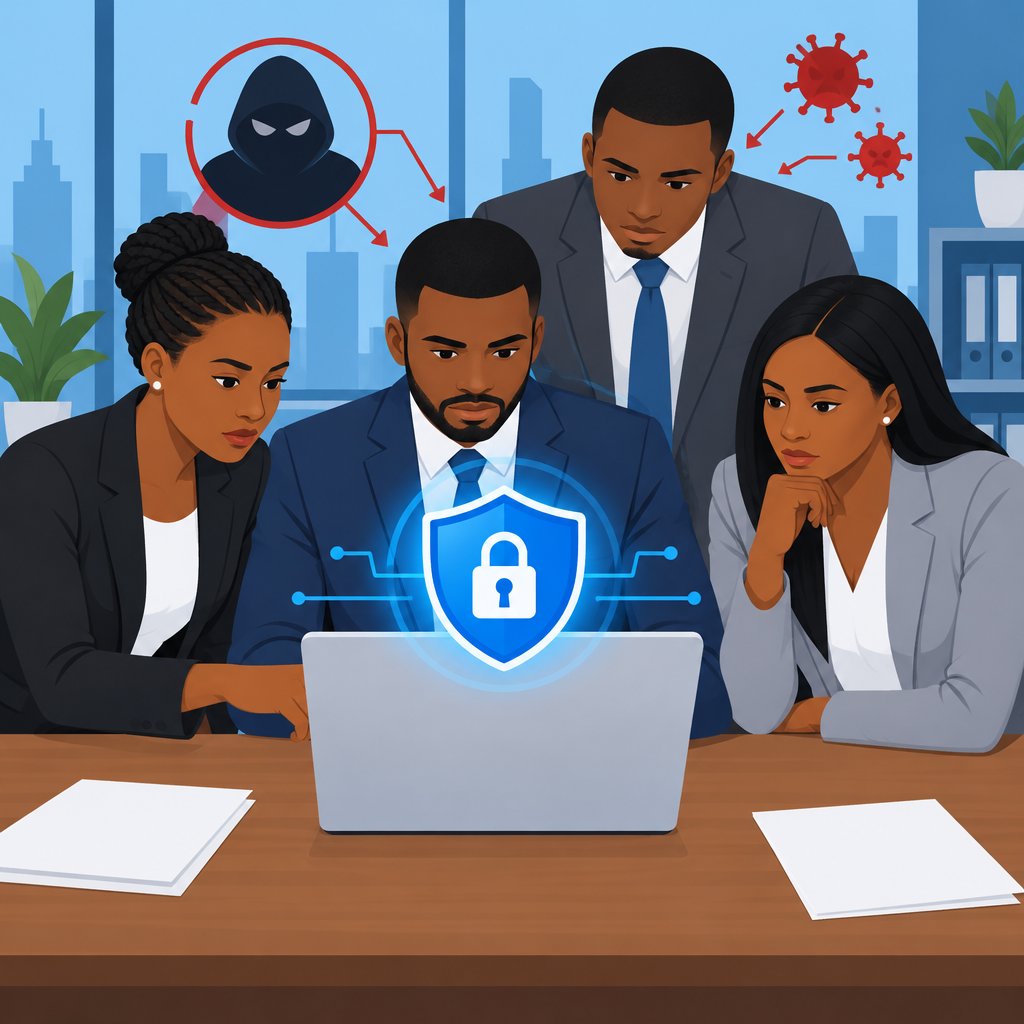
Consequences of Cybersecurity Breaches for Nigerian Businesses
Cybersecurity breaches can create serious consequences for Nigerian businesses.
These incidents can affect finances, reputation, and legal standing.
Moreover, the effects may extend beyond immediate recovery efforts.
Businesses may experience the following consequences:
- Businesses may lose money through stolen funds, downtime, lost revenue, and remediation costs.
- Breaches can damage reputation, reduce consumer trust, weaken loyalty, and cause businesses to lose customers.
- Businesses may need to notify affected people and regulators, while non-compliance may result in fines.
Find Out More: Challenges in the Nigerian Automobile Engineering Sector
Cybersecurity Measures for Nigerian Businesses
Effective cybersecurity strategies help Nigerian businesses reduce exposure to attacks.
Businesses should protect information, maintain systems, and prepare for security incidents.
The following measures strengthen daily defenses and support an organized security program.
Strong Encryption
Strong encryption protects sensitive information from unauthorized access.
Encryption can keep data unreadable when attackers access business systems.
Businesses should apply suitable encryption protocols to important information.
Regular Security Software Updates
Current security software helps businesses defend against emerging cyber threats.
Nigerian businesses should update antivirus programs, firewalls, and other security tools regularly.
These updates improve protection against newly identified threats.
Regular Security Audits
Regular security audits reveal weaknesses within business systems.
Businesses can address identified vulnerabilities before attackers exploit them.
Thorough assessments also help organizations strengthen their overall cybersecurity posture.
Employee Cybersecurity Training
Employees can become vulnerable points in a business security program.
Attackers may target employees through phishing scams and social engineering tactics.
Cybersecurity training teaches employees to recognize and respond to potential threats.
Incident Response Planning
An incident response plan guides business actions after a cyber attack.
The plan should identify contacts, containment steps, and system recovery procedures.
A clear response process helps businesses restore normal operations more effectively.
Cybersecurity Training and Resources
Investing in cybersecurity training strengthens employee awareness and defensive capabilities.
Employees with relevant knowledge can identify and address potential risks more effectively.
Businesses should also invest in advanced security software and threat intelligence services.
Cybersecurity experts can help organizations detect, prevent, and respond to attacks.
See Related Content: Networking & Security Salary Expectations in Nigeria
Collaboration with Cybersecurity Experts
Nigerian businesses can strengthen their security by partnering with qualified cybersecurity professionals.
These experts help protect sensitive data and prevent cyber attacks.
Moreover, professional guidance helps businesses respond to changing threats.
Why Businesses Should Partner with Cybersecurity Experts
Cybersecurity professionals bring specialized knowledge and practical skills to business security programs.
They identify weaknesses, recommend safeguards, and support stronger security practices.
As a result, businesses can improve their security posture and protect valuable information.
Benefits of Outsourcing Cybersecurity Services
Outsourcing gives Nigerian businesses access to cybersecurity support without maintaining a full in-house team.
Additionally, external professionals can provide broader security knowledge and specialized assistance.
These services also help businesses manage security needs more efficiently.
- Cybersecurity experts provide specialized knowledge for protecting against different threats.
- Outsourcing can cost less than maintaining an in-house cybersecurity team.
- Security providers can monitor systems and respond to potential threats around the clock.
- Businesses can access advanced technologies and tools through external specialists.
- Outsourced support can help businesses respond quickly during cyber attacks.
Strengthening Business Security Through Expert Support
Collaboration with cybersecurity experts helps Nigerian businesses improve their defenses against cyber threats.
Outsourced services provide expertise, monitoring, technology, and response support.
Therefore, businesses should prioritize professional cybersecurity support as part of their security strategy.
Uncover the Details: Common Challenges in Nigeria's Metallurgical Engineering Field
Strengthening Nigerian Business Cybersecurity
Nigerian businesses now face increasingly sophisticated cyber threats.
These threats include phishing attacks, malware infections, ransomware, and data breaches.
Businesses must prioritize cybersecurity to protect sensitive data and operations.
Regular security updates, employee training, and strong password policies can reduce exposure to cyber attacks.
In today’s digital age, cybersecurity should remain a top priority for every Nigerian business.
Robust security measures help businesses establish trust with customers and partners.
They also enhance reputations and help avoid costly data breaches that could disrupt operations.
Therefore, Nigerian businesses should stay informed about emerging cyber threats and implement established best practices.
They should also work with cybersecurity experts to create strong defenses against malicious actors.
Additional Resources
Google search results for Cybersecurity Threats Facing Nigerian Businesses Engineering
Bing search results for Cybersecurity Threats Facing Nigerian Businesses Engineering


