




Introduction
Radiography uses medical imaging to diagnose and treat diseases.
Additionally, it provides valuable diagnostic information in the medical field.
Radiographers operate imaging equipment and assist with patient care.
History of Radiography in Nigeria
- Development of radiography as a profession in Nigeria
Radiography as a profession in Nigeria has developed through several stages over the years.
The field became an essential part of the country’s healthcare system.
Its evolution reflects changes in medical imaging and healthcare practice.
- Milestones in the growth of radiography in the country
Several milestones have marked radiography’s growth in Nigeria.
Early services focused primarily on diagnostic purposes within medical settings.
However, technological advances expanded its scope to therapeutic and interventional procedures.
Healthcare institutions established radiography departments across the country.
These departments trained skilled radiographers to meet increasing demand for imaging services.
Another milestone involved digital radiography and fluoroscopy.
Those advances improved diagnostic image quality and supported more accurate, efficient patient care.
- Influence of international standards on radiography practice in Nigeria
International standards and guidelines have influenced radiography practice in Nigeria.
The ISRRT and WHO help promote global best practices and quality standards.
Consequently, Nigerian radiography services pursue internationally informed expectations.
International collaborations and partnerships have also shaped professional practice.
Training programs helped Nigerian radiographers strengthen their imaging knowledge and skills.
They continue to follow global advancements in radiography practice.
Through these developments, radiography in Nigeria continues to evolve.
It provides essential diagnostic and therapeutic services to patients across the country.
Accredited Institutions Offering Radiography Programs
In Nigeria, several accredited institutions offer radiography programs.
These institutions include the University of Lagos and Ahmadu Bello University.
Other options include the University of Benin, Obafemi Awolowo University, and the University of Nigeria.
Curriculum and Coursework for Radiography Students
The curriculum combines theoretical instruction with practical training.
Students study radiographic positioning, procedures, medical ethics, and radiation protection.
They also develop skills in image analysis and medical imaging technology.
Key Courses for Radiography Students
These courses provide essential knowledge for radiography students.
Anatomy, physics, pathology, and imaging technology support their academic training.
Image analysis further develops their understanding of radiographic examinations.
- Anatomy and Physiology
- Radiographic Physics
- Radiographic Pathology
- Medical Imaging Technology
- Radiographic Image Analysis
Certification and Licensing Requirements for Aspiring Radiographers
Individuals must meet certification and licensing requirements before practicing as radiographers in Nigeria.
They must complete a radiography program and pass the RRBN examination.
Afterward, they must obtain an RRBN license and maintain professional standards.
Steps to Become a Licensed Radiographer
The licensing process begins with graduation from an accredited radiography program.
Candidates then pass the RRBN examination and obtain professional licensure.
Licensed radiographers continue their education and follow professional and ethical standards.
- Graduation from an accredited radiography program
- Passing the RRBN exam
- Obtaining a license from the RRBN
- Continuing education to maintain licensure
- Adhering to professional and ethical standards
Learn More: Nutrition and Dietetics: Nigerian Government Policies
Specializations in Radiography
Radiography includes several specialized fields.
These fields create different career opportunities for professionals.
Professionals can focus on areas beyond conventional X-ray services.
Transform Your Career with Expert Guidance
Get personalized mentorship consulting that’s tailored to your unique path. Our expert advice is actionable and exclusive.
Get StartedTypes of Radiography Specializations
Each specialization applies different techniques to support diagnosis or treatment.
Radiographers can select fields that match their interests and professional goals.
These fields also support specialized services within healthcare settings.
- Radiation therapy uses radiation to treat cancer and other diseases.
- Diagnostic radiography creates images of body structures to help diagnose medical conditions.
- Nuclear medicine uses radioactive substances to diagnose and treat diseases.
- Magnetic Resonance Imaging uses magnetic fields to create detailed body images.
- Ultrasound uses sound waves to produce images of internal organs and tissues.
Further Education Opportunities
Nigeria provides various opportunities for radiographers seeking further education.
Universities and institutions offer postgraduate programs and certifications.
These options help professionals gain specialized knowledge and practical skills.
Continuing education enhances expertise and supports advanced career opportunities.
Specialization can improve job prospects and salary potential.
Professional Importance of Specialization
Specialization helps radiographers advance their careers and remain competitive.
Focused training allows professionals to deepen their knowledge and technical expertise.
Specialized radiographers can become valuable assets within the healthcare industry.
They provide focused patient care within their chosen areas.
They also contribute to advances in medical technology.
Specialized roles may provide access to advanced equipment and technologies.
These resources can support high-quality services and improved patient outcomes.
Specialization benefits individual radiographers and strengthens healthcare services in Nigeria.
It also offers a rewarding career path within the evolving field of radiography.
Nigeria offers diverse specialization opportunities for radiographers pursuing distinct career paths.
Find Out More: Dietitian Certification Exams: Prep Tips for Nigerians
Radiographers support healthcare delivery in Nigeria through imaging, communication, and patient-focused care.
Their responsibilities connect imaging procedures with accurate diagnosis and effective treatment planning.
They also protect patients by applying safety measures and providing reassurance during examinations.
Collaboration with Healthcare Professionals
Radiographers work closely with radiologists, physicians, and other healthcare professionals during the diagnostic process.
They coordinate with colleagues to select suitable imaging techniques for each examination.
Furthermore, clear communication and teamwork help radiographers support timely and accurate diagnosis.
- Radiographers work closely with radiologists, physicians, and other healthcare professionals to provide accurate and timely diagnosis.
- They collaborate to ensure that appropriate imaging techniques produce high-quality diagnostic images.
- Effective communication and teamwork help radiographers work successfully with other healthcare providers.
Diagnostic Imaging Procedures
Radiographers operate imaging equipment, including X-ray machines, CT scanners, MRI scanners, and ultrasound machines.
They follow established protocols to capture images of internal body structures for diagnostic purposes.
Additionally, radiographers use knowledge of anatomy, physiology, and pathology to perform examinations accurately.
- Radiographers operate X-ray machines, CT scanners, MRI scanners, and ultrasound machines.
- They follow specific protocols to capture images of internal body structures for diagnosis.
- Radiographers apply knowledge of anatomy, physiology, and pathology during imaging procedures.
Patient Safety and Comfort During Imaging
Radiographers protect patients’ safety and well-being throughout imaging examinations.
They apply radiation safety protocols to reduce exposure for patients, staff, and nearby individuals.
Moreover, radiographers prepare patients for examinations and offer reassurance throughout each procedure.
- Radiographers ensure patient safety and well-being during imaging examinations.
- They follow radiation safety protocols to minimize exposure for patients, themselves, and nearby individuals.
- Radiographers prepare patients for examinations and provide reassurance throughout the procedure.
Radiographers contribute essential expertise to Nigeria’s healthcare system through imaging and patient care.
Their collaboration, technical skills, and safety practices support accurate diagnosis and appropriate treatment.
Explore Further: Future of Chemical Pathology in Nigerian Healthcare
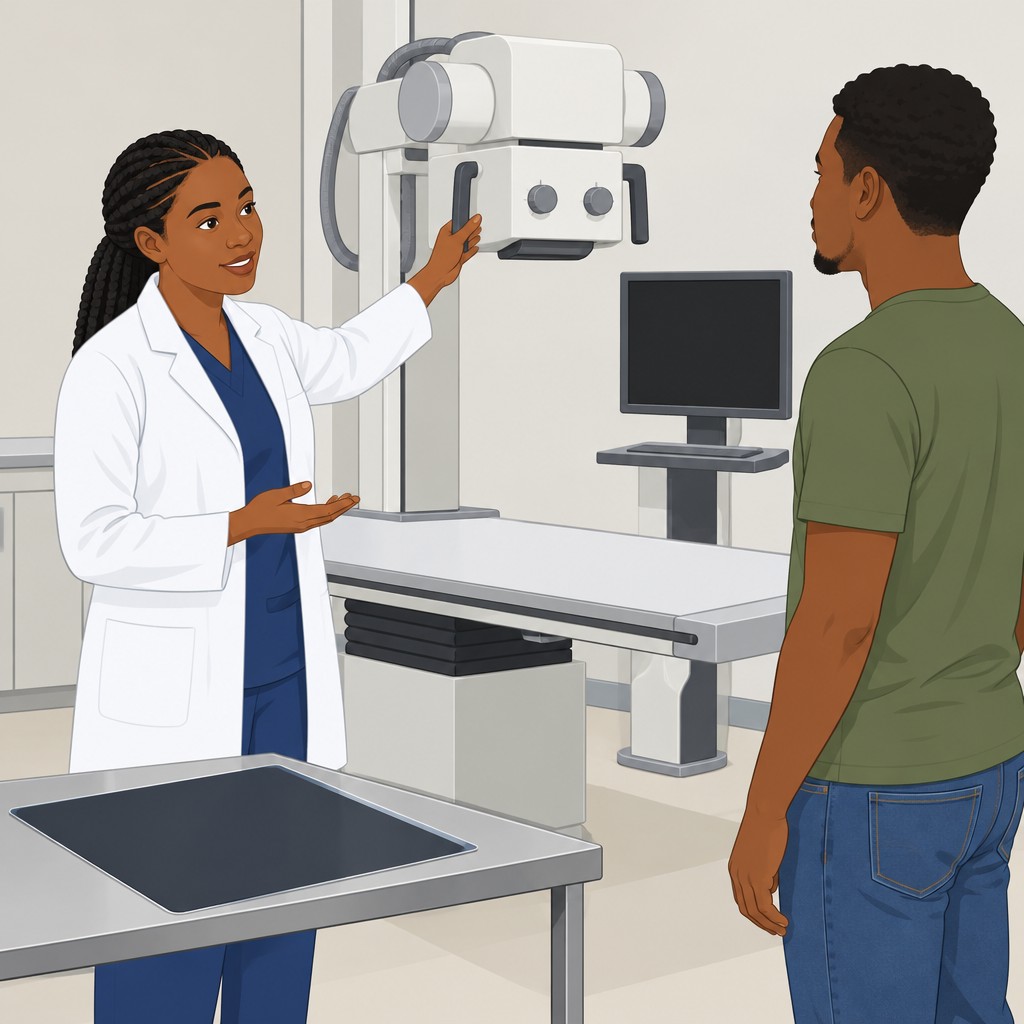
Digital Imaging in Nigerian Radiography
Radiography in Nigeria has evolved through the introduction of digital imaging technology.
This technology captures x-ray images digitally, eliminating traditional film.
Consequently, radiographers can view images immediately, supporting quicker diagnosis and treatment.
This transition has improved patient care within Nigerian radiography practice.
Technology and Diagnostic Accuracy
Digital imaging technology has strengthened diagnostic accuracy in radiography.
Radiographers can manipulate digital images to improve organ and tissue visualization.
Additionally, providers can share these images easily, encouraging efficient clinical collaboration.
Therefore, technology increases the speed and accuracy of radiographic diagnoses for patients in Nigeria.
Challenges and Opportunities in Technology Adoption
Despite these benefits, Nigerian facilities face challenges when adopting digital imaging technology.
High costs can limit equipment acquisition and maintenance for healthcare facilities.
Furthermore, radiographers need training and education to use this technology effectively.
However, adoption creates opportunities to expand new radiography technologies in Nigeria.
Embracing these advances can strengthen healthcare delivery and patient outcomes.
You Might Also Like: Professional Bodies for Medical Lab Scientists in Nigeria
Ethical and Legal Considerations in Radiography Practice
Ethical and legal considerations protect patient safety and support quality care.
Radiographers must apply these principles during every stage of practice.
Their decisions should respect patients and uphold professional responsibilities.
Patient Confidentiality in Radiography
Maintaining patient confidentiality protects sensitive medical information.
Patients have a right to privacy during radiographic care.
Therefore, radiographers should restrict access to information and discuss cases appropriately.
Informed Consent for Radiographic Procedures
Patients should give informed consent before radiographic procedures.
Radiographers should explain relevant procedure details clearly before seeking agreement.
This process supports patient autonomy and strengthens trust in care.
Regulatory Compliance in Radiography
Radiographers must follow national and international regulations.
These requirements support safe and effective radiography practice.
Additionally, compliance protects patients and practitioners from avoidable professional and legal problems.
Professional Standards and Quality Care
Professional standards help maintain quality in radiography services.
They guide radiographers’ conduct, responsibilities, and daily decisions.
Consistent adherence also supports trustworthy patient care.
Professional Handling of Patient Information
Radiographers should handle patient data and images professionally.
They must safeguard these materials against unauthorized access or misuse.
Proper controls help preserve privacy throughout the imaging process.
Secure Storage and Disposal of Sensitive Information
Radiographers need proper storage procedures for sensitive information and images.
They should also dispose of records securely when appropriate.
These practices maintain ethical standards in radiography practice.
Future of Radiography in Nigeria
Radiography in Nigeria is entering a period of significant transformation.
Healthcare providers are adopting new imaging approaches as technology develops.
These changes create opportunities while also introducing important professional and infrastructure challenges.
Emerging Trends and Developments in Radiography
Digital imaging continues to shape radiography practice across Nigeria.
Meanwhile, professionals increasingly use advanced techniques, including MRI, CT scans, and interventional radiography.
Tele-radiology allows radiologists to work remotely and provide timely diagnoses.
Additionally, artificial intelligence and machine learning can improve diagnostic accuracy and efficiency.
Therefore, professionals need continuous training to manage these rapidly changing technologies.
Growth Opportunities for Radiography Professionals
Healthcare expansion should increase demand for skilled radiography professionals.
Professionals can specialize in mammography, nuclear medicine, or pediatric radiology.
Moreover, private hospitals and diagnostic centers need qualified radiographers for growing patient needs.
Research and academic roles allow radiographers to advance knowledge in their field.
International collaborations and exchange programs can also broaden professional experience.
Challenges Facing Radiography Practice in Nigeria
However, limited resources and funding can delay upgrades to imaging equipment and facilities.
The shortage of qualified professionals can restrict timely and accurate diagnostic services.
Rural infrastructure gaps also limit access for underserved populations.
Furthermore, regulatory problems and inconsistent training standards can affect practice quality.
Socio-cultural factors may also influence community acceptance of modern radiographic procedures.
Radiography’s Continuing Contribution to Nigerian Healthcare
Radiography remains essential to healthcare because it supports the diagnosis and treatment of various medical conditions.
For aspiring students and professionals, this guide offers valuable insight into radiography’s broad role in Nigeria.
It also encourages readers to pursue radiography careers and strengthen healthcare services across the country.
Furthermore, continuous learning supports success throughout a radiography career.
Professionals must stay informed about new advancements and technologies in radiography.
By doing so, they can provide better care for patients.
Lifelong learning also strengthens professional skills and supports the growth of radiography in Nigeria.


