




Microbiology Research in Nigeria
Microbiology research helps Nigeria address public health challenges.
Nigerian researchers investigate diverse areas of microbiology.
Microbiologists study the structure, function, and evolution of microorganisms.
This knowledge supports strategies for combating infectious diseases.
It also promotes environmental sustainability.
Microbiologists in Nigeria can pursue various research opportunities.
They can study microbial diversity across different ecosystems.
They can also investigate antimicrobial resistance patterns.
Types of Research Opportunities
Microbiology research offers several professional pathways in Nigeria and beyond.
These opportunities support fundamental discovery, practical innovation, and public health efforts.
Researchers can work with universities, industries, government agencies, NGOs, or international partners.
- Academic positions support detailed research in universities and research institutions.
- Industry positions apply microbiology to pharmaceuticals, food, beverages, and healthcare.
- Government positions address policy, disease surveillance, and public health interventions.
- NGO positions support public health, disease prevention, and community-based interventions.
- International partnerships encourage cross-cultural exchange and broader research impact.
Academic Research Positions
Academic positions help Nigerian universities and research institutions advance microbiology.
Researchers conduct fundamental studies, train emerging scientists, and expand knowledge within the discipline.
They also contribute findings that can inform practical applications.
Academic researchers explore both basic science and applied microbiology.
Their projects may examine infectious diseases, antimicrobial resistance, environmental microbiology, or food microbiology.
They can also investigate other subjects within the field.
Furthermore, academic researchers collaborate with industry partners, government agencies, and international organizations.
These partnerships help address important microbiology challenges.
Their combined expertise can support public health, agriculture, biotechnology, and related sectors.
Industry Research Positions
Industry positions allow microbiologists to apply their knowledge in practical settings.
Pharmaceutical, food, beverage, healthcare, and other companies employ microbiology researchers.
These researchers develop products, improve processes, and solve technical problems.
In pharmaceuticals, microbiologists support drug discovery and product safety.
They may study antimicrobial compounds, vaccines, or drug resistance mechanisms.
Meanwhile, food and beverage companies focus on safety, quality control, and fermentation.
Healthcare companies also employ microbiologists to develop diagnostic tests.
They may improve infection control strategies and antibiotic stewardship programs.
By joining multidisciplinary teams, these researchers can influence public health outcomes.
They also contribute to new therapies and technologies.
Government Research Positions
Government research positions help shape public health policies and interventions.
Agencies such as NIMR, NIPRD, and NACA employ researchers in important roles.
Microbiologists support surveillance, outbreak response, and health promotion programs.
At NIMR, researchers study infectious diseases, tropical medicine, and emerging pathogens.
Their findings support disease control and prevention strategies.
NIPRD researchers develop drugs, study herbal medicines, and conduct pharmaceutical analysis.
This work contributes to the local pharmaceutical industry.
NACA researchers address HIV and AIDS through prevention and treatment research.
They also support public awareness campaigns and evaluate treatment outcomes.
Government researchers can influence health decisions through evidence-based findings.
Transform Your Career with Expert Guidance
Get personalized mentorship consulting that’s tailored to your unique path. Our expert advice is actionable and exclusive.
Get StartedThey also collaborate with national and international stakeholders.
NGO Research Positions
NGOs support public health, disease prevention, and community-based interventions in Nigeria.
Microbiologists working with NGOs address several important health concerns.
These concerns include infectious diseases, maternal health, child health, and sanitation-related illnesses.
NGO researchers may conduct field studies and implement public health programs.
They can also advocate for policies that improve health outcomes.
Researchers work with communities, healthcare providers, and government agencies.
These partnerships help create sustainable responses to health disparities and communicable diseases.
Additionally, NGOs partner with academic institutions, research organizations, and funding agencies.
Such partnerships support research initiatives and capacity-building projects.
Microbiologists contribute to evidence-based practices and stronger healthcare delivery systems.
Their work can empower communities and support vulnerable populations.
International Research Collaborations
Nigerian microbiologists can extend their research through international collaborations and partnerships.
These collaborations connect researchers from different countries.
They also encourage knowledge exchange and shared responses to global health challenges.
International partnerships can provide access to advanced technologies and funding opportunities.
Researchers may also access training programs unavailable locally.
Joint projects, workshops, and conferences help microbiologists expand their professional networks.
They also expose researchers to diverse research methods.
Furthermore, international cooperation promotes cross-cultural understanding and scientific diplomacy.
Researchers can share knowledge while developing innovative approaches to microbiology.
These efforts address transnational health issues and support sustainable development goals.
They can also produce research outcomes with broad implications.
Funding Opportunities
- Availability of grants and scholarships for microbiology research in Nigeria
- Important organizations and foundations providing funding support
- Tips for writing successful grant proposals and securing research funding
Researchers need funding to conduct microbiology projects in Nigeria.
Several funding opportunities support these projects.
Government agencies, nonprofit organizations, private foundations, and academic institutions may provide support.
Availability of Grants and Scholarships
Researchers in Nigeria can access grants and scholarships for microbiology research.
Government agencies, nonprofit organizations, private foundations, and academic institutions offer these opportunities.
These funding sources can support research activities and academic development.
The Tertiary Educational Trust Fund provides grants for research activities.
TETFund supports universities and other higher education institutions across Nigeria.
International organizations also offer grants for research projects in Nigeria.
The Wellcome Trust and the Bill & Melinda Gates Foundation support some research areas.
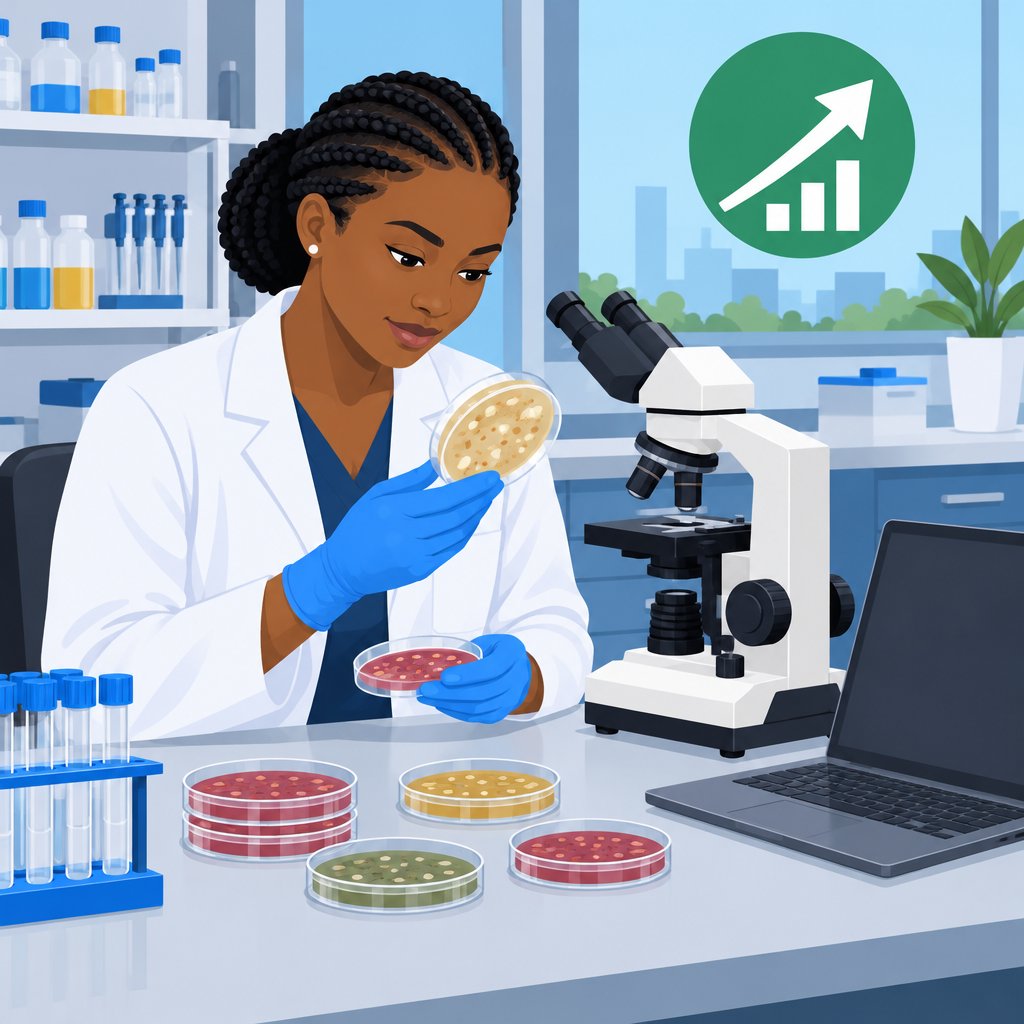
Organizations and Foundations Providing Support
Several organizations provide funding support for microbiology research in Nigeria.
These organizations include government agencies, international foundations, and local professional groups.
Researchers should review each funder’s requirements before preparing an application.
The Nigerian Society for Microbiology offers research grants to its members.
These grants support projects related to microbiology.
The society also creates networking and collaboration opportunities for researchers.
The Nigerian government’s Research and Innovation Fund supports scientific research and innovation.
The fund covers various fields, including microbiology.
Successful Grant Proposals and Funding Strategies
Competition for research funding makes proposal quality important.
A clear proposal helps funders understand the project’s value and feasibility.
Researchers should present their methods, costs, qualifications, and expected contribution carefully.
- Clearly define your research objectives and explain their significance in microbiology.
- Provide a detailed budget and justify every proposed expense.
- Demonstrate project feasibility and explain its contribution to scientific knowledge.
- Describe potential applications resulting from the proposed research.
- Highlight your microbiology qualifications and relevant research experience.
- Show that your experience supports successful project completion.
- Ask colleagues and mentors to review the proposal before submission.
- Use their feedback to strengthen the application.
By exploring available funding sources, researchers can improve their chances of securing project support.
Discover More: Radiography and Radiology: Future Trends in Nigeria
Collaborations and Partnerships
- Researchers must understand collaboration’s importance to advance microbiology research.
- Additionally, international partnerships open new avenues for microbiology research.
- Nigerian researchers can share resources through partnerships with local institutions.
- Furthermore, collaborators exchange ideas, expertise, and technologies to encourage innovative research.
- Partners can pool resources to support larger research projects with greater impact.
Uncover the Details: Eye Health Education: Resources for Nigerians
Current Trends in Nigerian Microbiology Research
Nigerian microbiology researchers can pursue several emerging directions.
These directions address health, environmental, agricultural, and industrial questions.
Moreover, they encourage studies that connect laboratory methods with local priorities.
- Study of antibiotic resistance in pathogens
- Investigation of microbial diversity across different ecosystems
- Exploration of microbiota roles in human health
- Development of novel antimicrobial agents
- Application of metagenomics in microbiology research
Hot Topics Involving Nigerian Microbiology
Several topics offer strong potential for focused microbiology investigations.
Researchers can connect indigenous resources with environmental and technological questions.
Additionally, these subjects can support discoveries with practical applications.
- Microbiome analysis of indigenous Nigerian foods
- Assessment of climate change effects on microbial communities
- Bioremediation of oil-polluted sites using microorganisms
- Exploration of plant-microbe interactions for sustainable agriculture
- Study of bacterial strains with potential industrial applications
Interdisciplinary Opportunities For Innovation
Nigerian microbiologists can combine expertise from several scientific disciplines.
For example, bioinformatics, environmental science, medicine, and biotechnology can strengthen research approaches.
Through this integration, researchers can develop solutions to complex microbiological problems.
Potential For Groundbreaking Microbiology Research
Nigeria’s diverse ecosystems provide opportunities for significant microbiology discoveries.
Researchers can investigate novel microbial species and complex microbial interactions.
Furthermore, suitable facilities and talented scientists can support contributions to global microbiology.
Delve into the Subject: Blood Transfusion Safety Measures in Nigeria
Challenges and Solutions
Microbiology researchers in Nigeria face several barriers that can affect research quality and progress.
These barriers require practical strategies, institutional support, and sustained professional guidance.
Researchers can strengthen their work by building useful connections and seeking alternative resources.
- Common challenges affect researchers working in microbiology across Nigeria.
- Effective solutions can help researchers conduct their work more successfully.
- Mentorship helps researchers navigate professional and technical difficulties.
- Support networks provide opportunities for collaboration, guidance, and shared learning.
Common Challenges Faced by Researchers in Nigeria
- Limited funding opportunities can restrict the quality and scope of research projects.
- Inadequate infrastructure can prevent institutions from conducting advanced microbiology research.
- Limited subscriptions can restrict access to current publications and research resources.
- Few collaboration opportunities can limit knowledge exchange with international researchers and institutions.
Solutions for Effective Research
- Researchers can diversify funding sources through nongovernmental organizations and international collaborations.
- Government and institutional investment can improve equipment and research facilities.
- Partnerships with well-equipped libraries can improve access to relevant literature.
- Networking events, conferences, and workshops can encourage collaboration and knowledge exchange.
Mentorship and Support Networks in Microbiology Research
Mentors guide early-career researchers through technical, professional, and organizational challenges.
Experienced mentors provide advice that supports informed decisions and stronger research practices.
Research institutions and professional organizations can create valuable support networks.
Online communities also help researchers connect with peers, share experiences, and access useful resources.
These relationships can strengthen research capabilities and help researchers advance their professional goals.
See Related Content: Frequently Asked Questions about Eye Surgery in Nigeria
Future Directions for Nigerian Microbiology
Nigerian microbiology offers many research opportunities for passionate scientific researchers.
Researchers can study infectious diseases and discover novel microbes.
Therefore, the field provides diverse avenues for scientific exploration.
Aspiring researchers in Nigeria should pursue microbiology and support the country’s scientific advancement.
By conducting innovative research, they can contribute significantly to microbiology.
They can also help address critical health challenges facing Nigeria.
Additional Resources
Google search results for Research Opportunities in Nigerian Microbiology Medical
Bing search results for Research Opportunities in Nigerian Microbiology Medical


