




Current State of Archaeological Research in Nigeria
Archaeological research in Nigeria continues to grow steadily.
However, funding and infrastructure challenges still affect the field.
Technological advancements and international collaborations could support further growth.
Importance of Archaeology in Understanding Nigeria’s Heritage
Archaeology uncovers important evidence about Nigeria’s past.
It helps researchers trace the country’s roots.
Additionally, archaeology supports the preservation of Nigeria’s cultural identity.
Future Directions for Archaeological Research
If researchers address current challenges, archaeology in Nigeria has promising future prospects.
Underwater archaeology could reveal more about coastal maritime history and trade routes.
Moreover, community involvement can include local knowledge and perspectives in research projects.
Interdisciplinary research can combine archaeology with genetics, linguistics, and environmental studies.
These approaches could deepen understanding of Nigeria’s history and cultural heritage.
Consequently, Nigerian archaeologists could make significant contributions to the global archaeological community.
History of Archaeological Research in Nigeria
Archaeological research in Nigeria has a rich history shaped by early expeditions and discoveries.
These excavations uncovered artifacts that reveal aspects of the country’s cultural heritage and history.
They also provided valuable information about ancient communities across different regions.
Early Archaeological Expeditions in Nigeria
- British researchers conducted one of Nigeria’s earliest archaeological expeditions during the late nineteenth century.
- The expedition explored ancient ruins, rock art, and burial sites across different Nigerian regions.
- Archaeologists found pottery, tools, and artifacts that revealed prehistoric cultures and societies.
Key Archaeological Discoveries in Nigeria
- The Nok terracotta figures rank among Nigeria’s most important archaeological discoveries.
- These figures date to around 500 BC and represent some of sub-Saharan Africa’s earliest sculptures.
- Their artistic quality demonstrates the skills of ancient Nigerian civilizations.
- Ife bronze heads and Benin Kingdom artifacts also reveal advanced metallurgical techniques.
- These objects further demonstrate the artistic achievements of Nigerian societies.
Colonial Influence on Archaeological Research
- Colonialism significantly influenced archaeological research in Nigeria.
- European powers often treated archaeological sites as sources of valuable artifacts for looting or export.
- Colonial plundering damaged cultural heritage and caused the loss of historical information.
- However, colonial archaeologists documented and preserved some Nigerian archaeological treasures.
- Their work also contributed to the development of archaeology in Nigeria.
Archaeological discoveries have revealed ancient civilizations and important aspects of Nigeria’s cultural heritage.
Despite colonial challenges, Nigeria remains a significant region for archaeological exploration and discovery.
Research findings continue to deepen understanding of the country’s past.
Challenges Affecting Archaeological Research
Archaeological research in Nigeria faces several obstacles that restrict its progress and development.
Limited funding prevents archaeologists from conducting extensive excavations, surveys, and research projects.
Development activities also threaten archaeological sites and can permanently remove evidence of Nigeria’s cultural heritage.
Furthermore, limited public awareness reduces appreciation and support for archaeological research.
- Lack of funding and resources
- Destruction of archaeological sites by development projects
- Limited awareness and appreciation of archaeology in Nigeria
Strategies Supporting Archaeology’s Future
Nigeria can address these obstacles through coordinated support from public and private institutions.
Stakeholder cooperation can strengthen site protection and encourage responsible heritage management.
Education, training, and community engagement can create stronger foundations for archaeological research.
- Increased funding and support from government and private institutions
- Collaboration with relevant stakeholders to protect archaeological sites
- Education and outreach programs to raise awareness about archaeology
- Capacity building and training for local archaeologists and researchers
- Integration of archaeological studies into school curricula
Government and private funding can expand fieldwork, preserve threatened sites, and improve investigations.
Local communities, heritage organizations, and development agencies can cooperate to protect archaeological locations.
Public exhibitions, workshops, and lectures can help Nigerians appreciate their archaeological heritage.
Training initiatives can prepare local archaeologists and researchers to lead future projects effectively.
Professional development can also strengthen research skills and encourage meaningful contributions to archaeology.
Schools can introduce archaeological studies early, helping students value and protect their heritage.
These measures can support a sustainable archaeological research community in Nigeria.
They can also improve understanding and preservation of the country’s rich cultural heritage.
Uncover the Details: Successful Nigerian Ecologists: Profiles and Achievements
Technology in Nigerian Archaeological Research
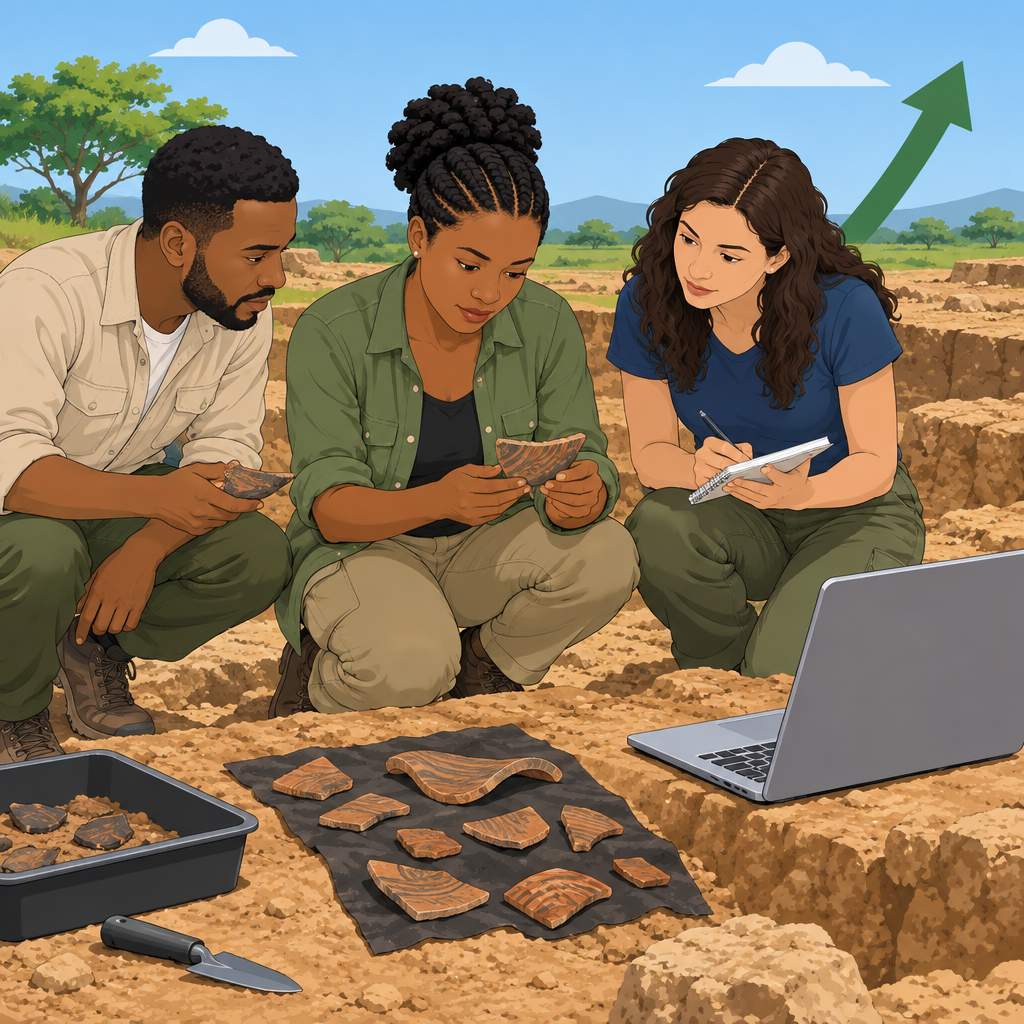
Technology advances archaeological research in Nigeria by helping researchers uncover and preserve cultural heritage.
It also improves how researchers survey sites, document artifacts, and share archaeological knowledge.
Consequently, digital tools support efficient investigations and stronger preservation practices.
- GIS and remote sensing technology for archaeological site surveys
- Digital documentation and preservation of artifacts
- International collaborations for technological support
GIS and Remote Sensing for Site Surveys
GIS helps archaeologists map and analyze sites with greater efficiency and accuracy.
Researchers can overlay topography, vegetation, and historical records within one digital landscape.
This combined information helps them interpret archaeological features and understand their surroundings.
Transform Your Career with Expert Guidance
Get personalized mentorship consulting that’s tailored to your unique path. Our expert advice is actionable and exclusive.
Get StartedRemote sensing uses aerial photography and satellite imagery to survey and monitor Nigerian archaeological sites.
These tools reveal subtle landscape changes that may indicate buried structures or artifacts.
Therefore, researchers can target excavations more effectively and focus on promising areas.
Digital Documentation and Artifact Preservation
Advances in 3D scanning and modeling let researchers create detailed digital replicas of artifacts.
These replicas support analysis, interpretation, and long-term preservation.
Digital records also protect valuable finds by preserving information for future generations.
Researchers can use these records to study artifacts without repeatedly handling the originals.
International Collaboration and Technological Support
International collaborations give Nigerian archaeologists access to advanced technological tools and specialized expertise.
Partnerships with universities, museums, and research centers abroad expand access to global resources.
These relationships also provide training, funding, and equipment that may not be readily available locally.
As a result, Nigerian researchers can strengthen their work through shared knowledge and technology.
Technology’s Contribution to Nigerian Archaeology
Together, these technologies improve how researchers study and preserve Nigeria’s cultural heritage.
Nigerian archaeologists can use these tools and partnerships to deepen local research.
Their work can also contribute significantly to archaeology worldwide.
Delve into the Subject: Zoological Society of Nigeria: Role and Activities
Potential for New Discoveries in Unexplored Nigerian Regions
Nigeria contains diverse cultural traditions and a history spanning thousands of years.
Archaeologists have not thoroughly explored many Nigerian regions.
Therefore, those areas may reveal discoveries that reshape understanding of Nigeria’s past.
Existing work includes the ancient Nok city, which is known for its terracotta sculptures.
Expanding research could uncover artifacts that illuminate ancient civilizations and their communities.
Local Community Involvement in Archaeological Projects
Local communities possess valuable knowledge about regional history and cultural practices.
Archaeologists can gain important insights by working closely with local residents.
Moreover, collaboration helps researchers respect local cultures during archaeological work.
Active participation can strengthen community ownership of archaeological research.
It also encourages residents to protect heritage from looting and development.
Interdisciplinary Opportunities in Nigerian Archaeology
Archaeology combines insights from anthropology, geology, chemistry, and biology.
Nigerian archaeological sites offer many opportunities for interdisciplinary research.
Researchers can analyze artifacts and sites through advanced methods from multiple fields.
For example, DNA analysis can reveal information about ancient populations and migrations.
Integrating disciplines can create a more comprehensive picture of Nigeria’s archaeological heritage.
Together, these approaches can deepen understanding of Nigeria’s past.
Continued investment can help Nigeria preserve its cultural heritage.
Archaeological research can also educate future generations about Nigeria’s history.
Discover More: Notable Nigerian Bioinformatics Research Projects
The Impact of Archaeological Research on Nigeria’s Development
Archaeological research contributes to Nigeria’s development through tourism, conservation, and public understanding.
It connects evidence from the past with present cultural and land management needs.
Moreover, this work supports national identity by revealing Nigerian communities’ achievements and traditions.
Contribution to Tourism and Cultural Heritage Preservation
Archaeologists uncover ancient sites and artifacts that attract visitors.
As a result, these discoveries can strengthen tourism by showcasing Nigeria’s rich cultural heritage.
Research also documents histories and traditions among the country’s various ethnic groups.
Informing Policy Decisions on Land Use and Conservation
Archaeological findings reveal historical land use patterns in Nigeria.
Consequently, policymakers can use this knowledge when making present-day land management decisions.
Researchers can also identify significant areas that development should protect.
Such evidence supports sustainable land use guidelines that respect historical and cultural heritage.
Fostering National Pride and Identity Through Knowledge of the Past
By studying ancient artifacts and sites, archaeologists deepen understanding of Nigeria’s history and cultural diversity.
This knowledge can encourage national pride as Nigerians learn about their ancestors’ achievements and legacies.
Furthermore, archaeology connects past and present, helping people feel continuity and belonging.
Find Out More: Applied Zoology: Graduate Programs and Specializations
Collaboration and Partnerships in Archaeological Research
Collaboration strengthens archaeological research in Nigeria and supports wider investigations across Africa.
These partnerships connect researchers, institutions, and communities around shared archaeological questions.
Furthermore, cooperation improves access to expertise, resources, training, and conservation support.
- Pan-African research projects with other African countries
- Partnerships with international universities and research institutions
- Local NGOs and community organizations supporting archaeological conservation
Researchers can compare related histories and cultural connections that cross national borders.
Shared resources, expertise, and technology can produce broader interpretations of the past.
International universities and research institutions also contribute diverse perspectives and research methods.
Such partnerships may create opportunities for funding, training, and access to advanced tools.
They can also strengthen local researchers and institutions through sustained knowledge exchange.
Local NGOs and community organizations provide important support for archaeological conservation.
These groups can raise awareness and encourage communities to protect nearby archaeological sites.
Moreover, community participation can build ownership and pride in local heritage.
Residents who support conservation can help promote sustainable protection for future generations.
Together, these relationships can deepen knowledge of Nigeria’s cultural heritage and support innovative research.
The Continuing Value of Archaeology in Nigeria
Archaeology in Nigeria preserves cultural heritage and traces the country’s rich history.
Therefore, stakeholders should prioritize funding and resources for archaeological projects.
Such support can help researchers complete successful investigations.
Furthermore, future discoveries can deepen understanding of the past and support national development.
Additional Resources
Google search results for Future Prospects for Archaeological Research in Nigeria Sciences
Bing search results for Future Prospects for Archaeological Research in Nigeria Sciences


