




Agricultural Economics in Nigeria
Agricultural economics plays a vital role in Nigeria’s economy.
More than 70 percent of Nigerians engage in agriculture for their livelihoods.
The agricultural sector contributes significantly to Nigeria’s gross domestic product.
Additionally, agriculture supports poverty reduction, food security, and broader economic development.
Importance of Agriculture to Nigeria’s Economy
Agriculture supports Nigeria’s economy through employment, income generation, and essential production.
Furthermore, the sector strengthens rural communities and supports national economic progress.
These contributions make agricultural economics important to Nigeria’s long-term development.
- Agriculture provides employment for millions of Nigerians, particularly in rural areas.
- Agricultural products contribute significantly to Nigeria’s export earnings.
- Agriculture supports national food security and self-sufficiency.
- Farmers generate income by selling their agricultural products.
- Moreover, agriculture supports rural development through infrastructure and services.
- Agricultural exports generate foreign exchange and strengthen the economy.
- Agriculture supplies raw materials to agro-allied industries and supports industrialization.
- Finally, agricultural sector taxes contribute to government revenue.
Historical Overview of Agricultural Economics in Nigeria
Agriculture in Nigeria evolved from traditional practices to modern techniques.
Over time, government policies and programs shaped agricultural development.
Historically, farming supported livelihoods and remained central to Nigeria’s economy.
Evolution of Agriculture in Nigeria
- Historically, agriculture employed a large percentage of Nigeria’s population.
- Traditional farming methods gradually gave way to modern agricultural practices.
- Consequently, improved techniques increased productivity and farming efficiency.
- Furthermore, new crops diversified Nigeria’s agricultural output and increased exports.
Implementation of Agricultural Policies and Programs
- The Nigerian government implemented policies and programs to promote agricultural development.
- During the 1970s, the Green Revolution sought to increase food production through modern technology.
- In 2011, the Agricultural Transformation Agenda focused on value chain development and increased investment.
- The agenda also improved farmers’ access to credit.
- The Growth Enhancement Support Scheme provided subsidized inputs to farmers.
- As a result, the scheme helped increase productivity and reduce post-harvest losses.
- The Anchor Borrowers Program gave smallholder farmers access to credit and agricultural inputs.
- It offered these resources at low-interest rates.
- Additionally, the Presidential Fertilizer Initiative increased fertilizer production and distribution.
- Consequently, farmers across Nigeria benefited from improved fertilizer availability.
Contribution of Agriculture to Nigeria’s Economy
Agriculture plays a significant role in Nigeria’s gross domestic product.
The sector provides essential support for the country’s economy.
It also supports many livelihoods and strengthens food security across Nigeria.
Role of Agriculture in GDP
Agriculture has driven economic growth in Nigeria for many years.
Consequently, Nigeria’s GDP growth closely reflects the agricultural sector’s performance.
The sector has consistently contributed positively to the country’s overall GDP.
Its GDP contribution demonstrates agriculture’s importance to Nigeria’s economy.
Furthermore, sustainable agricultural growth directly benefits Nigeria’s wider economy.
Agricultural productivity and efficiency directly influence the country’s GDP.
Meanwhile, government policies and investments significantly affect agriculture’s GDP contribution.
Improved agricultural productivity can boost economic growth.
Additionally, agricultural diversification reduces Nigeria’s dependence on oil revenue.
Employment Opportunities in the Agricultural Sector
The agricultural sector remains a major source of employment for Nigeria’s population.
It provides jobs for a significant portion of the country’s workforce.
Both skilled and unskilled workers participate in various agricultural activities.
Smallholder farmers, agribusinesses, and related industries create employment opportunities.
Moreover, agriculture can absorb many unemployed individuals.
Job creation in agriculture helps reduce poverty and improve livelihoods.
Women and young people represent a considerable portion of the agricultural workforce.
Increased investment in agriculture can create additional employment opportunities.
Entrepreneurship opportunities attract people who want to establish agricultural businesses.
The agricultural value chain employs people in farming, processing, and marketing.
Government initiatives supporting agriculture also contribute to job creation and economic growth.
Training and capacity-building programs strengthen workers’ agricultural skills.
Therefore, agricultural expansion can help address unemployment in Nigeria.
Agriculture’s employment role supports Nigeria’s broader socioeconomic development.
Discover More: Geology vs. Environmental Science: Choosing Your Path in Nigerian Sciences
Challenges Facing Agricultural Economics in Nigeria
Several challenges continue to hinder agricultural growth and development in Nigeria.
These obstacles also affect the country’s wider economy.
Addressing them can improve productivity, profitability, and the sector’s ability to meet population demands.
Transform Your Career with Expert Guidance
Get personalized mentorship consulting that’s tailored to your unique path. Our expert advice is actionable and exclusive.
Get Started- Lack of modern agricultural practices: Many farmers still rely on traditional methods, which limit productivity and efficiency.
- Inadequate infrastructure and technology: Poor roads, limited irrigation, and outdated machinery restrict agricultural performance.
Consequently, the sector struggles to meet the population’s growing demands.
These limitations also reduce profitability and weaken agriculture’s economic contribution.
Therefore, government and stakeholders should invest in modernizing agriculture and improving infrastructure.
Providing access to current farming technologies can help Nigeria unlock the sector’s potential.
Such improvements can strengthen agricultural performance and support the wider economy.
Discover More: Fieldwork Experiences in Animal Science Education
Government Intervention in Agricultural Economics
Government intervention supports agricultural activities and strengthens development within Nigeria’s agricultural economy.
Additionally, intervention can improve productivity, food security, and economic growth.
These efforts also help farmers access resources, information, and opportunities.
Agricultural Subsidies and Incentives
The Nigerian government provides subsidies and incentives to support farmers’ agricultural activities.
For example, subsidies can reduce the costs of inputs such as fertilizers and seeds.
Furthermore, incentives may include tax breaks or grants for agricultural innovation and technology adoption.
Agricultural Development Programs
The government also implements agricultural development programs to improve productivity and increase food security.
These programs often provide farmers with training, credit access, and market information.
Examples include the Agricultural Transformation Agenda, FADAMA projects, and the Growth Enhancement Support Scheme.
Gain More Insights: Agricultural Economics Societies in Nigeria
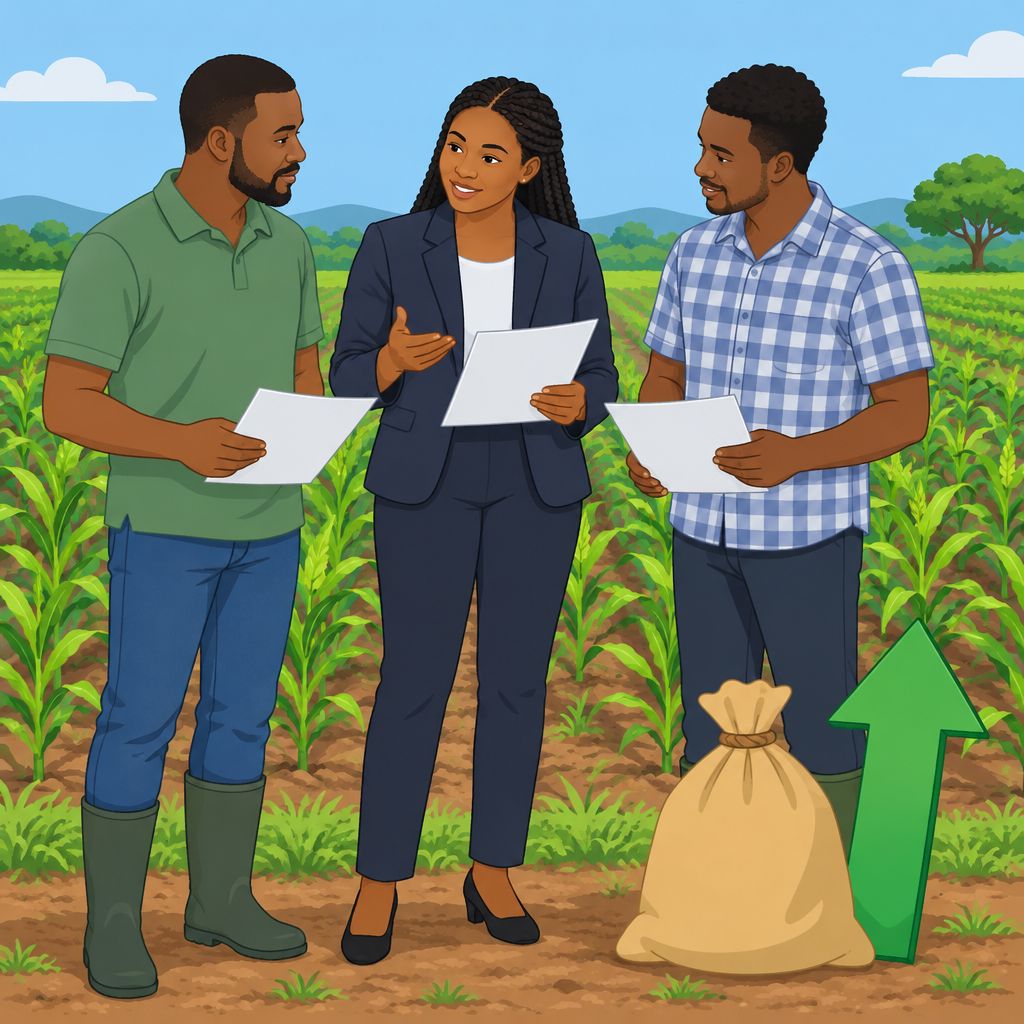
Agricultural Economics and Poverty Alleviation
Agriculture remains the main livelihood for many Nigerians, particularly people living in rural communities.
Through farming, individuals earn income and improve their ability to meet household needs.
Therefore, agricultural participation can help lower poverty levels among vulnerable populations.
Support for Small-Scale Farmers
Small-scale farmers represent a significant portion of Nigeria’s agricultural sector.
However, many remain exposed to poverty and limited economic opportunities.
Government and other stakeholders can provide tools, resources, and knowledge to improve their productivity.
Such support can help farmers increase incomes while strengthening their economic independence.
Rural Farmer Empowerment and Economic Development
Rural farmer empowerment improves household welfare and supports broader national development.
When farmers produce more food, they strengthen food security and create economic value.
Moreover, higher farm incomes can stimulate spending within rural communities.
Agricultural activities also create employment opportunities for people living in those communities.
Agricultural Investment and Sustainable Development
Nigeria can address poverty more effectively by investing in agriculture and supporting small-scale farmers.
This approach can combine income generation, food production, and rural employment.
Consequently, agricultural economics can support sustainable development and economic growth.
Delve into the Subject: Role of Applied Botany in Nigerian Agriculture
Potential for Growth and Development in Agricultural Economics
Agriculture plays a significant role in Nigeria’s economy.
It contributes to GDP and provides employment for many people.
With effective strategies and policies, agricultural economics can grow and develop.
Opportunities for Agricultural Diversification
- Diversifying agricultural products can reduce dependence on oil revenues and create new revenue streams.
- Exploring new crops, livestock, and products can open domestic and international markets.
- Agricultural diversification can mitigate climate change effects and increase sector resilience.
- Research and development can identify diversification opportunities and improve agricultural productivity and profitability.
Integration of Technology in Agriculture
- Modern technologies such as precision agriculture, IoT, and drones can improve farming productivity and efficiency.
- Data analytics and AI can help farmers make informed decisions and optimize resource allocation.
- E-commerce platforms and digital marketing can connect farmers directly with consumers and increase profit margins.
- Mobile applications can provide market information, weather forecasts, and improved farming practices.
Agricultural Investment and National Prosperity
Nigeria’s agricultural sector supplies jobs, food, and industrial raw materials.
It also supports household livelihoods and contributes substantially to national GDP.
These functions make agricultural economics important to national planning and economic stability.
Government and stakeholders should prioritize investment that raises productivity and strengthens food security.
Such investment can also reduce poverty and support broader economic growth.
Policymakers should support smallholder farmers through suitable policies and improved access to finance.
They should also improve infrastructure, encourage mechanization, and strengthen agricultural research.
Public and private organizations can cooperate through partnerships, training, and technology transfer.
Moreover, value chain integration can connect producers with wider economic opportunities.
These actions can help Nigeria use agriculture’s potential more effectively.
Stronger agricultural development can transform economic activity and improve people’s livelihoods.
Stakeholders must therefore coordinate their efforts to sustain the sector’s long-term success.
Additional Resources
Google search results for Impact of Agricultural Economics on Nigeria's Economy Sciences
Bing search results for Impact of Agricultural Economics on Nigeria's Economy Sciences


