




Introduction
Radiography plays a crucial role in the healthcare system of Nigeria.
It involves imaging techniques, such as X-rays, to diagnose and treat various medical conditions.
Advanced technologies and specialized training programs have strengthened radiography and patient care in Nigeria.
Development of Radiography in Nigeria
Radiography in Nigeria dates back to the early twentieth century.
Healthcare facilities first introduced X-ray machines during that period.
Since then, the field has grown significantly.
Radiographers now support medical imaging and radiation therapy.
Importance of Radiography in Healthcare
Radiography supports the early detection of diseases.
It also helps healthcare professionals monitor treatment progress.
Furthermore, imaging guides surgeons during medical procedures.
Radiography reduces the need for invasive surgeries.
It also minimizes risks associated with incorrect diagnoses.
Impact on Patient Care in Nigeria
Radiography has a profound impact on patient care in Nigeria.
It improves diagnostic accuracy and supports better treatment outcomes.
Additionally, radiography helps reduce healthcare costs.
These benefits improve the quality of healthcare services provided to patients.
Radiographers’ Role in Patient Care
Radiographers support patient care through diagnostic imaging procedures.
They also protect patients throughout each imaging examination.
Additionally, they contribute to accurate diagnoses and coordinated clinical decisions.
- Performing diagnostic imaging procedures
- Ensuring patient safety during imaging
- Interpreting images accurately
- Communicating findings to healthcare providers
Responsibilities During Diagnostic Imaging
Radiographers prepare patients carefully before imaging begins.
They operate imaging equipment and adjust parameters for optimal results.
Moreover, they maintain patient comfort throughout each procedure.
- Positioning patients for imaging
- Operating imaging equipment
- Adjusting imaging parameters for optimal results
- Ensuring patient comfort during procedures
Importance of Accurate Diagnosis
Accurate diagnosis helps healthcare professionals choose appropriate treatment plans.
It also prevents unnecessary procedures and supports improved patient outcomes.
Furthermore, reliable diagnoses can enhance patients’ overall satisfaction with care.
- Guides appropriate treatment plans
- Prevents unnecessary procedures
- Improves patient outcomes
- Enhances overall patient satisfaction
Collaboration for Better Patient Outcomes
Radiographers collaborate with healthcare professionals to support better patient outcomes.
They consult radiologists and communicate with referring physicians during patient care.
They also coordinate with nurses and participate in multidisciplinary team meetings.
- Consulting with radiologists for image interpretation
- Working closely with referring physicians
- Coordinating care with nurses and other staff
- Participating in multidisciplinary team meetings
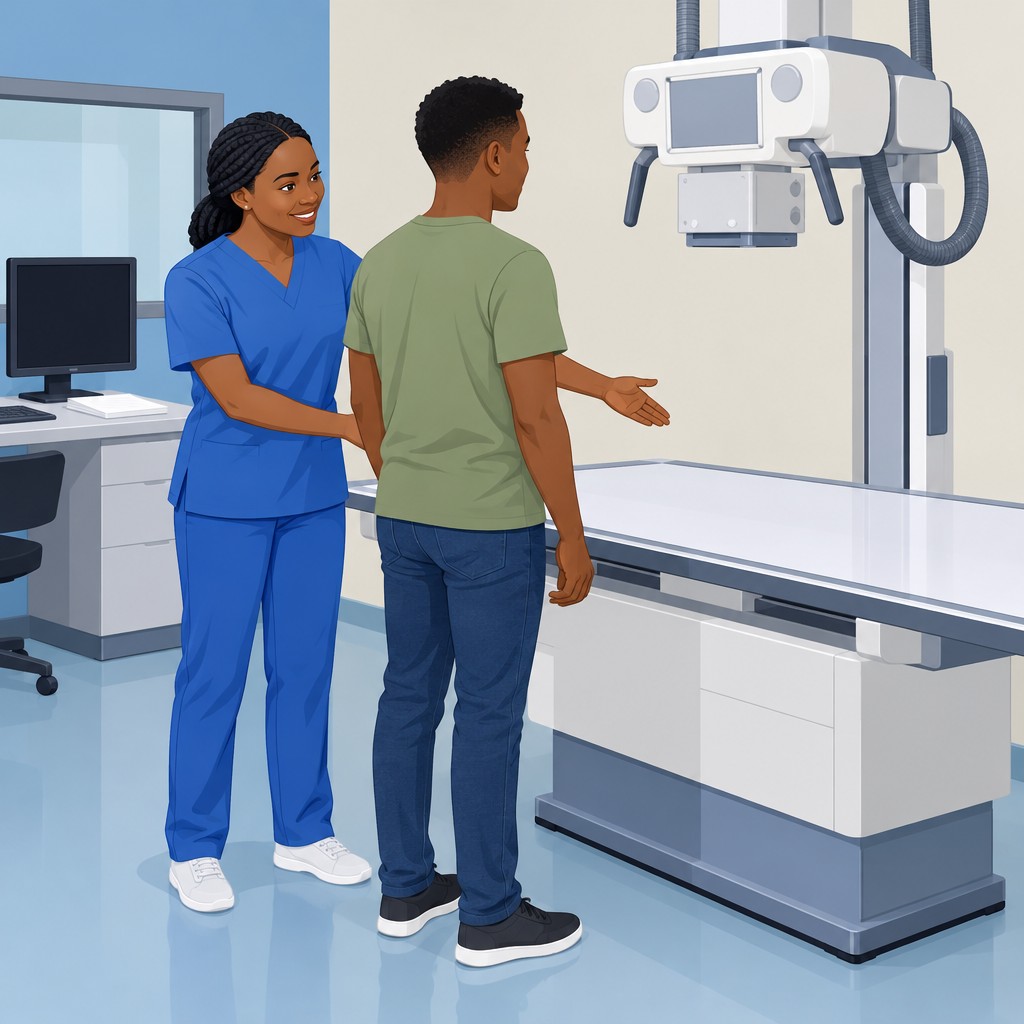
Access to Radiography Services in Nigeria
Many patients across Nigeria still struggle to access radiography services.
Healthcare facilities, especially rural facilities, often have limited equipment and skilled professionals.
Consequently, patients may travel long distances for examinations, increasing costs and delaying care.
Challenges Affecting Radiography Access
A shortage of equipment limits services in many healthcare facilities.
Basic tools, including X-ray machines, CT scanners, and MRI machines, remain unavailable in some facilities.
Nigeria also faces shortages of radiographers and radiologists.
Therefore, patients may experience long waits before receiving examinations and results.
Differences Between Urban and Rural Areas
Urban centers generally provide better-equipped facilities and more trained professionals.
Rural facilities often operate with fewer resources and less access to specialized personnel.
As a result, rural patients may travel to urban centers for needed examinations.
This journey increases time and costs for people seeking care.
Effects on Timely Diagnosis and Treatment
Limited access can prevent healthcare providers from confirming conditions promptly.
Transform Your Career with Expert Guidance
Get personalized mentorship consulting that’s tailored to your unique path. Our expert advice is actionable and exclusive.
Get StartedWithout imaging information, providers may face difficulty developing appropriate treatment plans.
Delays can allow conditions to worsen before patients receive care.
Timely radiography access supports effective healthcare delivery and improved patient outcomes.
Discover More: Radiology Equipment: What's Available in Nigeria
Advances in Radiography Technology
Radiography technology in Nigeria has advanced significantly in recent years.
These advances have changed how healthcare facilities conduct imaging examinations.
They have also strengthened diagnostic services and patient care.
Introduction of Digital Imaging Technologies
Digital imaging technologies now support radiography in Nigerian healthcare facilities.
Healthcare professionals can view images without traditional film processing.
This change has made imaging workflows more efficient.
Benefits of Faster and More Accurate Diagnosis
Digital imaging supports faster and more accurate diagnoses for patients.
- Digital imaging allows instant image viewing without traditional film processing.
- Faster interpretation enables healthcare professionals to make prompt decisions.
Improved Patient Outcomes and Reduced Radiation Exposure
These technologies help healthcare providers improve patient outcomes.
- Faster diagnoses help patients receive timely and appropriate treatment.
- Digital imaging techniques often require lower radiation doses for patients.
Lower radiation doses reduce the risk of radiation exposure during imaging examinations.
These technological advances continue to shape healthcare in Nigeria.
You Might Also Like: Emerging Fields in Human Physiology
Training and Education of Radiographers
Training and education help radiographers provide high-quality patient care in Nigeria.
Radiographers undergo rigorous training to develop essential imaging skills and knowledge.
This preparation enables them to operate imaging equipment and perform diagnostic procedures.
Importance of Well-Trained Radiography Professionals
Well-trained radiographers support accurate medical image interpretation.
Furthermore, their expertise helps healthcare professionals develop suitable treatment plans.
Consequently, skilled radiographers contribute to better patient outcomes.
Accreditation and Certification Requirements in Nigeria
Radiographers in Nigeria must meet specific accreditation and certification requirements.
These requirements support legal practice within the radiography profession.
They also confirm that radiographers possess suitable qualifications and practical skills.
Continuous Professional Development for Radiographers
Continuous professional development helps radiographers follow advances in imaging technology.
It also strengthens their knowledge of evolving imaging techniques.
Through ongoing training, radiographers can maintain current patient care practices.
Training, accreditation, and professional development support high-quality radiography services in Nigeria.
Healthcare facilities can strengthen patient care by investing in radiographer development.
These efforts can improve patient outcomes and enhance overall care quality.
Gain More Insights: Radiology Subspecialties: What to Consider in Nigeria
Patient Confidentiality and Informed Consent
Patients entrust radiographers with sensitive health information.
Therefore, radiographers must protect patient privacy and provide dignified care.
Before each radiographic procedure, radiographers should obtain informed consent from patients.
This process helps patients make informed decisions about their care and treatment options.
Consequently, informed consent promotes patient autonomy and respects individual rights.
Radiation Safety for Patients and Radiographers
Radiographers must protect patients from unnecessary radiation exposure during examinations.
They should apply the ALARA principle to keep radiation doses as low as reasonably achievable.
Meanwhile, radiographers must also protect themselves from occupational radiation exposure.
Proper training, protective equipment, and safety protocols support safer radiographic practice.
Professional Conduct and Ethical Patient Care
Professional codes of conduct guide radiographers’ ethical responsibilities in patient care.
Accordingly, radiographers should practice with integrity, honesty, and respect.
They must protect patients’ rights, dignity, and well-being during every examination.
Furthermore, radiographers should act in the best interests of patients under their care.
Learn More: Oral Biology: Importance in Nigerian Dental Practice
Radiography’s Continuing Contribution to Nigerian Healthcare
Radiography has significantly improved patient care in Nigeria through accurate diagnosis and treatment planning.
Consequently, it has strengthened healthcare services and improved patient outcomes across the country.
Therefore, continued support and investment can strengthen radiography services throughout Nigeria.
Such investment can help patients receive timely and effective healthcare interventions.
Ultimately, radiography remains vital for addressing the Nigerian population’s healthcare needs.
Additional Resources
Google search results for The Impact of Radiography on Patient Care in Nigeria Health Sciences
Bing search results for The Impact of Radiography on Patient Care in Nigeria Health Sciences


