




Eye Health Education in Nigeria
Educating Nigerians about eye health supports overall well-being.
Furthermore, eye diseases affect many individuals across Nigeria.
Various resources help Nigerians learn about eye health.
The Need for Eye Health Education in Nigeria
- Awareness remains limited about common eye diseases and conditions in Nigeria.
- Untreated eye conditions can affect health and quality of life.
- Several preventable eye diseases affect people in Nigeria.
Eye health education helps people recognize concerning symptoms and seek professional care promptly.
Timely attention can support better outcomes when eye conditions develop.
Education also highlights practical ways to prevent avoidable vision problems.
Limited Awareness of Common Eye Diseases
Many people do not recognize symptoms linked to common eye diseases.
As a result, they may delay consultations with healthcare professionals.
Delayed diagnosis and treatment can cause irreversible damage to the eyes.
Effects of Untreated Eye Conditions
Untreated eye conditions can reduce a person’s health, independence, and quality of life.
For example, untreated glaucoma can cause permanent vision loss.
Similarly, untreated cataracts can lead to blindness.
Furthermore, untreated eye infections can spread and cause life-threatening systemic infections.
Preventable Eye Diseases in Nigeria
Nigeria has several prevalent eye diseases that people can help prevent.
Trachoma results from poor hygiene and can cause blindness without treatment.
Refractive errors include myopia and hyperopia.
Early detection allows glasses or contact lenses to correct these refractive errors.
Government Initiatives Supporting Eye Health Education
Government initiatives support eye health education through prevention, treatment, and rehabilitation programs.
The National Eye Health Program coordinates efforts to address eye diseases across Nigeria.
Additionally, the government works with organizations, schools, and communities to share eye health information.
These partnerships help deliver educational activities through settings that communities already use.
Eye Care Facilities and Service Delivery
The government has established eye care facilities across the country.
These facilities provide screenings, diagnoses, treatments, and surgeries for various eye conditions.
They also improve access to affordable eye care services for the population.
However, limited funding and inadequate infrastructure restrict service delivery in some areas.
Furthermore, shortages of healthcare professionals create additional barriers to reaching every Nigerian.
Effectiveness of Existing Eye Health Programs
Existing programs have increased awareness about the importance of eye health.
They also encourage individuals to seek treatment earlier for eye conditions.
Nevertheless, these initiatives do not yet reach the entire population.
Continuous monitoring and evaluation can identify gaps in service delivery.
Such reviews can also guide improvements in future program implementation.
Accessing Government Eye Health Resources
Nigerians can access eye health resources through primary healthcare centers.
These centers provide information, screenings, and referrals for additional eye care services.
Community outreach programs and campaigns extend these services to remote and underserved areas.
Moreover, the Ministry of Health and other agencies provide educational materials.
They also organize workshops and training programs for healthcare professionals.
These resources strengthen professional knowledge and skills in eye care.
Strengthening Eye Health Outcomes
Government investment remains important for expanding eye health education and services.
Addressing funding, infrastructure, and workforce limitations can improve national coverage.
Continued collaboration can help provide quality eye care services to more Nigerians.
Transform Your Career with Expert Guidance
Get personalized mentorship consulting that’s tailored to your unique path. Our expert advice is actionable and exclusive.
Get StartedYou Might Also Like: Blood Transfusion Safety Measures in Nigeria
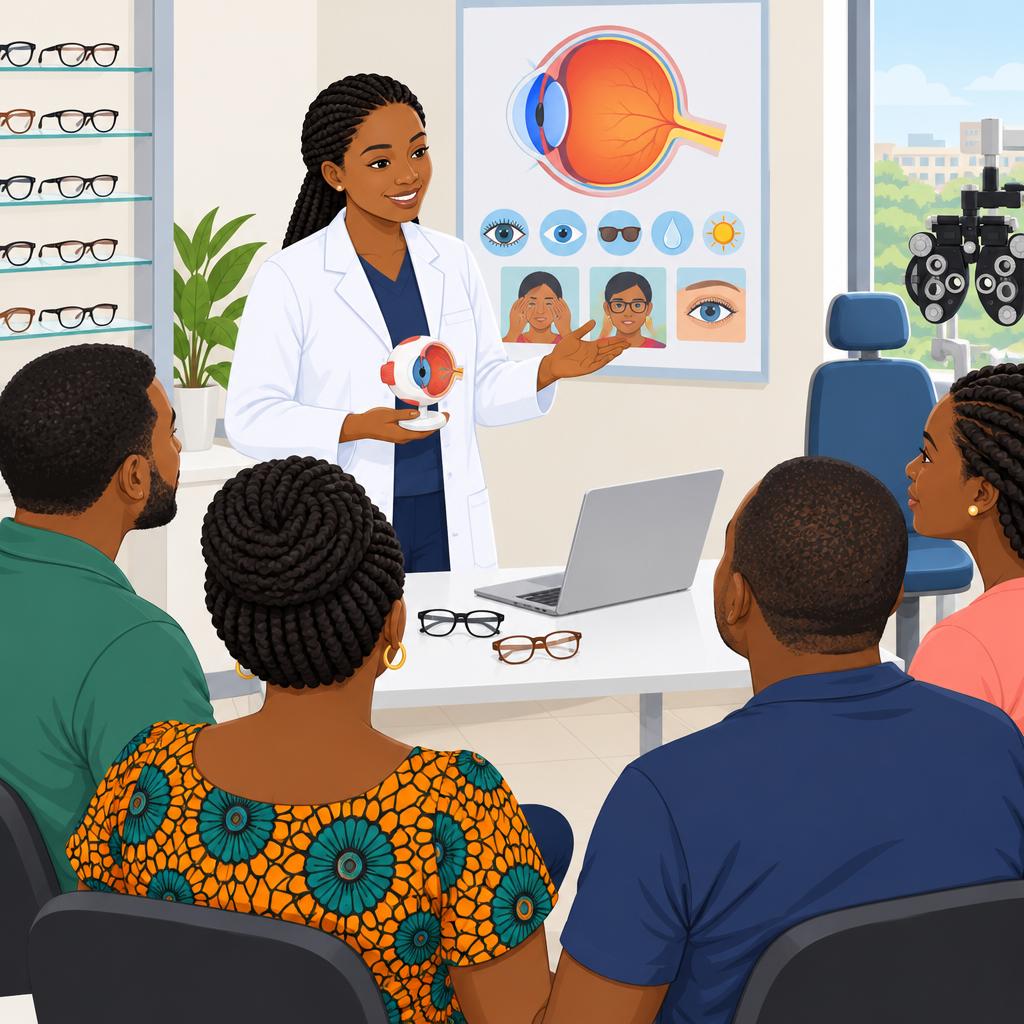
Nonprofit Organizations and NGOs
Nonprofit organizations and NGOs provide important eye health education throughout Nigeria.
They collaborate with local communities to explain the importance of regular eye care.
Additionally, these organizations connect underserved communities with affordable eye care services.
- Nonprofit organizations conduct outreach programs that teach preventive eye care measures.
- Sightsavers focuses on preventing avoidable blindness in Nigeria.
- These organizations work across urban and rural areas to broaden their reach.
Specific Initiatives and Projects
Sightsavers uses community eye screenings to identify eye problems early.
Meanwhile, advocacy campaigns promote eye health in schools and communities.
The Vision2020 program aims to eliminate preventable blindness in Nigeria.
- Sightsavers conducts community eye screenings for early detection of eye problems.
- Advocacy campaigns highlight the importance of eye health in schools and communities.
- Vision2020 addresses preventable blindness through a nationwide program.
- The Nigerian Optometric Association offers eye health education programs.
- These initiatives serve both urban and rural populations.
Contact Information for Support
Individuals can contact these organizations for eye health education support and information.
Furthermore, each listed organization provides a direct email address and telephone contact.
These contacts can help people locate relevant eye health programs and services.
- Sightsavers Nigeria: info@sightsavers.org, +234 1234 5678
- Nigerian Optometric Association: nigerianoptometricassociation@gmail.com, +234 8765 4321
- Vision2020 Nigeria: vision2020ng@gmail.com, +234 9012 3456
Uncover the Details: Frequently Asked Questions about Eye Surgery in Nigeria
Educational Materials and Resources
Educational materials help people learn about eye health and ways to maintain good vision.
These resources present useful guidance through printed documents, websites, videos, and interactive tools.
People can access these materials through health providers, community organizations, and online platforms.
Available Eye Health Resources
- Brochures provide details about eye health issues and practical tips for maintaining good vision.
- Pamphlets offer concise information that educates the public about eye health.
- Online materials include articles, videos, and interactive tools on websites, blogs, and social media platforms.
Importance of Culturally Relevant Materials
Culturally relevant materials reflect the norms, beliefs, and practices of different Nigerian communities.
They make eye health information more relatable and accessible to diverse audiences.
Moreover, cultural awareness can increase engagement and help people retain important guidance.
Local languages, traditional symbols, and familiar Nigerian imagery can improve understanding.
These choices may also encourage people to follow recommended eye health guidance.
Accessing Eye Health Resources
Individuals can visit local health centers, eye clinics, and community organizations for printed materials.
Meanwhile, reputable websites provide additional information about eye health.
These sources include the Nigerian Optometric Association, World Health Organization, and Vision 2020 Nigeria.
Additionally, Twitter, Facebook, and Instagram host campaigns and share information about preventing vision problems.
Patients can ask eye care providers for brochures or pamphlets about healthy eyes and timely treatment.
Finally, eye health organizations, government agencies, and vision professionals can provide resource lists and contacts.
Gain More Insights: Medical Rehabilitation Internships in Nigeria
Importance of Training Healthcare Professionals in Eye Health Education
Proper training supports accurate diagnosis and treatment of eye conditions.
It equips healthcare professionals with updated knowledge and practical skills.
Furthermore, training improves the quality of eye care services for patients.
Educated professionals can also raise eye health awareness within their communities.
Available Training Programs for Healthcare Providers
Optometrists can join the Nigerian Optometric Association for continuing education opportunities.
Meanwhile, ophthalmologists can attend the Annual Scientific Conference of Ophthalmological Society of Nigeria.
Primary healthcare workers can participate in eye health workshops organized by NGOs.
Additionally, nurses can enroll in online eye health courses from reputable institutions.
Community health workers can receive basic eye care training through government initiatives.
How Nigerians Can Participate in or Support Training Programs
People can volunteer to organize eye health workshops and training sessions.
They can also donate to organizations providing educational resources for healthcare professionals.
Moreover, communities can encourage healthcare providers to attend relevant conferences and workshops.
Citizens can promote community awareness about the importance of eye health education.
Finally, Nigerians can advocate for government funding that improves eye care training.
Learn More: Pediatric ENT Surgeries in Nigeria: What to Know
Impact of Community Outreach and Awareness Campaigns
Community outreach programs improve access to practical eye health information.
Awareness campaigns encourage regular eye check-ups and early detection of eye conditions.
They also promote proper eye care practices among underserved populations.
Furthermore, outreach events connect communities with essential eye health guidance and services.
Successful Examples of Community Initiatives
Several initiatives bring eye health services directly to rural and underserved communities.
These programs combine education, screening, treatment, referrals, and vision support.
Moreover, they help participants recognize eye problems before those problems worsen.
- Eye screening camps provide free check-ups and identify eye problems early.
- School eye health programs teach children about eye care and provide school screenings.
- Mobile eye clinics reach remote communities with examinations, treatment, and eyeglasses.
Effective Planning for Outreach Events
Successful outreach requires careful planning and meaningful community involvement.
Organizers should adapt their communication methods to local languages and cultural preferences.
They should also maintain support after each event and evaluate its results.
- Collaborate with community leaders, healthcare providers, and local organizations.
- Tailor messages to the audience’s language, culture, and communication preferences.
- Provide referrals, eye care materials, and educational resources after events.
- Gather participant feedback and improve future outreach strategies.
Prioritizing Eye Health in Nigeria
Eye health education plays a vital role in improving the overall well-being of Nigerians.
By understanding its importance, individuals can prevent vision loss and maintain good eye health.
Readers should use available resources, including eye health screenings, educational materials, and online information.
Prioritizing eye health should remain important for everyone, especially where healthcare access remains limited.
Collaboration can strengthen ongoing efforts in eye health education.
By working together, communities can raise awareness and increase access to eye care services.
These efforts can ultimately improve the quality of life for individuals in Nigeria.
Therefore, everyone should support eye health education and help expand opportunities for good vision.
Additional Resources
Google search results for Eye Health Education: Resources for Nigerians Medical
Bing search results for Eye Health Education: Resources for Nigerians Medical


