




Medical Outreach Programs in Nigeria
Medical outreach programs serve communities by providing healthcare services to underserved populations.
Moreover, these programs address inadequate healthcare resources in many parts of Nigeria.
Therefore, medical outreach programs bridge healthcare access gaps and provide vital services to people in need.
Overview of Medical Outreach Programs by Nigerian Universities
Medical outreach programs have supported Nigeria’s healthcare system for many years.
They provide essential medical services and healthcare education to underserved communities.
Nigerian universities organize and implement these programs to improve population health outcomes.
Universities Involved in Medical Outreach Programs
Several Nigerian universities participate in medical outreach programs.
The examples below identify universities involved in these programs.
The list includes five Nigerian universities.
- University of Ibadan
- Obafemi Awolowo University
- Ahmadu Bello University
- University of Lagos
- University of Nigeria, Nsukka
Goals and Objectives of Medical Outreach Programs
- These programs provide healthcare services in remote and underserved communities.
- They offer medical screenings, counseling, and treatment for various health conditions.
- They educate communities about preventive healthcare practices and disease management.
- They train medical students through hands-on clinical experiences and community engagement.
- They conduct research to identify health issues and develop targeted interventions.
Impact of Medical Outreach Programs
Medical outreach programs produce practical benefits for communities with limited healthcare options.
They expand access, support disease prevention, and strengthen knowledge about healthy practices.
Consequently, underserved populations can make more informed decisions about their health.
- Improved healthcare access for underserved communities
- Reduction in preventable diseases
- Increased awareness about healthcare practices
Improved Healthcare Access for Underserved Communities
Medical outreach programs bring healthcare services directly to communities lacking basic facilities.
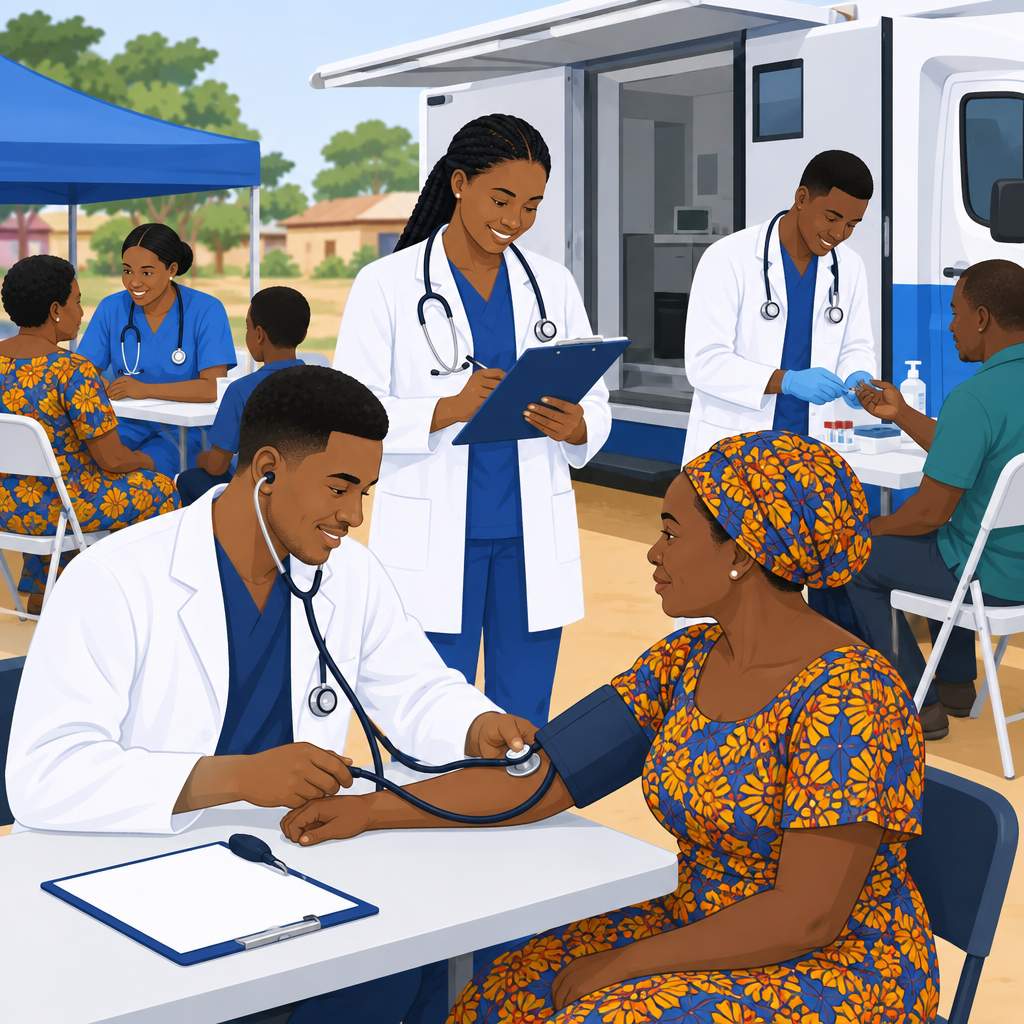
Medical professionals establish temporary clinics in remote villages and urban slums.
These clinics offer consultations, screenings, vaccinations, and medications.
Therefore, residents can receive treatment despite financial or geographic barriers.
Reduction in Preventable Diseases
Outreach teams help communities address preventable diseases through education, screenings, and vaccinations.
These activities help identify illnesses and limit the spread of communicable diseases.
Examples include malaria, tuberculosis, HIV/AIDS, and other communicable illnesses.
Early attention and appropriate treatment can improve long-term public health outcomes.
Increased Awareness of Healthcare Practices
Medical outreach programs provide reliable health information to communities with limited access.
Health talks, workshops, and demonstrations explain hygiene, nutrition, and disease prevention.
They also address family planning and other practical healthcare practices.
As a result, community members can adopt healthier behaviors and manage their wellbeing proactively.
These combined benefits help address healthcare disparities among vulnerable populations.
Discover More: Famous Parasitologists from Nigeria
Challenges Facing Medical Outreach Programs
Medical outreach programs by Nigerian universities face several challenges.
These difficulties limit healthcare delivery for underserved populations.
Furthermore, funding, supplies, and transportation problems reduce program effectiveness.
- Limited funding
- Lack of medical equipment and supplies
- Difficulty reaching remote areas
Limited Funding for Outreach Activities
Nigerian universities often struggle to secure adequate funding for medical outreach programs.
These programs require money for transportation, accommodation, medical supplies, and staffing.
Consequently, universities frequently depend on donations and grants to continue their outreach activities.
Shortages of Medical Equipment and Supplies
Outreach teams often lack essential medical equipment and supplies.
Budget constraints make it difficult for universities to purchase and maintain necessary resources.
As a result, providers may deliver fewer medical interventions during outreach activities.
Difficulty Reaching Remote Communities
Remote terrain and weak infrastructure create significant barriers for outreach teams.
Poor roads and limited transportation make rural communities difficult to access.
Additionally, security concerns can complicate travel and service delivery.
Strengthening Medical Outreach Initiatives
Medical outreach programs remain important despite these operational challenges.
Universities can improve their initiatives by addressing funding, supply, and transportation constraints.
Transform Your Career with Expert Guidance
Get personalized mentorship consulting that’s tailored to your unique path. Our expert advice is actionable and exclusive.
Get StartedThese improvements can help outreach teams serve underserved populations more effectively.
Explore Further: Public Health Policies and Their Impact in Nigeria
Strategies for Overcoming Challenges
Several strategies can help Nigerian universities address challenges in medical outreach programs.
These approaches can strengthen service delivery and extend support to underserved communities.
Universities can combine partnerships, fundraising, and innovative healthcare methods.
- Collaboration with government and NGOs
- Fundraising efforts
- Use of telemedicine and mobile clinics
Collaboration with Government and NGOs
Nigerian universities can collaborate with the government and non-governmental organizations to address outreach challenges.
These partnerships can combine resources, networks, and expertise.
Government agencies may provide logistical support, facility access, and regulatory assistance.
Meanwhile, NGOs can offer funding, technical assistance, and community outreach.
Fundraising Efforts
Fundraising provides another strategy for strengthening medical outreach programs.
Nigerian universities can organize events, campaigns, and initiatives to raise program funds.
They can also seek donations from alumni, corporate sponsors, and philanthropic foundations.
By diversifying funding sources, universities can support program sustainability and reach more communities.
Use of Telemedicine and Mobile Clinics
Telemedicine and mobile clinics can help universities serve remote and underserved areas.
Telemedicine allows healthcare providers to consult with patients remotely through digital technologies.
These technologies include video conferencing and mobile applications.
Mobile clinics use equipped vehicles and healthcare staff to serve different locations.
By using these approaches, universities can improve access to quality healthcare services.
Delve into the Subject: Nigerian Associations for Oral Surgeons: A Guide
Medical Outreach Success Stories
Nigerian universities use medical outreach programs to connect underserved communities with essential care.
These efforts also promote health awareness and give medical students practical experience.
Their success appears through beneficiary experiences, service records, and institutional recognition.
Beneficiary Experiences
Beneficiaries report relief when outreach teams provide timely attention for health concerns.
Some participants credit these services with improving their well-being and addressing urgent needs.
These experiences show how accessible consultations can affect communities with limited healthcare options.
Services Reached Through University Outreach
University outreach teams have reached many people across participating communities over the years.
They commonly provide consultations, screenings, immunizations, and treatment for common illnesses.
Teams have detected and treated conditions such as malaria, typhoid, hypertension, and diabetes.
Collected records show increasing beneficiary numbers, indicating expanding participation in these programs.
Recognition for Participating Universities
Several participating universities have received awards for their healthcare contributions.
Recognition highlights innovative approaches, community engagement, and sustainable program effects.
These honors encourage institutions to continue serving communities through organized outreach activities.
Find Out More: Introduction to Studying Anatomy in Nigerian Universities
Future Support for Sustainable Healthcare
Medical outreach programs play a vital role in providing healthcare services to underserved communities in Nigeria.
These programs improve access to medical care and promote health education.
Continued support and participation can help more people receive needed medical attention.
Individuals can volunteer or donate to these initiatives.
Their contributions can improve other people’s health and well-being.
Looking ahead, medical outreach programs in Nigeria have promising prospects.
Universities and medical professionals can help more communities access essential healthcare services.
Therefore, stakeholders should collaborate and invest in sustainable healthcare solutions for society’s benefit.
Additional Resources
Google search results for Medical Outreach Programs by Nigerian Universities Medical
Bing search results for Medical Outreach Programs by Nigerian Universities Medical


