




Introduction
Ensuring good dental health in children is crucial.
Diet plays a significant role in achieving good dental health.
Cultural diet habits in Nigeria can influence a child’s dental health.
Key Areas of Nigerian Child Dental Health
This section explores dietary practices that may affect children’s dental health.
It also considers sugary food consumption and its effects.
Additionally, dental hygiene practices remain important for children.
- Common dietary practices in Nigerian culture
- Sugar consumption and its effects on child dental health
- The importance of dental hygiene practices for children
Carbohydrate-Rich Foods and Children’s Dental Health
Nigerian meals commonly include starchy foods such as yams, cassava, rice, and plantains.
Children may also consume sugary snacks, sweets, and soft drinks.
Frequent sugar consumption can contribute to tooth decay in children.
Practical Ways to Support Children’s Dental Health
Parents and caregivers can help children develop consistent oral health habits.
Moderating sugary foods and drinks can support healthier teeth.
Regular dental care can also identify problems before they become more serious.
- Encourage children to brush their teeth at least twice daily.
- Teach children to floss regularly to remove food particles and plaque.
- Replace sugary snacks with healthier options, including fruits, vegetables, and nuts.
- Limit sugary drinks, such as sodas and fruit juices, and encourage water instead.
- Schedule regular dental check-ups and cleanings for your child.
- Explain how diet and oral hygiene affect children’s teeth.
- Encourage children to make healthy food choices and care for their teeth.
- Model good oral hygiene habits so children can follow your example.
- Seek professional advice from a pediatric dentist when dental concerns arise.
Lack of Awareness about Dental Health in Nigeria
Many Nigerian communities lack sufficient awareness about children’s dental hygiene.
Limited access to dental care and education restricts understanding of oral health importance.
Consequently, children may miss opportunities for preventive dental care.
- Many communities have limited access to dental care and education.
- Parents and children need education about effective dental hygiene.
- Organizations should improve awareness and promote preventive dental care.
Limited Access to Dental Care and Education
Rural areas and underserved communities often have few dental clinics and professionals.
Therefore, parents may struggle to arrange regular dental check-ups for their children.
This limited access also reduces opportunities for children to receive preventive dental care.
Importance of Educating Parents and Children
Parents and children need clear guidance about maintaining good oral hygiene.
Proper brushing and flossing can help prevent dental problems.
Regular dental check-ups can also support children’s oral health.
Efforts to Improve Awareness and Promote Preventive Care
Organizations and government agencies should invest in dental health education programs.
These programs can raise awareness about oral hygiene and preventive care.
Furthermore, schools can integrate oral health education into their curricula.
Gain More Insights: Child Health Vaccination Programs in Nigeria
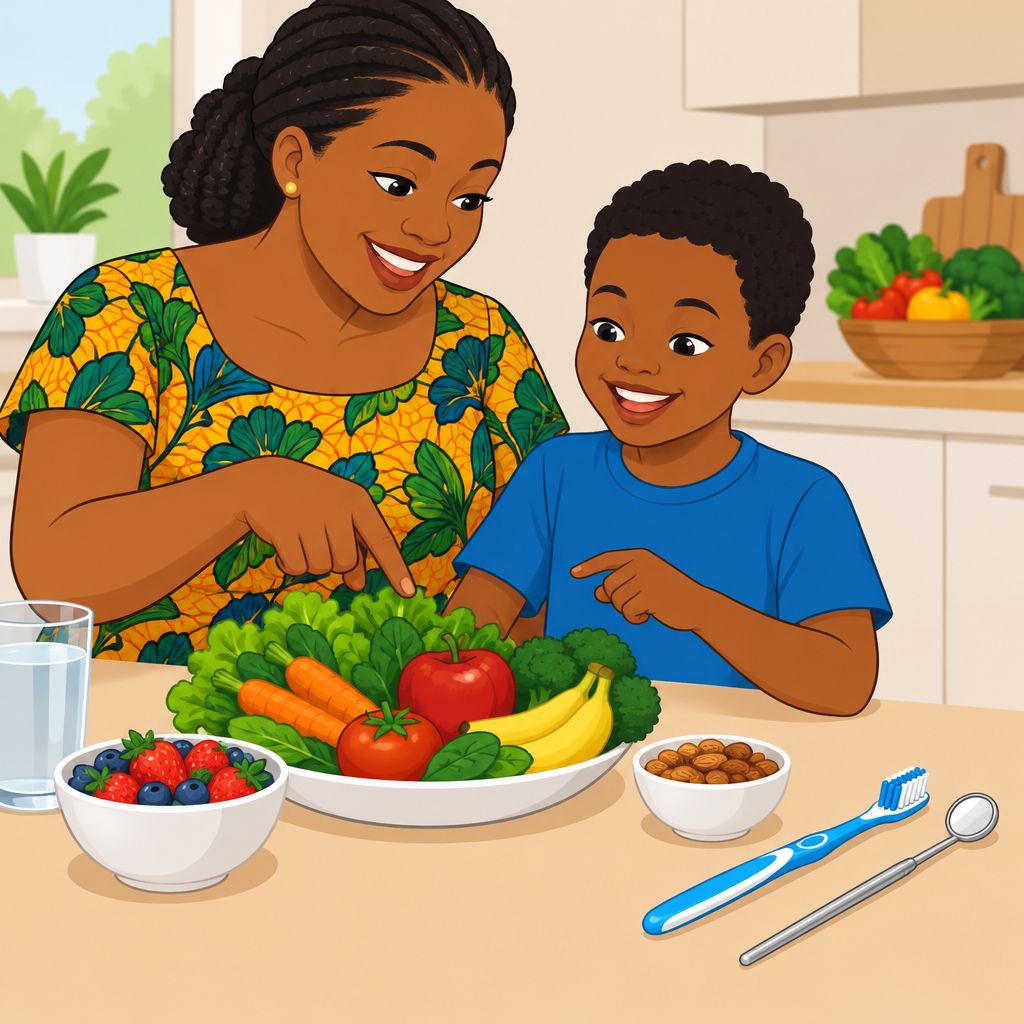
Parental Guidance for Children’s Diet and Dental Health
- Parents guide meal choices to support children’s nutrition and dental health.
- They carefully select foods to help children receive adequate nutrition.
- Balanced meals can help prevent tooth decay and other dental issues.
Healthy Eating Habits from a Young Age
- Parents can introduce fruits, vegetables, and whole grains to young children.
- Offering varied foods can help children develop a taste for nutritious choices.
- Parents can model healthy eating behaviors for their children.
Reducing Sugary Snacks and Drinks
- High sugar consumption can contribute to cavities and other dental problems.
- Parents should limit sugary snacks and drinks whenever possible.
- Water, milk, and healthier snacks offer alternatives that can reduce sugar intake.
Parental involvement shapes children’s dietary choices and supports good dental health.
By guiding meals and encouraging healthy habits, parents can support children’s overall well-being.
Uncover the Details: The Role of Dental Technologists in Nigeria
Impact of Western Influence on Nigerian Diet and Dental Health
Nigerian traditional diets include fruits, vegetables, grains, and lean proteins.
However, Western influence has changed dietary habits across many Nigerian communities.
These changes affect overall health and dental health.
Introduction of Processed Foods and Sugary Drinks
- Globalization has increased access to processed foods containing sugar, salt, and unhealthy fats.
- Sodas and energy drinks have become increasingly popular among children and young adults.
- Frequent consumption of these products increases the risk of cavities, obesity, diabetes, and cardiovascular diseases.
Growth of Fast Food and Snack Consumption
- Fast-food chains have expanded in Nigerian urban areas, increasing access to high-calorie meals.
- Children and adults increasingly choose burgers, fries, pastries, and other convenient snacks.
- These foods often contain sugar, salt, and unhealthy fats that promote tooth decay and gum disease.
Decline of Traditional, Healthier Food Choices
- Western dietary habits have gradually displaced traditional choices containing diverse nutrients.
- Many people now replace fruits, vegetables, whole grains, and lean proteins with processed foods.
- This dietary shift can harm health, weaken dental well-being, and influence future eating habits.
You Might Also Like: Nigerian Microbiology Associations and Societies
Strategies for Improving Child Dental Health in Nigeria
Several practical strategies can strengthen child dental health in Nigeria.
These strategies combine prevention, education, affordable services, and cooperation among key community partners.
Together, they can help children receive consistent guidance and appropriate dental care.
School-Based Dental Education Programs
Schools can teach children why daily oral hygiene matters.
Teachers and dental professionals can demonstrate proper brushing and flossing techniques.
Regular screenings can also help schools identify children who need dental attention.
- Teach children the importance of oral hygiene.
- Demonstrate proper brushing and flossing techniques.
- Explain how sugary foods and drinks affect dental health.
- Conduct regular dental check-ups and screenings at schools.
- Invite local dentists and dental hygienists to lead educational workshops.
Affordable Dental Care Services
Community clinics can bring essential dental services closer to children in underserved areas.
Subsidized services can reduce financial barriers for families seeking care.
Transform Your Career with Expert Guidance
Get personalized mentorship consulting that’s tailored to your unique path. Our expert advice is actionable and exclusive.
Get StartedTraining local healthcare providers can also expand basic dental support for children.
- Establish community dental clinics in underserved areas.
- Offer subsidized or free dental services for children.
- Partner with NGOs and government agencies to expand dental programs.
- Train local healthcare providers in basic dental procedures for children.
- Encourage parents to schedule regular dental check-ups for their children.
Collaboration Among Healthcare Providers, Educators, and Parents
Healthcare providers, educators, and parents can coordinate their efforts to support children’s oral health.
Shared educational materials can reinforce consistent messages across schools and communities.
Clear referrals can connect children with appropriate dental services when they need additional care.
- Organize joint workshops and seminars on child dental health.
- Create educational materials for schools and communities.
- Establish referrals between schools, healthcare facilities, and dental clinics.
- Encourage communication among parents, teachers, and healthcare providers.
- Advocate for policies supporting oral health education and dental services.
These combined efforts can improve prevention, education, and access to dental care for children across Nigeria.
Consistent community support can help every child pursue better oral health.
Find Out More: Medical Ethics and Laws in Nigeria: Essential Knowledge
Importance of Regular Dental Check-Ups for Children
Regular dental check-ups support children’s overall health and well-being.
These appointments help dentists identify dental problems early.
Prompt treatment can prevent further complications.
Early detection and preventive care remain important benefits.
Dental visits also support consistent oral hygiene.
Children can maintain brushing and flossing practices through regular dental visits.
These practices help support healthy teeth and gums.
Parents should schedule routine check-ups and appointments for their children.
By doing so, parents can encourage lasting oral health habits.
Therefore, regular check-ups help protect children’s dental health and prevent future problems.
Cultural Factors Influencing Diet Choices and Dental Health
- Cultural celebrations can influence children’s food choices.
- Traditional beliefs and practices can affect children’s dental health.
- Culturally sensitive education can improve acceptance of dental interventions.
Cultural celebrations often feature sugary treats and acidic drinks.
These choices can increase risks to children’s dental health.
During such events, families may serve these foods more frequently than usual.
However, families can preserve celebrations while offering healthier options.
Traditional beliefs and practices also shape dietary habits and responses to dental problems.
For example, some communities use traditional herbs or remedies for dental concerns.
Although these practices may reflect cultural knowledge, they may not always work safely or effectively.
Therefore, healthcare providers should discuss potential risks respectfully.
Culturally sensitive education helps providers understand family beliefs and daily practices.
It also enables families to consider guidance without feeling that their traditions face criticism.
Additionally, providers can recommend culturally relevant foods that support oral health.
Fibrous fruits and vegetables can stimulate saliva production and help reduce cavity risks.
These foods can fit within traditional diets while supporting healthier choices.
Parents and caregivers also need guidance about limiting sugary and acidic foods.
Regular oral hygiene practices further support children’s dental health.
By combining respect, practical advice, and family participation, interventions can become easier to accept and follow.
This approach can help Nigerian families make informed dietary and dental health decisions.
Building Healthier Smiles for Nigerian Children
Nigerian dietary choices can influence children’s dental health.
Sugary and acidic foods pose significant risks to children’s oral health.
Therefore, parents, educators, and policymakers should prioritize children’s dental health.
Schools and families should teach children consistent dental hygiene practices.
Moreover, balanced meals can include fruits, vegetables, and dairy products.
These foods can support children’s oral health.
Parents should also teach children to brush and floss correctly.
Regular dental check-ups can help prevent dental problems.
By taking proactive steps, communities can support healthy smiles and strong teeth.
Together, Nigerians can encourage children to value dental health and overall well-being.
Additional Resources
Google search results for Nigerian Diet and Child Dental Health Medical
Bing search results for Nigerian Diet and Child Dental Health Medical


