




Marine Biology and Sustainable Fishing
Marine biology studies ocean organisms and their interactions with the environment.
In Nigeria, the fishing industry supports the economy while providing food and livelihoods for many people.
Marine biology helps scientists understand Nigerian marine ecosystems and support sustainable fishing practices.
The Rich Marine Biodiversity of Nigeria
Nigeria has rich marine biodiversity because its coastline extends along the Gulf of Guinea.
Its waters contain fish, marine mammals, crustaceans, and mollusks.
This diversity supports Nigeria’s fishing industry and contributes to ecosystem health.
- Nigerian waters contain diverse marine life.
- Various fish, marine mammals, crustaceans, and mollusks inhabit Nigerian waters.
- Common species include tuna, mackerel, shrimp, squid, and octopus.
- Endangered species, including sea turtles, manatees, and dolphins, also inhabit coastal waters.
- Various fish, marine mammals, crustaceans, and mollusks inhabit Nigerian waters.
Marine Biodiversity and Nigeria’s Fishing Industry
- Research and monitoring can clarify changes within fish populations.
- Protecting marine biodiversity supports sustainable fishing practices and prevents overexploitation.
- Healthy marine ecosystems strengthen fisheries productivity and resilience.
- Conservation efforts also benefit tourism and coastal communities.
Careful management and conservation can help sustain Nigeria’s fishing industry and ecosystem health.
Challenges Facing Nigeria’s Fishing Industry
Nigeria’s fishing industry faces several pressures affecting fish stocks, aquatic habitats, and fishing communities.
These pressures also threaten legitimate fishers and the industry’s long-term viability.
Government institutions, fishing communities, industry stakeholders, and environmental organizations must cooperate to address them.
Overfishing and Fish Stock Depletion
Overfishing occurs when fishers catch fish faster than populations can reproduce.
High demand for fish encourages intensive catches in Nigerian waters.
Consequently, declining fish populations can harm aquatic ecosystems and local communities.
Fish stock depletion can reduce income and food supplies for fishing communities.
Environmental Degradation and Water Pollution
Industrial activities, waste disposal, oil spills, and untreated sewage pollute Nigerian waters.
These pollutants damage fish populations and other aquatic life.
Furthermore, pollution degrades marine and freshwater habitats.
This damage harms fish breeding and feeding grounds, worsening stock declines.
Illegal Fishing and Weak Regulation
Illegal, unreported, and unregulated fishing remains a serious industry challenge.
Fishers may operate without authorization, exceed catch quotas, or use prohibited gear.
They may also catch undersized fish, reducing resource sustainability.
Weak regulation and enforcement allow these practices to continue.
Collaborative Fisheries Management
Effective policies can control fishing practices and promote sustainable fisheries.
Stronger enforcement can conserve fish resources and protect legitimate fishers.
Protecting aquatic ecosystems can support the industry’s long-term viability and biodiversity.
You Might Also Like: Zoology and Its Impact on Nigerian Agriculture
Marine Biologists’ Contributions to Nigeria’s Fishing Industry
- Researching fish populations, habitats, and ecosystems
- Developing sustainable fishing practices
- Guiding policymakers and fishermen
Marine biologists strengthen Nigeria’s fishing industry through research, practical guidance, and policy support.
They study fish populations, aquatic habitats, and ecosystems to assess the condition of Nigeria’s marine resources.
This research reveals threats such as overfishing and pollution.
It also helps specialists recommend measures that reduce risks to fish populations.
Furthermore, marine biologists examine ecological relationships that influence the industry’s long-term viability.
Their findings support sustainable fishing practices that protect marine resources.
Marine biologists also advise policymakers as they develop measures for responsible resource management.
They provide fishermen with practical knowledge about environmentally friendly fishing methods.
Additionally, training can help fishermen reduce waste and protect marine biodiversity.
Through these efforts, marine biologists support healthier aquatic resources and a more viable fishing industry.
Find Out More: Research Areas in Applied Biology in Nigeria
Initiatives to Promote Sustainable Fishing in Nigeria
Nigeria promotes sustainable fishing through protected areas, training, and international collaboration.
These initiatives support responsible fishing and help protect marine ecosystems.
Together, they aim to preserve fish populations and sustain fishing activities.
Transform Your Career with Expert Guidance
Get personalized mentorship consulting that’s tailored to your unique path. Our expert advice is actionable and exclusive.
Get Started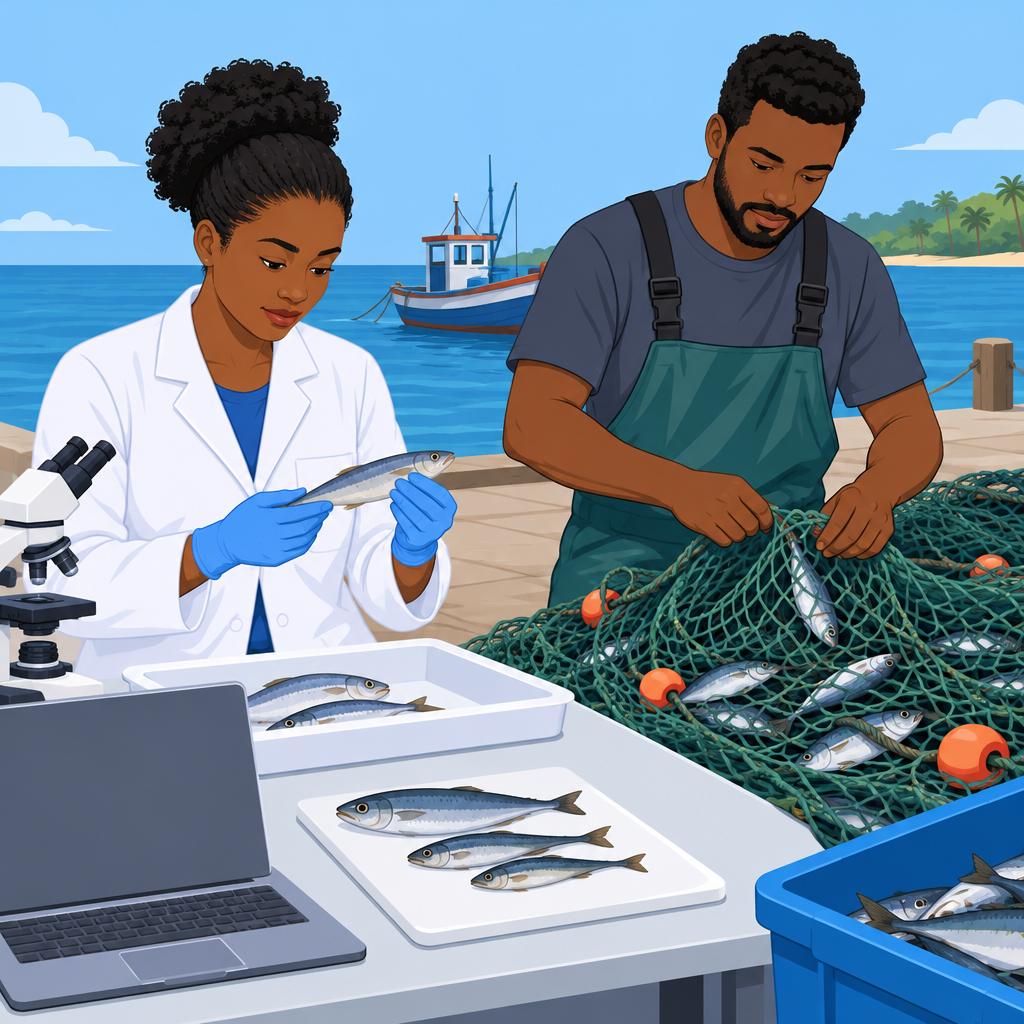
Implementation of Marine Protected Areas
Nigeria has worked toward establishing marine protected areas to preserve marine life.
These areas serve as sanctuaries for fish species and help replenish fish populations.
Moreover, protected areas can limit overfishing and habitat destruction in vulnerable ecosystems.
The government designates specific regions to safeguard biodiversity.
Through this approach, Nigeria seeks long-term viability for fishing.
Training Programs for Fishermen on Sustainable Fishing Practices
Educating fishermen about sustainable methods helps preserve marine resources.
Training programs explain responsible practices and conservation efforts.
Participants learn proper gear usage and techniques that protect marine habitats.
The programs also stress regulation to prevent overexploitation.
As a result, fishermen can support sustainable fishing and protect marine ecosystems.
Collaboration with International Organizations and Researchers
Nigeria can strengthen fishing sustainability by collaborating with international organizations and researchers.
Such partnerships enable knowledge sharing, technology transfer, and access to fisheries management practices.
They can also provide funding support, scientific expertise, and access to global markets.
Researchers can study local fish populations, marine ecosystems, and human impacts on fisheries.
Consequently, cooperation can help Nigeria promote sustainable practices nationwide.
Explore Further: Famous Geological Sites to Visit in Nigeria
Fishing supports Nigeria’s economy through employment, food supply, and revenue generation.
It also sustains households connected to harvesting, processing, trading, and exporting.
These contributions create opportunities for broader economic development.
Economic Contributions of Nigeria’s Fishing Industry
Fishing provides livelihoods for people working throughout Nigeria’s fishing value chain.
Furthermore, fish supplies essential protein and nutrients to many Nigerian communities.
Fish exports also generate foreign exchange that can support national economic activity.
- Employment opportunities: Fishermen, processors, traders, and exporters earn income through the industry.
- Revenue generation: Fish exports provide foreign exchange and contribute to economic growth.
- Food security: Fish helps meet nutritional needs and reduces food insecurity risks.
Growth Through Sustainable Practices and Research
Nigeria can strengthen the fishing industry by combining sustainability with research and innovation.
Sustainable methods can conserve fish stocks, protect marine ecosystems, and preserve fishing livelihoods.
Research can improve fishing techniques, aquaculture practices, and the value of fish products.
- Sustainable practices: Responsible fishing can support healthy ecosystems and long-term industry viability.
- Research and innovation: Improved methods can increase productivity, competitiveness, and profitability.
- Capacity building: Training helps industry participants adopt effective practices and respond to market changes.
Gain More Insights: Job Market Analysis for Applied Botany Graduates
Successful Marine Biology Projects in Nigeria
Marine biology projects in Nigeria support fish stock conservation and management.
Several initiatives combine sustainable practices, habitat protection, and cooperation among different groups.
These projects demonstrate how targeted action can produce positive conservation outcomes.
Ogoni Fish Farming Project
The Ogoni Fish Farming Project began in the Niger Delta region.
The project focused on sustainable fish farming practices.
Consequently, the initiative increased fish stocks in the area.
- Initiated in the Niger Delta region
- Focused on sustainable fish farming practices
- Resulted in increased fish stocks in the area
Lagos State Marine Protected Areas
Lagos State established marine protected areas to safeguard endangered marine species.
Authorities enforced regulations governing fishing activities within these protected zones.
As a result, fish populations recovered in the protected areas.
- Established to protect endangered marine species
- Enforced regulations on fishing activities
- Led to the recovery of fish populations
Cross River National Park Marine Conservation Program
The Cross River National Park program joined government agencies with nongovernmental organizations.
Partners implemented strategies that protected marine habitats.
Furthermore, the program recorded a significant increase in biodiversity.
- Collaboration between government and NGOs
- Implemented strategies to protect marine habitats
- Significant increase in biodiversity observed
Initiatives Supporting Fish Stock Recovery
Nigeria uses several initiatives to improve fish stocks and strengthen conservation efforts.
These initiatives connect communities, public institutions, NGOs, and industry participants.
In addition, they promote sustainable fishing and protect important habitats.
Community-Based Fisheries Management
Community-based management involves local residents in fisheries decision-making.
Communities implement sustainable fishing practices and help protect fish habitats.
This approach also empowers residents to support local resource management.
- Engagement of local communities in fisheries management
- Implementation of sustainable fishing practices
- Empowerment of communities to protect fish habitats
Fishery Improvement Projects
Fishery improvement projects unite government, NGOs, and industry participants.
These partners develop action plans that encourage sustainable fishing.
They also monitor and evaluate project outcomes.
- Collaboration between government, NGOs, and industry
- Development of action plans for sustainable fishing
- Monitoring and evaluation of project outcomes
Expansion of Marine Protected Areas
Authorities designate new marine protected areas to conserve marine resources.
Fishing restrictions apply within designated protected zones.
These areas encourage the sustainable use of marine resources.
- Designation of new marine protected areas
- Restrictions on fishing activities in protected zones
- Promotion of sustainable use of marine resources
Lessons for Scaling Marine Conservation Projects
Successful projects provide useful lessons for future marine conservation efforts.
Effective scaling requires community participation, cooperation, and consistent assessment.
These principles can guide long-term conservation planning in Nigeria.
Community Engagement
Local empowerment supports sustainable resource management.
Community participation in decisions can improve project outcomes.
Moreover, partnerships can build local ownership and commitment.
- Empowering local communities is crucial for sustainable resource management
- Involving communities in decision-making processes enhances project outcomes
- Building partnerships with communities fosters ownership and commitment
Collaboration and Partnerships
Government, NGOs, and industry players must collaborate effectively.
Partners can pool resources and expertise for stronger interventions.
Long-term partnerships can also support project sustainability.
- Effective collaboration between government, NGOs, and industry players is essential
- Pooling resources and expertise leads to more impactful interventions
- Establishing partnerships ensures long-term sustainability of projects
Monitoring and Evaluation
Regular monitoring helps project teams track activities and outcomes.
Evaluation shows how projects affect conservation objectives.
Continuous assessment supports adaptive management and informed scaling decisions.
- Regular monitoring of project activities and outcomes is critical
- Evaluation of project impacts informs adaptive management strategies
- Continuous assessment guides decision-making for project scalability
Collaborative Stewardship for Nigeria’s Marine Future
Marine biodiversity sustains Nigeria’s fishing sector.
Therefore, researchers must study marine ecosystems to guide resource management and conservation.
This knowledge can protect endangered species and encourage sustainable fishing practices.
It can also support the fishing industry’s long-term viability.
Government agencies, NGOs, and researchers must collaborate on effective conservation policies.
These groups should also support practices that safeguard marine biodiversity.
Consequently, stakeholders must prioritize marine biology within Nigeria’s fishing industry.
Such cooperation can preserve marine resources for future generations.
It can also help maintain a healthy and thriving fishing industry.
Additional Resources
Google search results for Marine Biology and Nigeria's Fishing Industry Sciences
Bing search results for Marine Biology and Nigeria's Fishing Industry Sciences


