




Architectural Heritage Conservation
Architectural heritage conservation preserves historical buildings and structures.
This practice helps protect Nigeria’s cultural identity and history.
Therefore, maintaining Nigeria’s architectural heritage supports future generations.
Historical Significance of Nigerian Architecture
Nigerian architecture reflects a rich history that spans many centuries.
Various cultures have influenced architectural development across the region.
Traditional buildings express the cultural diversity and resilience of Nigerian communities.
Meanwhile, regional styles reveal each community’s distinctive identity.
Ancient structures preserve visible reminders of Nigeria’s historical past.
Over time, Nigerian architecture has blended traditional methods with modern design elements.
Key Architectural Styles in Nigeria
Several architectural styles demonstrate Nigeria’s cultural variety and changing design practices.
- Traditional builders use local materials such as clay, wood, and thatch.
- Vernacular buildings display the skill and ingenuity of local builders.
- Colonial buildings from British and Portuguese eras appear in cities such as Lagos and Calabar.
- Islamic architecture reflects North African influences in cities such as Kano and Sokoto.
- Modern architecture appears in skyscrapers, government buildings, and commercial structures.
- For example, the National Theatre in Lagos represents contemporary Nigerian architecture.
- Similarly, the National Mosque in Abuja demonstrates contemporary architectural expression.
Key Architectural Structures in Nigeria
Nigeria’s architectural landmarks connect cultural traditions with distinctive places and forms.
These structures and landscapes illustrate how communities shaped their surroundings.
The following examples represent historical, cultural, modern, and natural architectural significance.
- The ancient city of Benin contains historic walls and moats recognized as a UNESCO World Heritage Site.
- The Ogbunike Caves in Anambra State feature natural rock formations used by ancient settlers.
- The Sukur Cultural Landscape in Adamawa State includes terraced fields and a palace complex.
- The Emir’s Palace in Kano represents traditional Hausa architecture through intricate designs and motifs.
- The National Arts Theatre in Lagos presents a modernist design by architect Yakubu Fadairo.
- The Lekki Conservation Centre in Lagos combines contemporary design with eco-tourism facilities.
- Its canopy walkway provides a notable feature for visitors.
Nigerian Architecture and Cultural Identity
Nigerian architecture records the country’s complex history and cultural diversity.
Its regional forms show how communities expressed identity through materials, layouts, and decoration.
Furthermore, historic and contemporary structures demonstrate architecture’s continuing cultural importance.
Threats to Architectural Heritage in Nigeria
Nigeria faces several challenges that threaten its architectural heritage.
These threats affect historical buildings and structures in different ways.
Together, these pressures can accelerate damage and reduce opportunities for preservation.
- Urbanization: Rapid urbanization destroys historical buildings for modern infrastructure and development.
- Lack of Awareness: Limited public awareness reduces support for architectural heritage preservation.
- Poor Maintenance Practices: Insufficient resources and expertise allow historical buildings to deteriorate.
- Environmental Factors: Flooding, erosion, and extreme weather conditions can damage architectural heritage.
- Political Instability: Political unrest and conflicts can damage historical buildings and structures.
Measures for Strengthening Heritage Conservation
Effective responses require public education, stronger laws, professional training, and community participation.
Government agencies and heritage organizations can coordinate efforts with local communities.
These measures can improve the protection and maintenance of historical buildings.
- Education and Awareness Campaigns: Public education can explain the importance of preserving architectural heritage.
- Legislation and Enforcement: Strict laws can protect historical buildings when authorities enforce them effectively.
- Capacity Building: Training programs can develop the skills needed for proper maintenance and conservation.
- Partnerships and Collaborations: Cooperation among agencies, organizations, and communities can support preservation activities.
- Public Engagement: Community participation can increase appreciation for architectural heritage and encourage preservation efforts.
Coordinated Priorities for Heritage Protection
Architectural heritage in Nigeria requires coordinated responses to urban, environmental, institutional, and political pressures.
Education, legislation, capacity building, collaboration, and public engagement address these challenges from multiple directions.
Consistent action can help protect historical buildings and structures from continued deterioration.
Delve into the Subject: Architectural Competitions in Nigeria: Opportunities and Insights
Government Involvement in Architectural Heritage Conservation
The Nigerian government has adopted policies to safeguard historic buildings and sites.
It has also introduced initiatives that support architectural heritage conservation.
These measures help maintain Nigeria’s cultural identity and historical record.
Government Policies and Conservation Initiatives
The National Commission for Museums and Monuments manages Nigeria’s cultural heritage conservation responsibilities.
The Antiquities Ordinance of 1959 protects monuments, relics, and culturally significant objects.
Additionally, ICOMOS supports cooperation with international organizations on heritage conservation.
- The National Commission for Museums and Monuments serves as the government’s cultural heritage conservation body.
- The Antiquities Ordinance of 1959 protects monuments, relics, and objects with archaeological, historical, or cultural interest.
- The Nigerian National Committee of ICOMOS collaborates internationally to promote heritage conservation.
- The Federal Ministry of Tourism, Culture, and National Orientation oversees heritage conservation policies and initiatives.
- The Nigerian Urban and Regional Planning Act of 1992 addresses historic building and site conservation.
Evaluating Government Conservation Efforts
Government initiatives have advanced architectural heritage conservation in Nigeria.
However, authorities still face challenges that limit the effectiveness of these efforts.
Several factors can help evaluate conservation performance and identify areas for improvement.
- Authorities must enforce conservation laws to prevent encroachment and destruction.
- Adequate funding supports conservation projects, maintenance, and professional training.
- Capacity-building programs can strengthen the skills of heritage conservation professionals.
- Public awareness can encourage broader support for architectural heritage conservation.
- Public-private partnerships can provide additional resources for conservation projects.
Government involvement remains essential for preserving Nigeria’s architectural heritage.
Robust policies and financial support can strengthen conservation activities.
Partnerships with stakeholders can help protect this heritage for future generations.
Discover More: Women in Nigerian Architecture: Breaking Barriers
Role of Communities and NGOs in Architectural Heritage Conservation
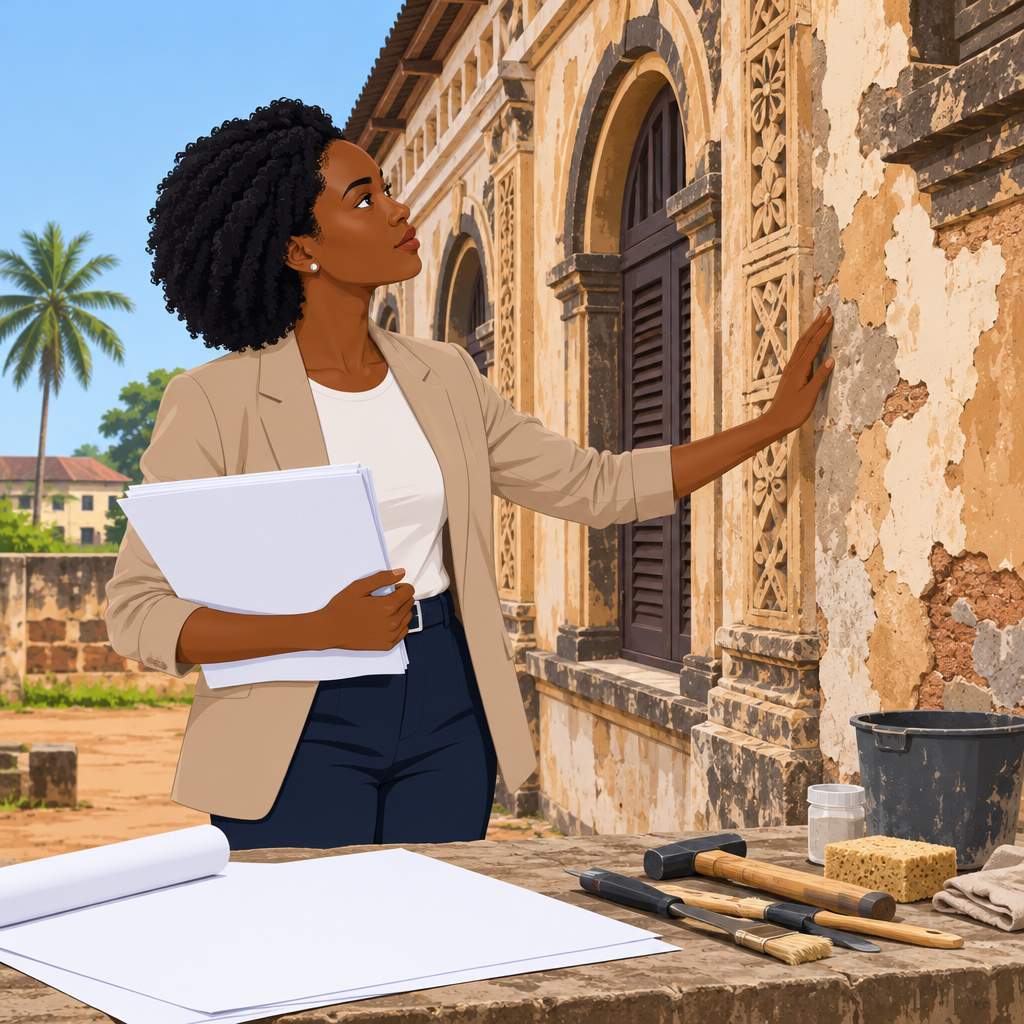
Community involvement plays a crucial role in preserving architectural heritage in Nigeria.
Transform Your Career with Expert Guidance
Get personalized mentorship consulting that’s tailored to your unique path. Our expert advice is actionable and exclusive.
Get StartedWhen communities actively engage in conservation, they develop ownership and pride, supporting effective and sustainable practices.
This participation strengthens local responsibility for heritage protection.
Importance of Community Involvement
Communities serve as custodians of cultural heritage and help align conservation with local values and traditions.
Moreover, residents often possess detailed knowledge of historical buildings and sites.
Their knowledge can provide valuable insights for conservation projects and improve local decision-making.
- Communities help align conservation efforts with local values and traditions.
- Residents provide valuable knowledge about historical buildings and sites.
- Inclusive decisions ensure that conservation reflects local needs and aspirations.
- Community participation fosters empowerment and strengthens local ownership.
- Volunteer labor and local resources can reduce costs and support sustainability.
Examples of Community-Led Conservation Projects
Several Nigerian projects demonstrate how communities, governments, and nonprofit organizations can support heritage conservation.
These initiatives combine local participation with organized conservation support.
The examples below highlight efforts in different Nigerian states.
- The local community and the Osun-Osogbo Sacred Grove Conservation Foundation helped preserve this UNESCO World Heritage Site.
- The Kano State Government and Kano Heritage Preservation Initiative supported restoration of the Kano City Walls.
- The nonprofit organization actively involves local residents.
- The Sokoto State Government restored the Gidan Gimba Cultural Centre with local community collaboration.
- Residents actively participated in conserving the historic building.
- The Cross River State Government maintains the Old Residency Museum in Calabar.
- The Calabar Heritage Society supports regional architectural heritage preservation.
Delve into the Subject: The Role of Architecture in Nigeria's Urban Development
Best Practices in Architectural Heritage Conservation
Successful conservation projects require careful planning, informed decisions, and cooperation among relevant stakeholders.
These practices help teams protect historic structures while respecting their cultural and architectural value.
They also support continued appreciation and use of Nigeria’s architectural heritage.
Documentation and Research
Before conservation work begins, teams should document and research each structure’s history and significance.
This process clarifies the building’s context and guides an informed conservation approach.
Researchers can therefore connect conservation decisions with the structure’s documented cultural value.
Appropriate Materials and Techniques
Conservation teams should select materials and techniques that respect the original design and construction.
Sensitive choices help maintain the structure’s physical integrity during conservation work.
This approach preserves the building’s established character while supporting necessary repairs.
Community Engagement
Local residents should participate throughout the conservation process.
Such involvement can build ownership and pride in nearby heritage.
Consequently, communities can support preservation over the long term.
Adaptive Reuse
Adaptive reuse gives historic buildings new functions while preserving their historic character.
This strategy keeps buildings relevant and useful in modern settings.
It also supports conservation by connecting heritage with continuing use.
Stakeholder Collaboration
Conservation projects benefit from cooperation among government agencies, heritage organizations, and private investors.
This collaboration creates a coordinated effort to protect architectural heritage.
Such cooperation can unite stakeholders around shared conservation goals.
Examples of Conservation Projects in Nigeria
Nigeria has several conservation projects that illustrate these practices.
These projects show how careful conservation can support heritage appreciation and continued public use.
The examples below include sacred, defensive, and museum heritage sites.
- The restoration of the Osun-Osogbo Sacred Grove, a UNESCO World Heritage Site, showcases traditional Yoruba architecture and culture.
- The conserved Kano City Walls are ancient fortifications dating from the fourteenth century and attract tourists.
- The rehabilitation of Lagos’ National Museum supports a cultural hub housing significant Nigerian art and artifacts.
Uncover the Details: Challenges Facing the Architecture Industry in Nigeria
Current Challenges in Architectural Heritage Conservation
Architectural heritage conservation in Nigeria faces several challenges that limit its progress.
First, inadequate funding leaves many historic buildings and sites in disrepair.
Consequently, limited financial resources weaken regular maintenance and restoration efforts.
Meanwhile, rapid urbanization and modernization often encourage demolition for new development.
Such changes place valuable historical structures at risk of permanent loss.
Moreover, many residents lack awareness of these buildings’ cultural and historical importance.
Without public appreciation, conservation receives less support from society.
Opportunities for Stronger Conservation
Several practical opportunities can strengthen conservation efforts across the country.
Government investment can support restoration, maintenance, and protection for historic places.
Partnerships, education, and enforceable rules can also improve long-term preservation.
- Government agencies should increase funding for restoration and maintenance projects.
- International partnerships can provide conservation expertise, training, and capacity building.
- Educational campaigns can explain heritage value and encourage public support.
- Protective building codes can restrict demolition and safeguard important heritage sites.
Shared Commitment to Nigerian Architectural Heritage
Shared commitment can keep Nigeria’s architectural legacy meaningful for future generations.
Furthermore, public awareness can encourage people to value and protect these important cultural assets.
Active participation can strengthen efforts to prevent neglect and destruction.
Through cooperation, Nigerians can celebrate architectural heritage while respecting its historical importance.
Together, we can preserve a distinctive legacy that connects communities with their past.
Additional Resources
Google search results for Architectural Heritage Conservation in Nigeria Engineering
Bing search results for Architectural Heritage Conservation in Nigeria Engineering


